Inside a Custom Paper Packaging Facility in Shenzhen
A finished rigid gift box is the last link in a sequence of separate operations. This piece walks the floor of a Shenzhen packaging facility in the order the work flows, from structural development through printing, finishing, die cutting, V grooving, box making, assembly and final inspection.
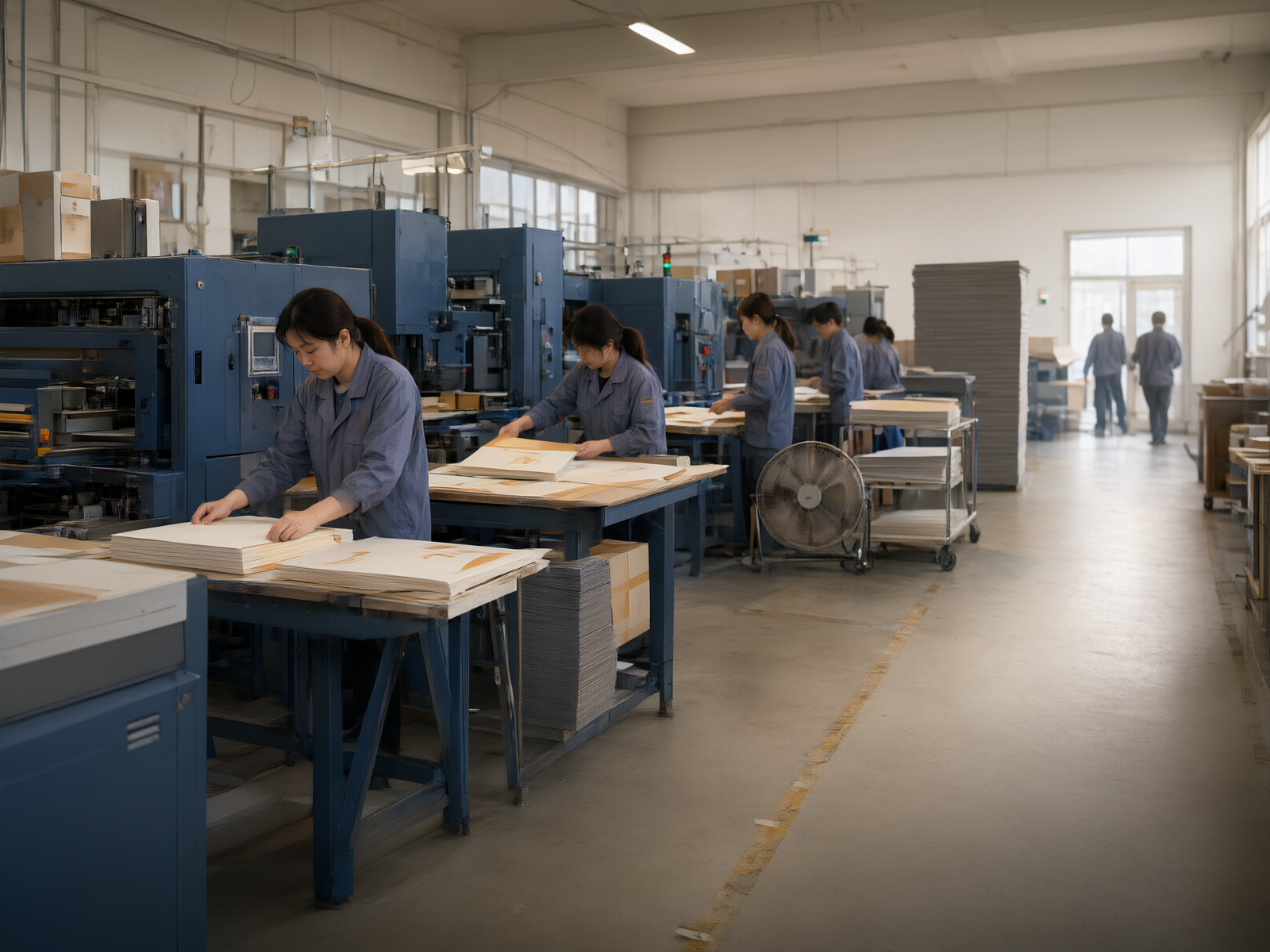
A finished rigid gift box is the last link in a sequence of separate operations. Paper bags, rigid boxes and magnetic-closure presentation cases all begin as flat sheets of chipboard and printed paper, and their quality is decided by the order in which those sheets move through a building. This piece describes how one such building operates. BOYU LUXE PACK was founded in 2012 in Shenzhen, works across more than 11,000 square meters, and staffs more than 200 employees on roughly 10 production lines. Walking the floor in the order the work flows makes that arrangement legible.
Structural development comes before any machine touches the board
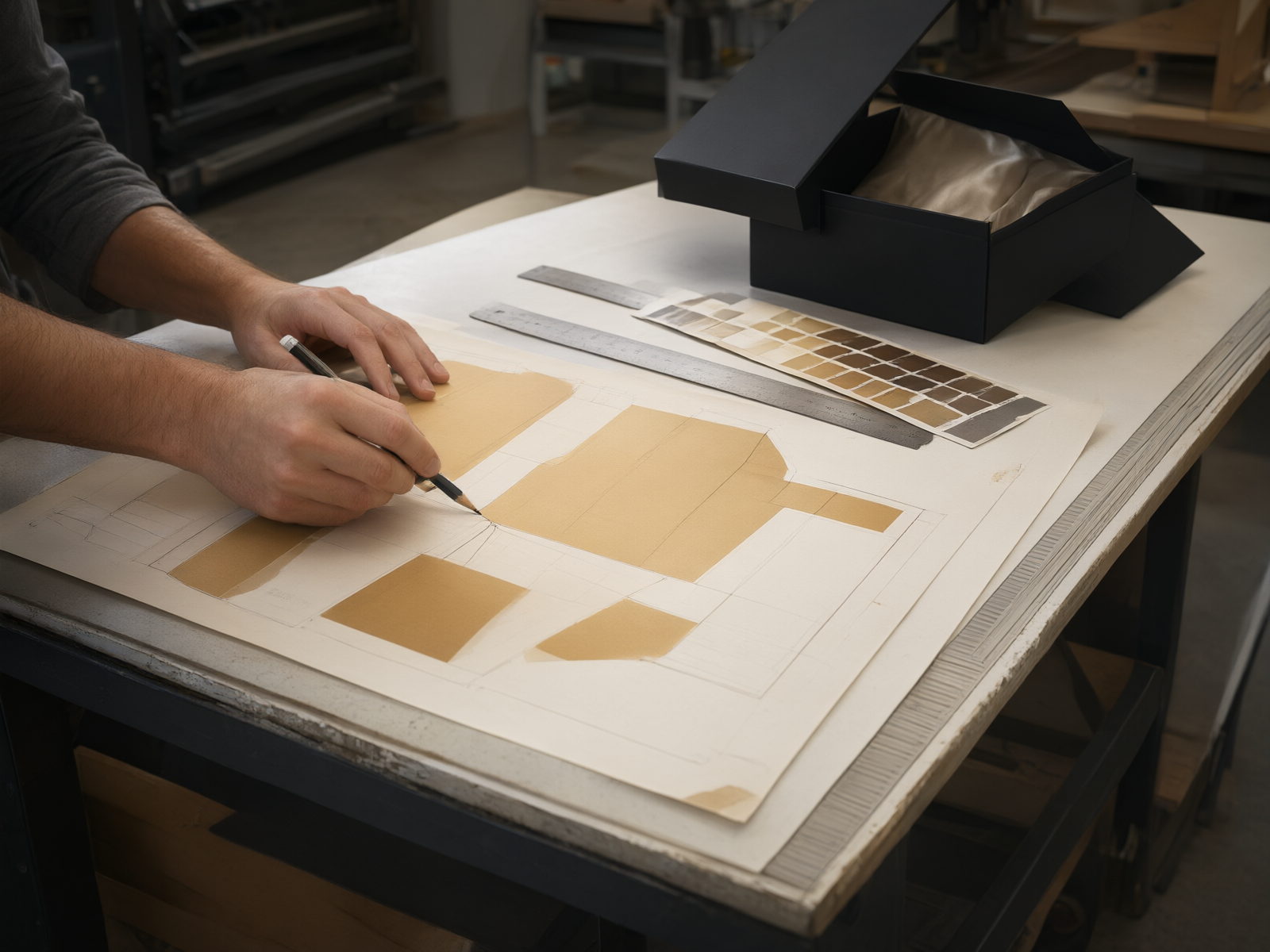
A custom box is not scaled at the press. Each project begins with a dieline, a flat drawing in which fold lines, glue tabs and cut marks are set so that a two-dimensional sheet can be calculated to become a three-dimensional container. The 15 research and product development specialists working with the facility carry out this stage from the dimensions of the product and the load the box must carry. For a box built on thick chipboard, the board has to stay square after assembly, so the team fixes the board thickness and the wrap allowance here. For a 320 by 240 by 90 mm skincare gift set, the structural drawing and the graphic layout are approved before production starts, not during it. The output of this room is a confirmed dieline and a mock-up. Every machine downstream is executed against that document.
The printing room is where brand color is fixed
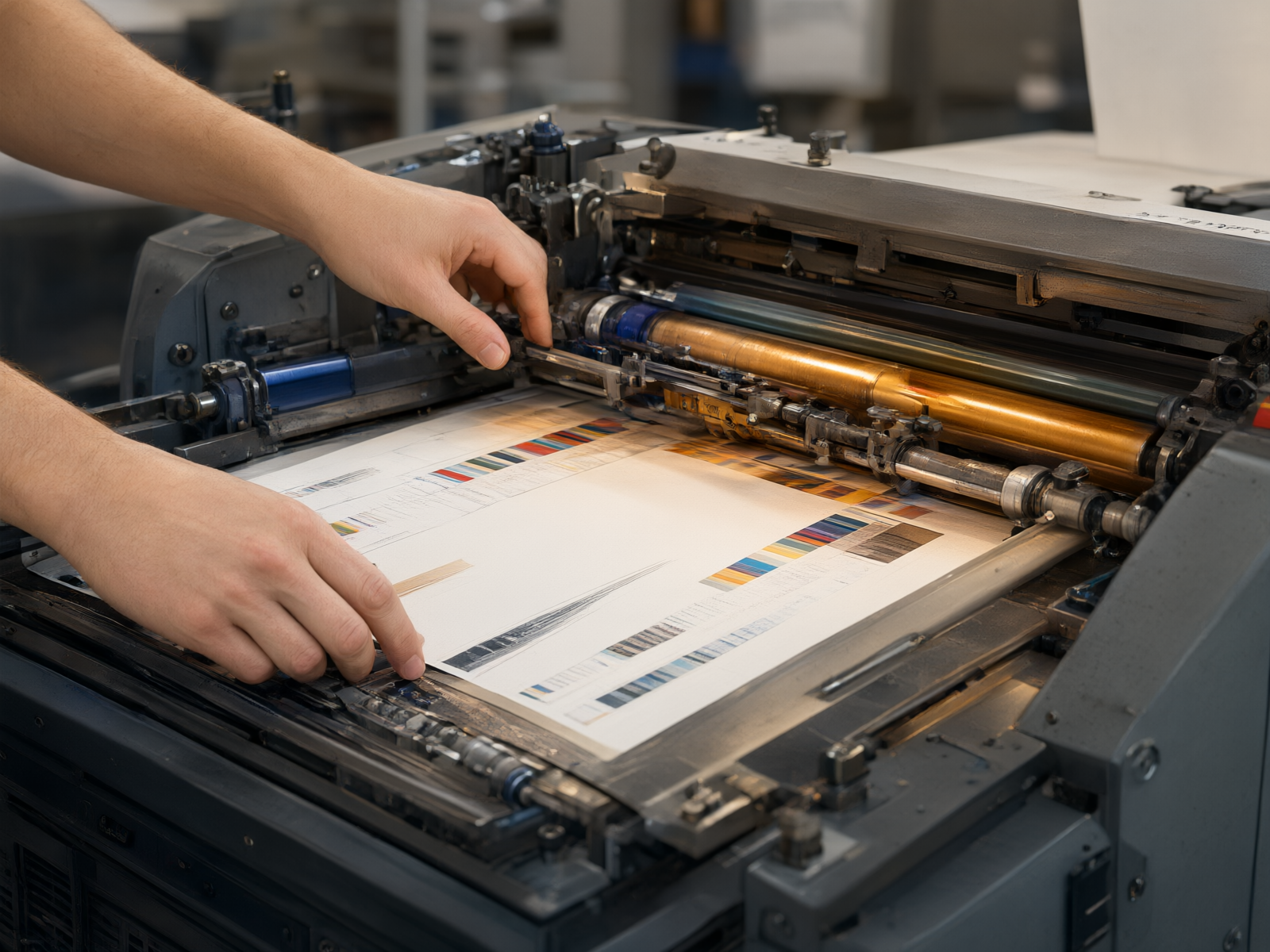
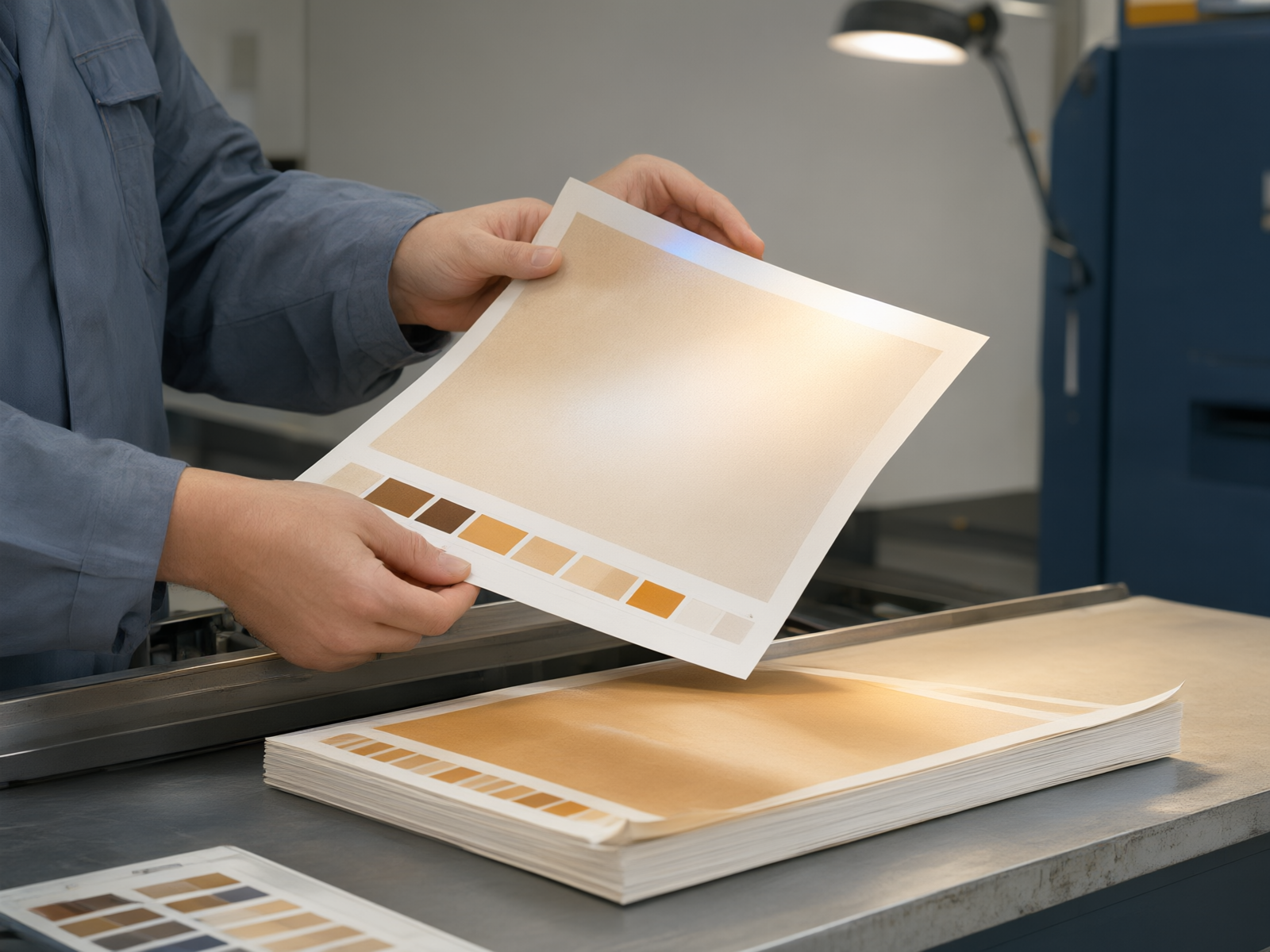
Offset printing is the dominant process in the printing area, chosen for large custom runs because it reproduces fine line work, small type and flat color fields at a consistent density across thousands of sheets. Work for cosmetic and perfume brands is commonly printed in CMYK with added spot colors matched to a Pantone reference, because a house gold or a corporate silver cannot be assembled predictably from four process inks. The roughly 10 production lines feed from this stage onward, and color is settled in this area: a job moves from the press only when the printed sheet holds against the approved standard under controlled light. Registration and color are verified sheet by sheet here, since correction after die cutting is impossible.
Finishing is a separate pass, and it has to be
Between printing and the point where paper is glued to a box, the surface is treated. Lamination places a thin film over printed paper, matte or gloss, protecting the ink and changing how light reflects from the box. Hot foil stamping presses a heated metal die into the surface so that a logo appears in metallic gold or silver. Spot varnish is applied in selected areas only, raising a glossy pattern above a matte field. Each operation is a separate machine pass in a dedicated area. Finishing tolerates neither dust nor misregistration: a speck trapped under foil, or a half-millimetre offset between varnish and print, reads as a defect on the finished surface rather than as a process mark.
Die cutting turns printed sheet into parts
A steel-rule die cuts and creases a printed, finished sheet into a single flat blank that already carries the outline of the box, its fold lines and any window cutouts. The die is made from the approved dieline, which is why structural development comes first on the floor. Two features matter at this stage. The cut must be complete, so that waste board clears cleanly from the sheet, and the crease must be exact, so that a fold line is positioned where the paper will actually bend. Creases are too deep and the panel tears along the fold; too shallow and the box springs back from square. Blanks are pulled and inspected for both before they leave this area.
V grooving is what makes a rigid box look rigid
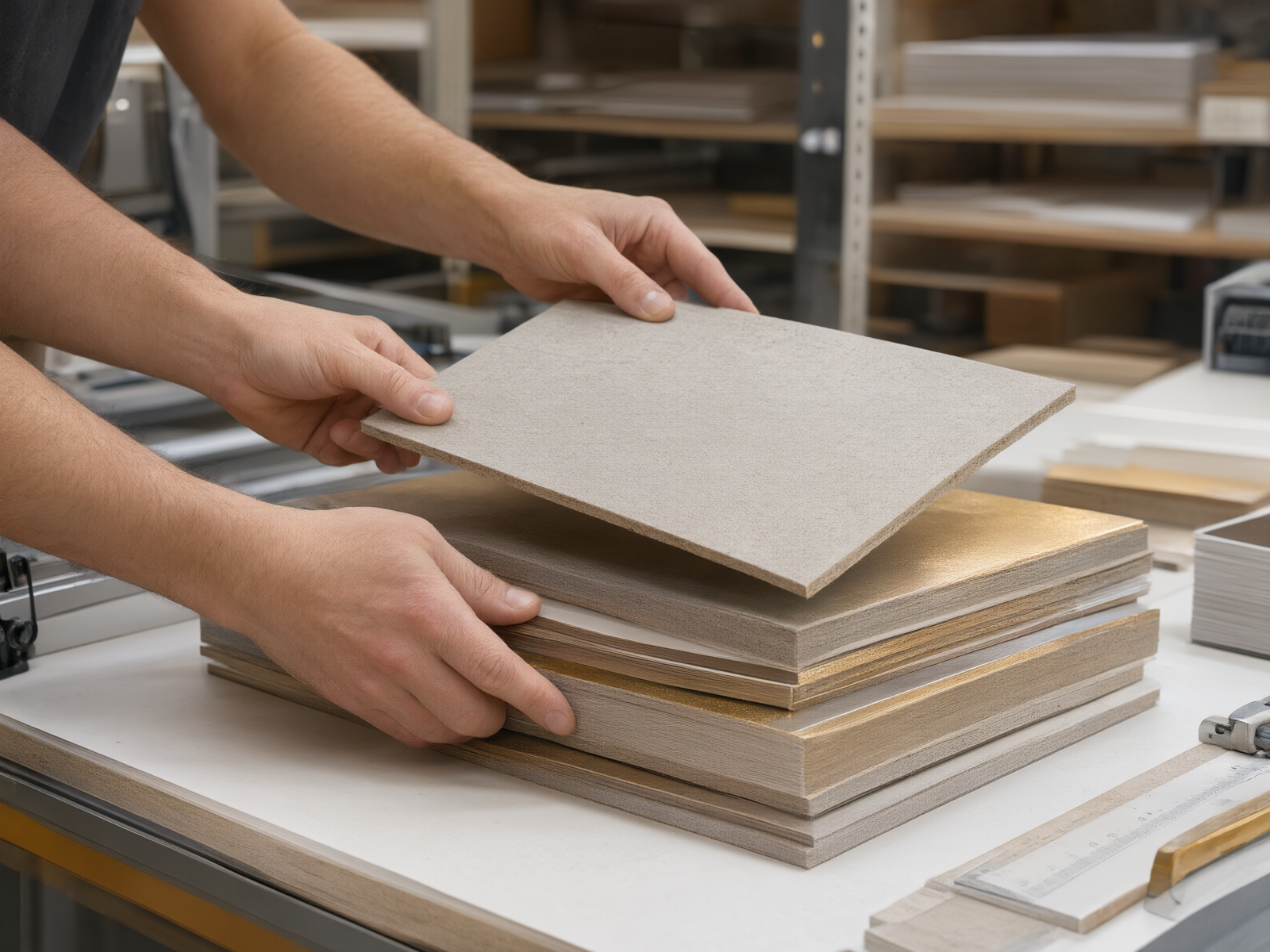
Folding chipboard of the 1200 to 1500 gsm used for luxury boxes produces a rounded, soft corner, no matter how carefully the paper is wrapped. A V-grooving machine removes material along the fold line in a V-shaped channel, allowing thick board to fold into a sharp, straight edge. The result is the crisp edge that signals a rigid box on a retail shelf. This stage is the reason box making and rigid-box assembly are separate areas: grooving requires its own machines and its own calibration, and the depth of the channel is judged against the board thickness fixed during structural development.
Box making converts flat parts into containers
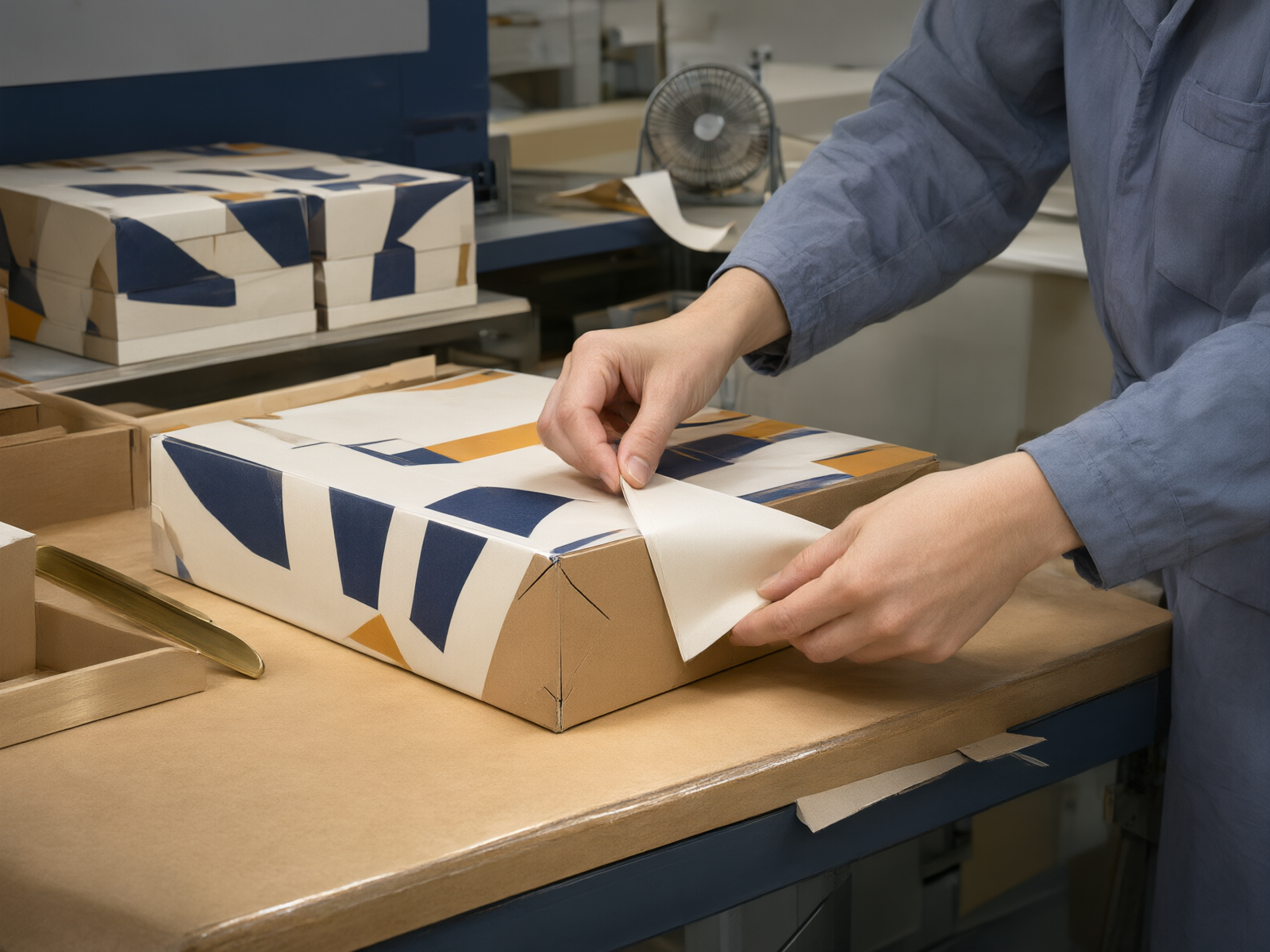
Rigid box making is the operation most difficult to automate, and the one that most determines the look of the final package. On rigid boxes, paper is glued to the grooved board and folded over the edges by hand at the wrapping station; the wrapper is pulled from two opposing sides so that the printed image stays aligned with the box. For folding cartons, the same stage scores, folds and applies adhesive along the glue tab. Magnetic closures, ribbon pulls and hinge components are set here rather than later, because once the interior lining is placed there is no access to the wall of the box.
Assembly completes the product
Some orders are finished by box making alone. Rigid gift sets are not. This area adds the interior work: satin or velvet lining, fitted inserts for bottles and compacts, end caps on paper tubes, rope handles threaded through paper bags. Assembly also includes the packing sequence for export, the count-per-carton that an importer unloads against. The 200-plus staff are distributed so that the lines feeding this point can flex between product families; when a batch of tea tubes and a batch of perfume cases arrive together, both must clear assembly before the same inspection slot.
Quality inspection is the gate, and it is multi-stage
Inspection is not confined to the end of the line. Color is approved at press, blanks are checked after die cutting, and the finished unit is inspected again before packing. At the final gate the inspector verifies the same points a buyer would: print alignment, edge square, the flatness of a foiled surface, glue coverage along a wrapped edge, and a structural check that lid and base fit together as the dieline intended. Units that fail are pulled, not reworked, because a half-millimetre misregistration cannot be corrected by hand at this thickness of board.
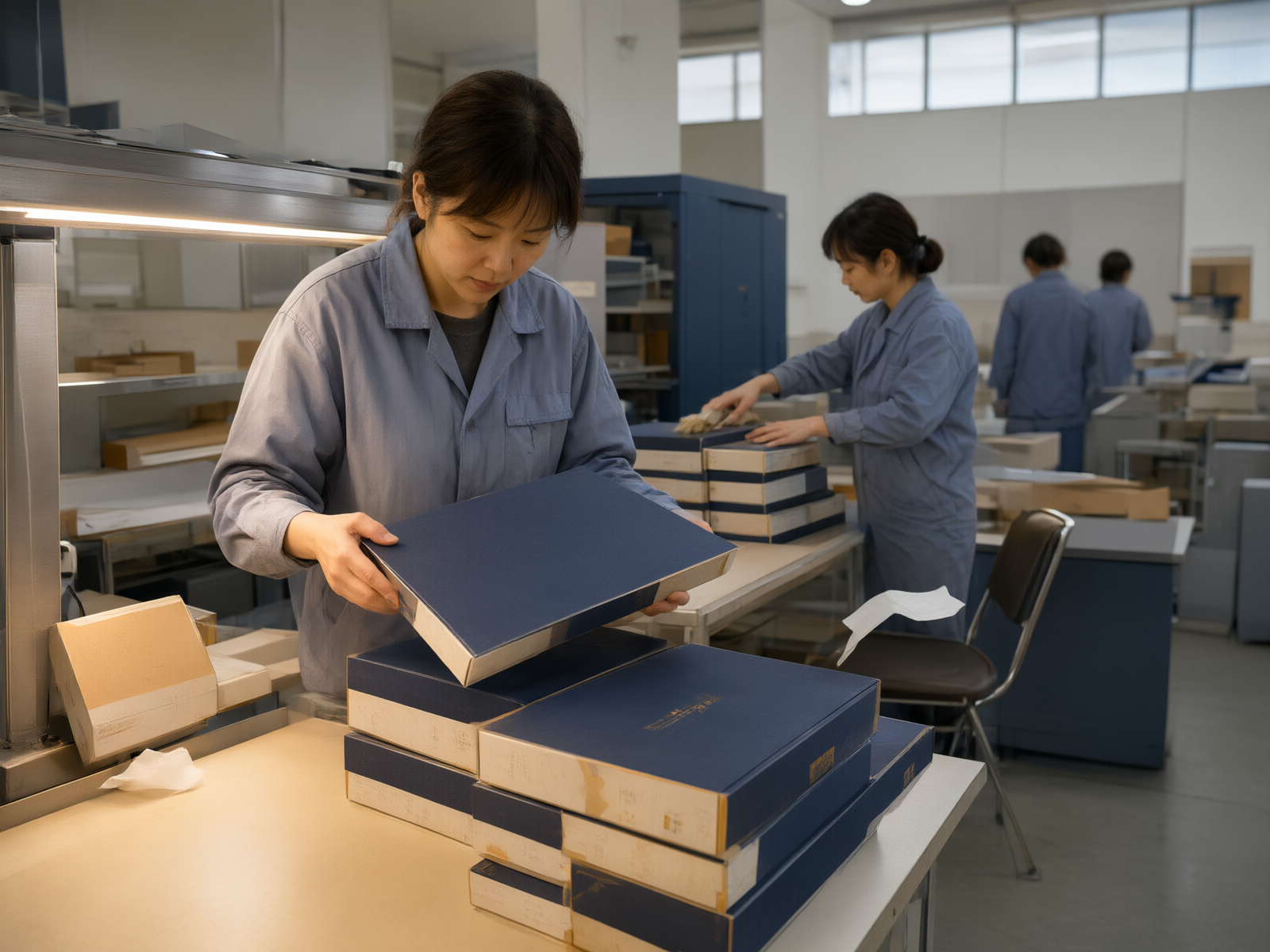
Reading the floor as a sequence explains why the facility is organised this way. Structural development produces a document every machine obeys; printing and finishing are isolated because they are image operations; die cutting, grooving, box making and assembly are physical operations performed in order of commitment, each one reducing the options available to the next. A buyer evaluating a supplier can apply the same logic from the outside: ask what each area does to the box, and ask in what order.
Interested in Custom Paper Tube Packaging?
Send us your specifications and get a detailed quote within 24 hours.
Get a Free Quote