How a Custom Packaging Factory Plans Large Production Orders
Most production problems in custom packaging do not start on the shop floor. They start at the planning table, weeks before a press is loaded. This article walks through the planning sequence that keeps large custom packaging programs from becoming scrap, from dieline approval through material preparation, line scheduling, printing and finishing coordination, quality control and packing.
Most production problems in custom packaging do not start on the shop floor. They start at the planning table, weeks before a press is loaded. A large order multiplies every weak assumption in a program: a dieline measured one millimetre wrong costs a handful of boxes on a small run, and a container's worth on a bulk run. The work that keeps programs from becoming scrap happens after the artwork is approved and before the first sheet is cut.
Why production planning starts before manufacturing begins
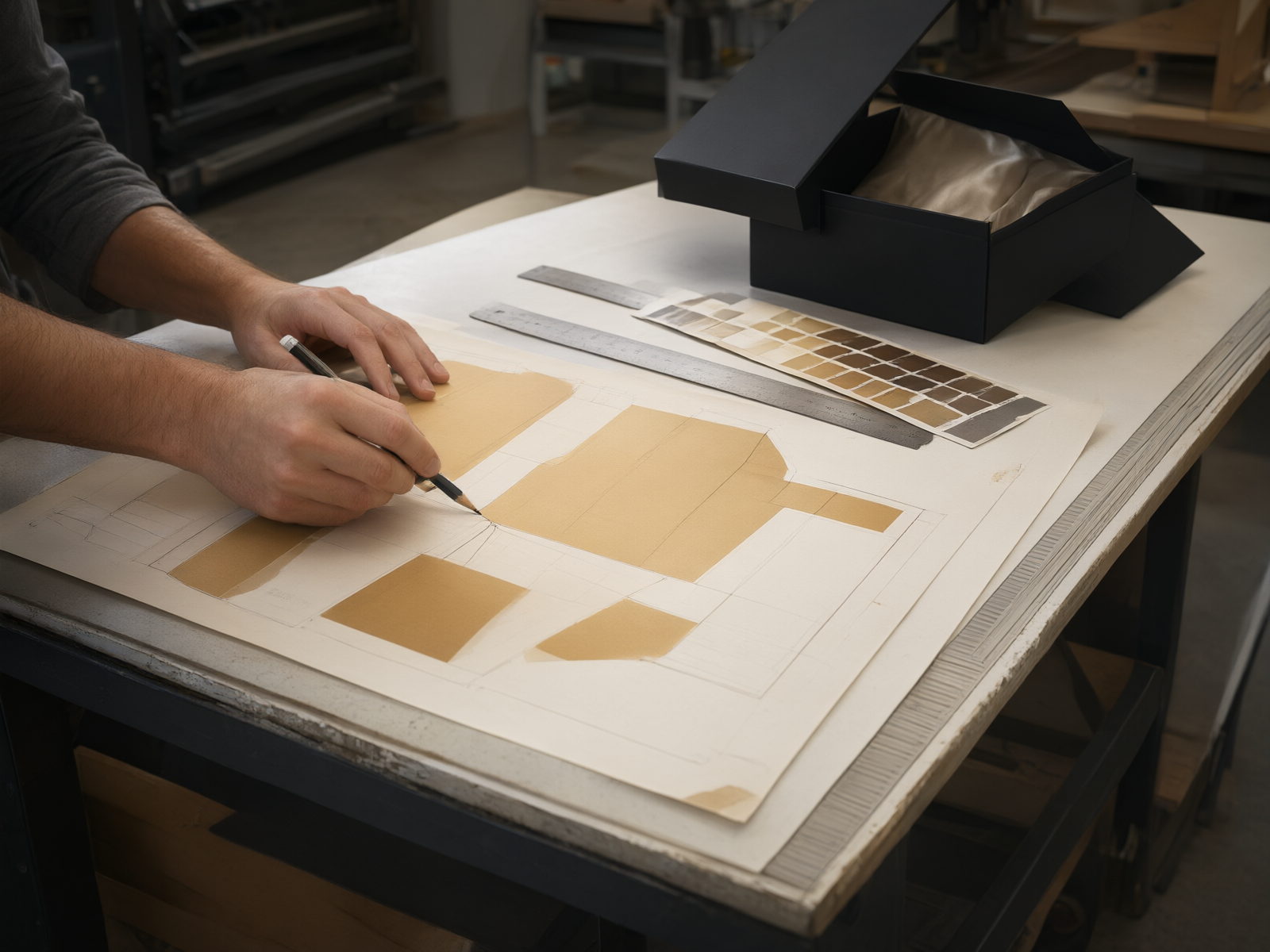
The first physical output of a manufacturing program is not a carton. It is an approved dieline, a locked artwork layout, and a signed sample. At BOYU LUXE PACK each project moves through these three gates before bulk material is committed, and that order is deliberate.
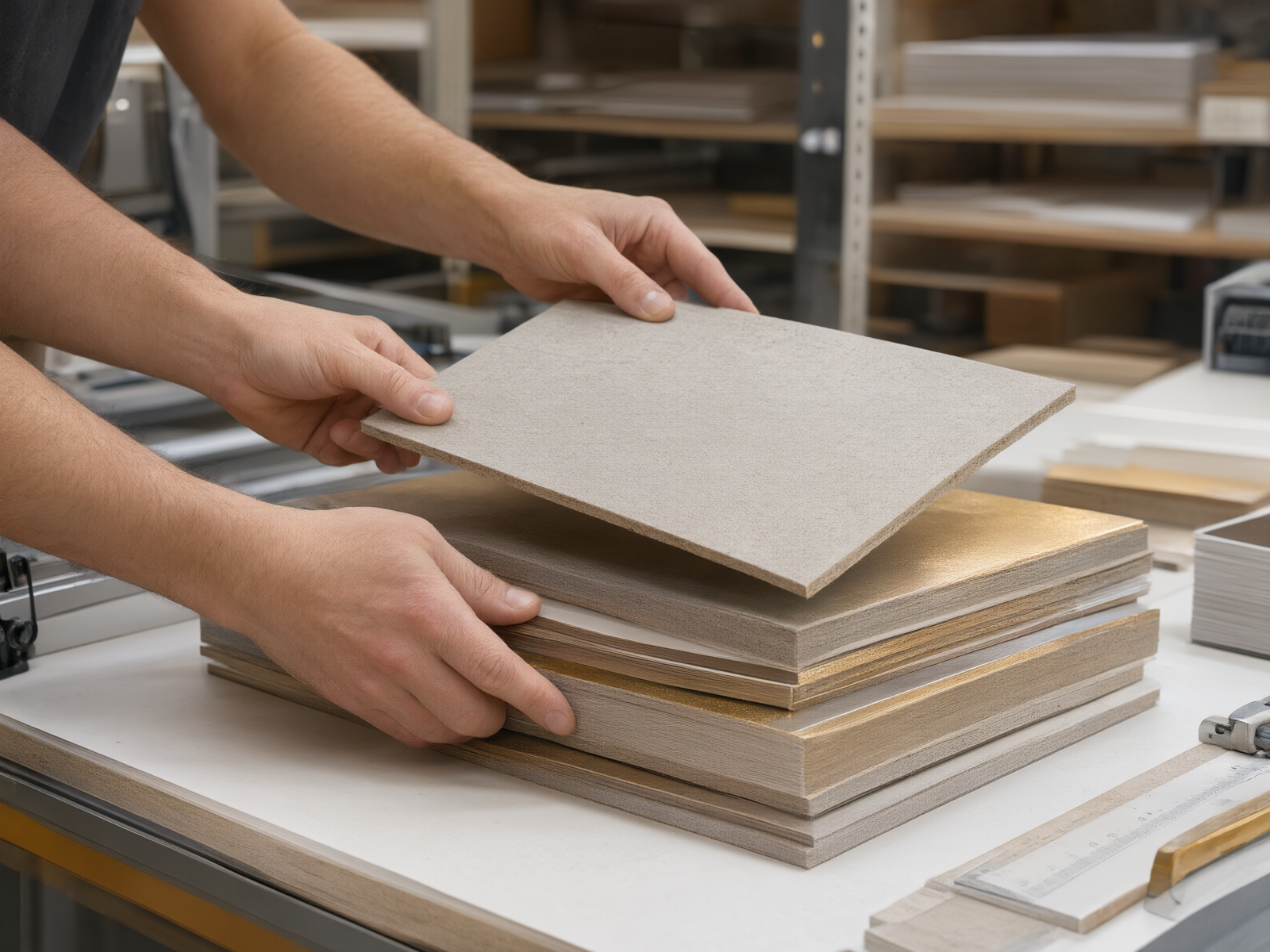
Structural design fixes the inputs that every downstream department consumes without re-deciding: chipboard weight, wrap style, insert geometry, the relationship between an outer lid and an inner tray. The luxury skincare gift set runs on 1200gsm chipboard with art paper wrap at 320x240x90mm; the perfume presentation box uses 1500gsm chipboard with textured paper at 180x120x80mm. Different weights behave differently under foil, embossing and hand wrapping, which is why the difference is settled on paper, when it is cheap to change. A sampling gate then turns the drawing into a physical object a buyer can hold, so the last misunderstandings surface at the stage where correction is measured in hours.
Material preparation follows an approved specification
Once the specification is locked, purchasing reserves exactly what the program will consume: chipboard, art paper, textured or kraft stock (food-grade kraft for tea and food programs), handles and ropes, metal end caps, foil, satin or velvet lining. Incoming material is verified against the approved sheet: weight checked against the gsm on the dieline, colours checked against the Pantone callouts rather than against memory or the design file on screen.
Material arrival, not machine availability, sets the earliest a program can enter printing. That is also the point where order size is understood. Flexible MOQ options starting from 200 pieces on select products depend on shared or short-run lots; large dedicated commitments usually require longer material runs. Planning decides early which side of that line a project sits on, so the material reservation matches the production reality instead of the purchase order alone.

Scheduling lines departments up against the constraint
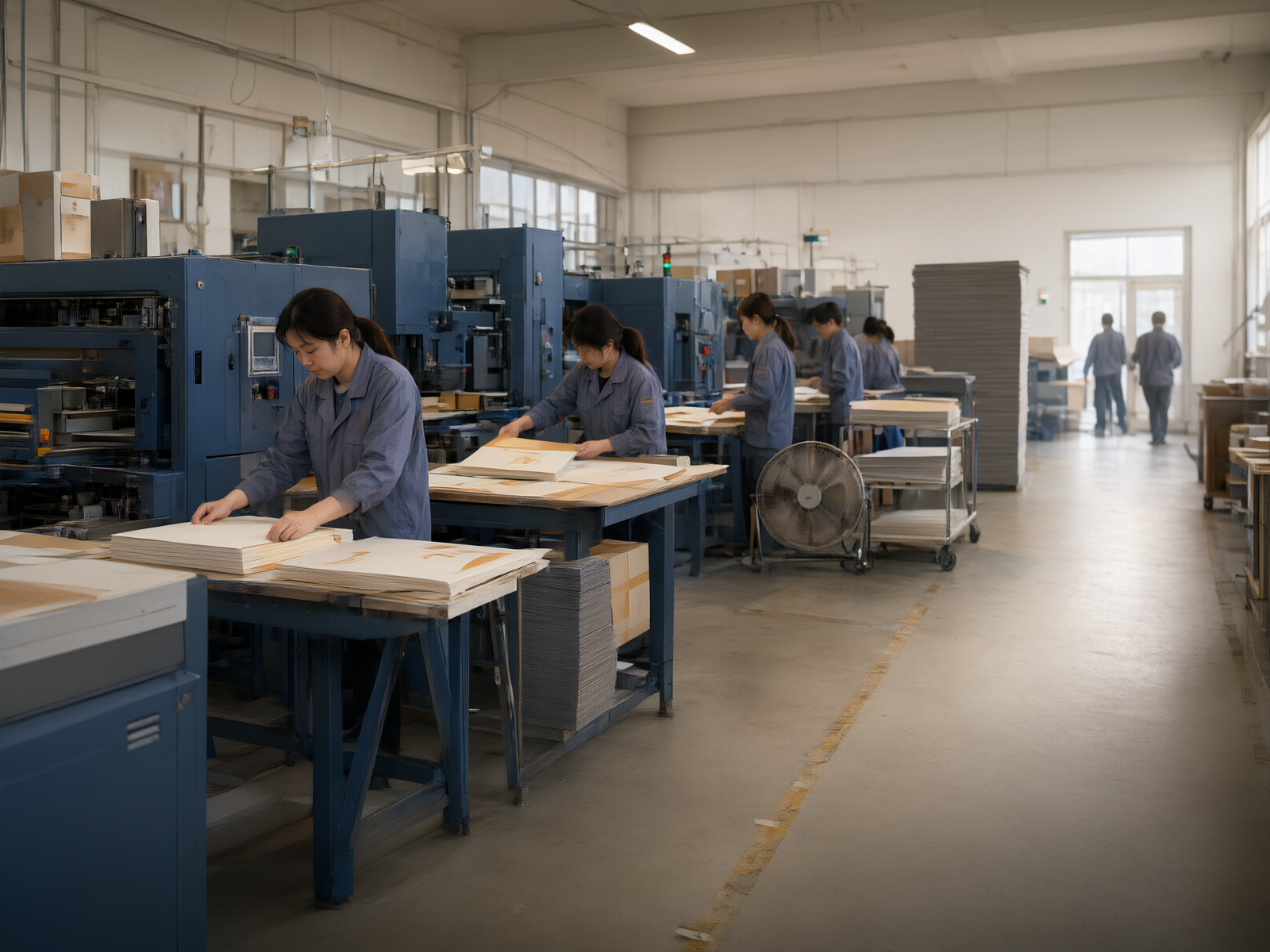
Departments consume the job in a fixed sequence: printing, then lamination, then effects, then die-cutting and creasing, then box wrapping and assembly, then inspection and packing. Two of those stations carry the pace of a rigid box program. Hand-applied wrapping and insert fitting are skilled work, not a line passing at carton speed, and they sit after every other step. Folding cartons and paper bags move faster.
A large order is therefore split into batches that flow through finishing and assembly in a steady sequence. The alternative is well known on any factory floor: a mountain of printed sheets arriving at a station that processes a limited number of boxes a day, followed by inspection teams discovering at the end of the program what the beginning of the program already contained.
Printing and finishing share one approval chain
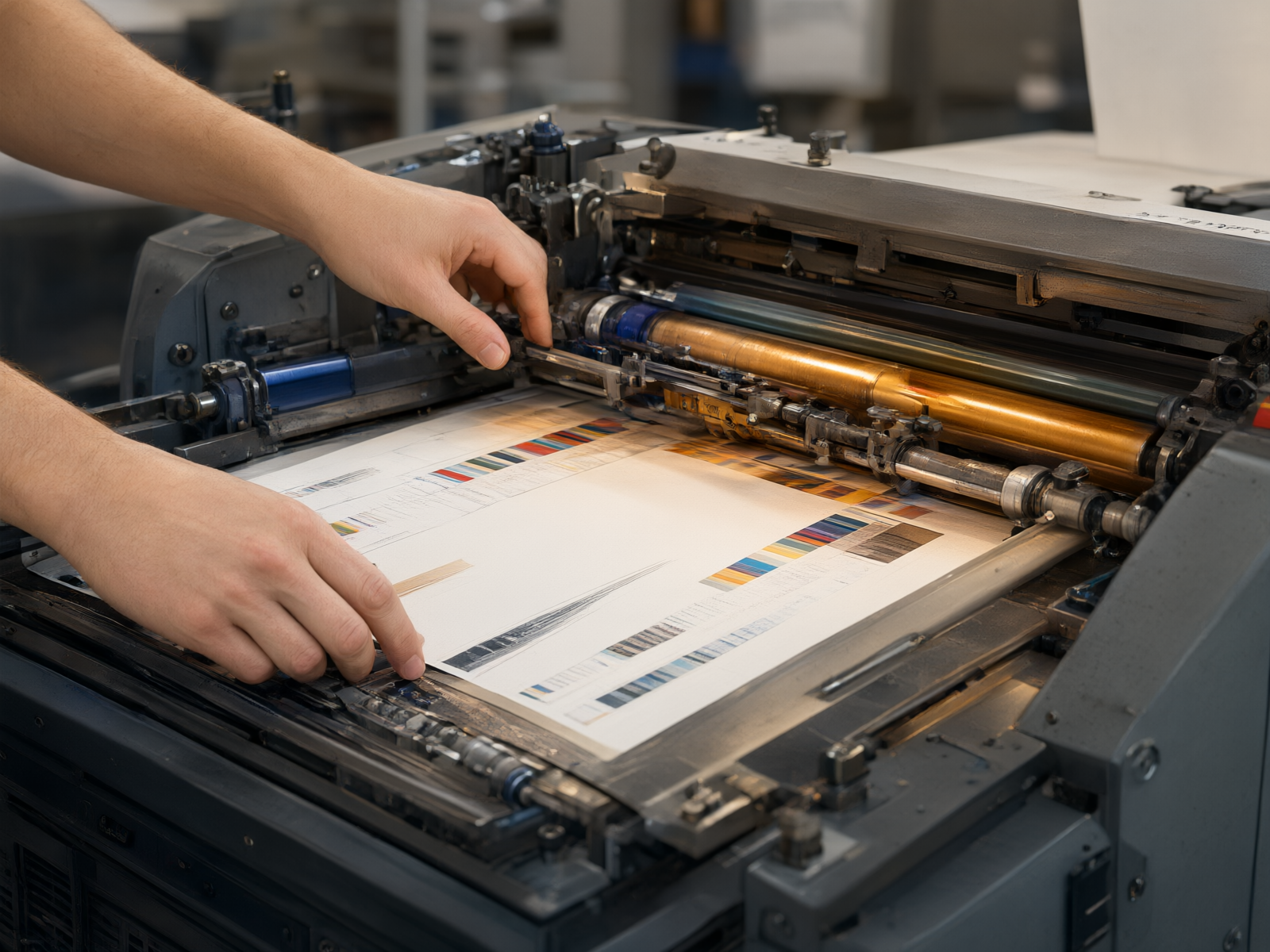
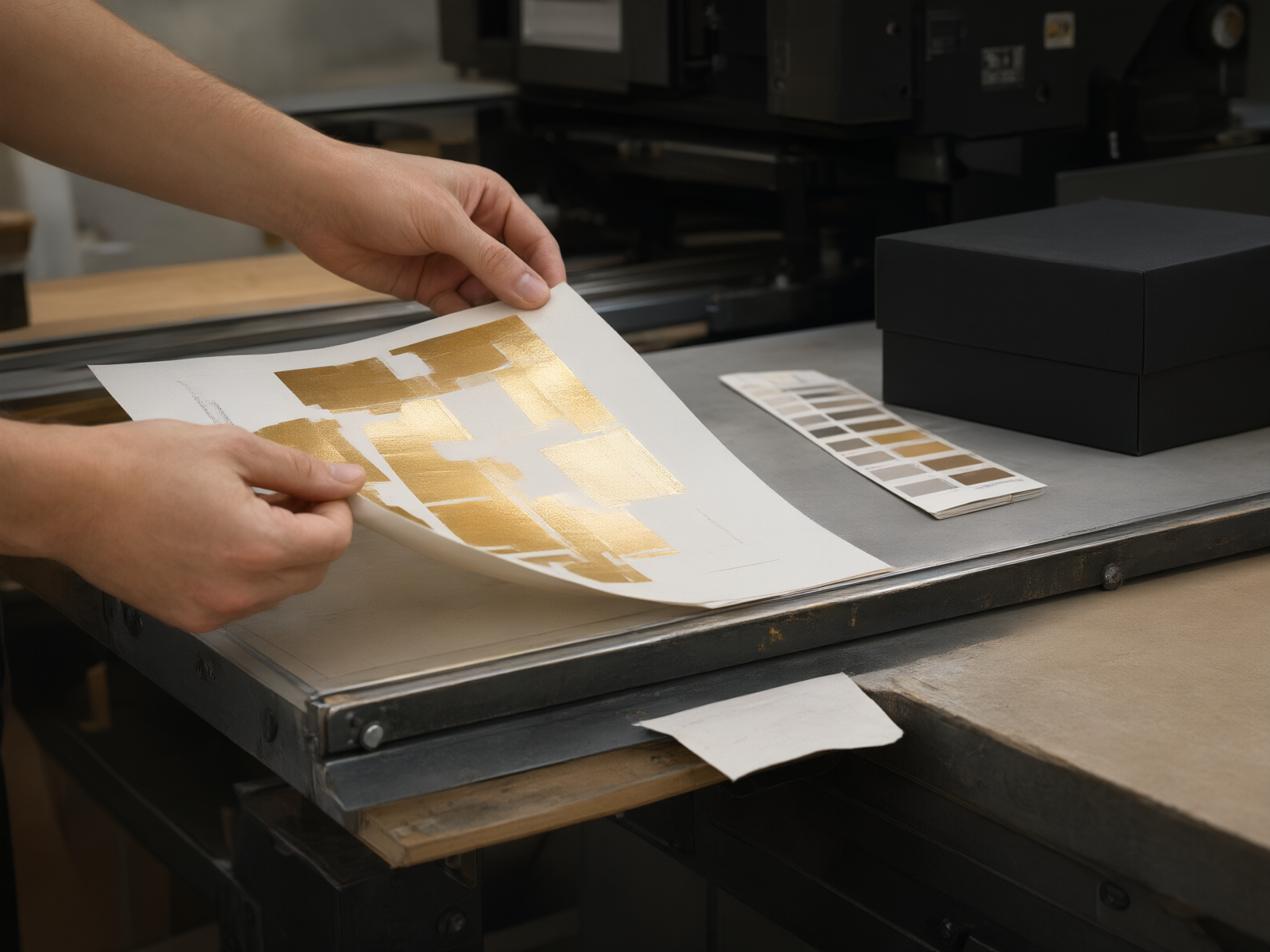
Printing defines the sheet: CMYK process colours, plus Pantone references for brand colours that cannot mix reliably from four inks. After the ink comes the effect chain: hot foil stamping, spot UV, embossing, digital enhancement. Each effect needs registration against what was printed and time to dry or set before the next layer is applied, and matte lamination can sit before or after selected effects, which changes the whole routing.
This is the reason effect decisions are fixed in planning. A buyer who approves the artwork without specifying foil versus tonal embossing will get a decision made by whoever runs the job. Colour proofs and physical samples exist to stop reprints: a press sheet with a Pantone that reads differently under box lighting is still wrong at 40,000 units, and only the pre-production comparison catches it.
Quality control and assembly are designed together
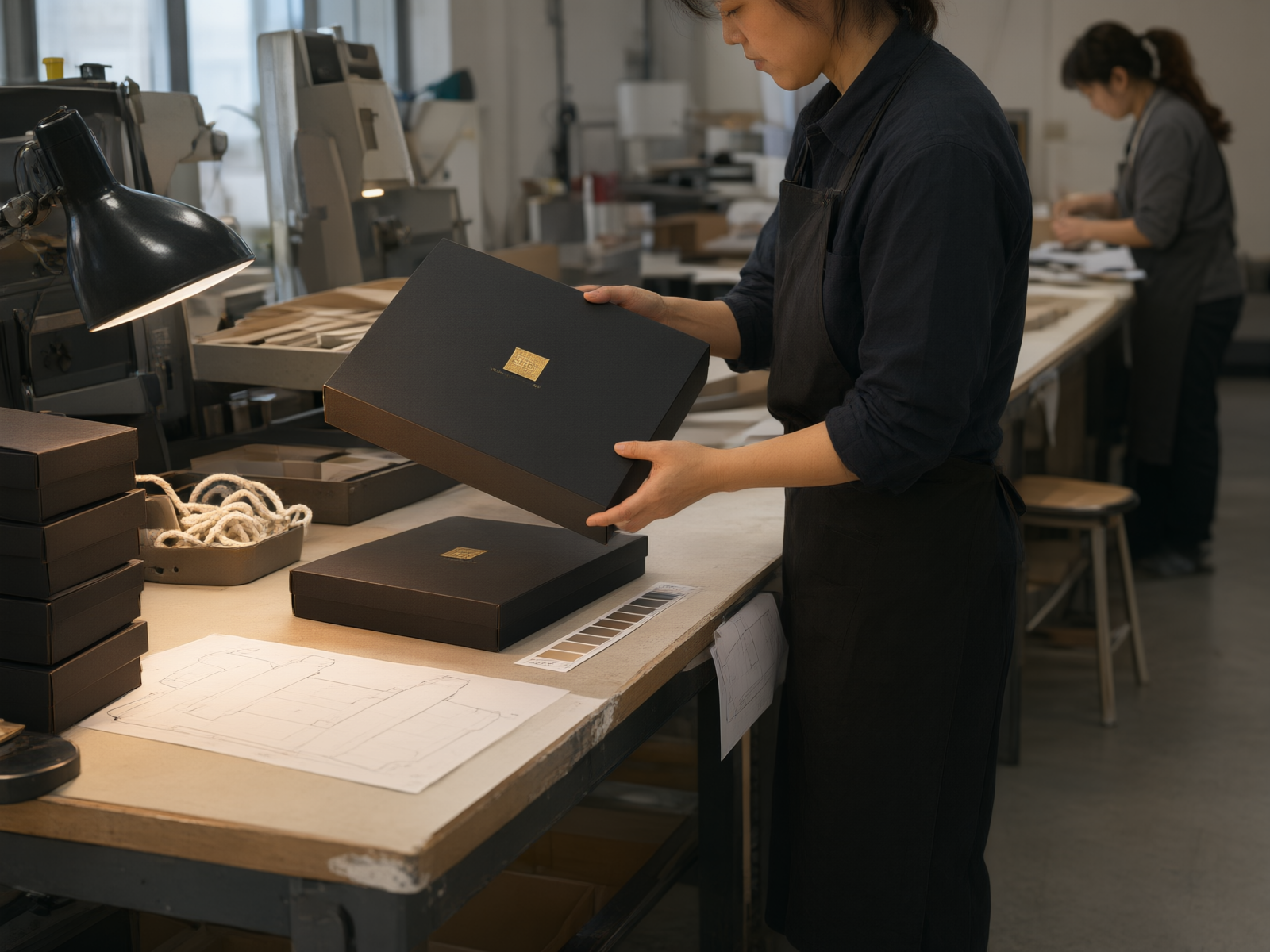
A multi-stage inspection system has to live at real positions in the schedule. Incoming material is screened before printing. Inline checks sit between departments, so sheets are not cut, creased, wrapped and lined before a registration or effect fault is visible. Final inspection is performed against the approved sample, which is what makes that sample worth the time spent on it.
Assembly is where rigid boxes show truth. Corner sharpness, seam alignment, lid fit, the straightness of a satin lining: defects that hide on a flat sheet become structural problems once the board is wrapped and the insert is glued. QC acceptance criteria are agreed before the first unit is wrapped, so the result is a gate, and a batch moves on when the gate clears.
Packing and delivery coordination finish the plan
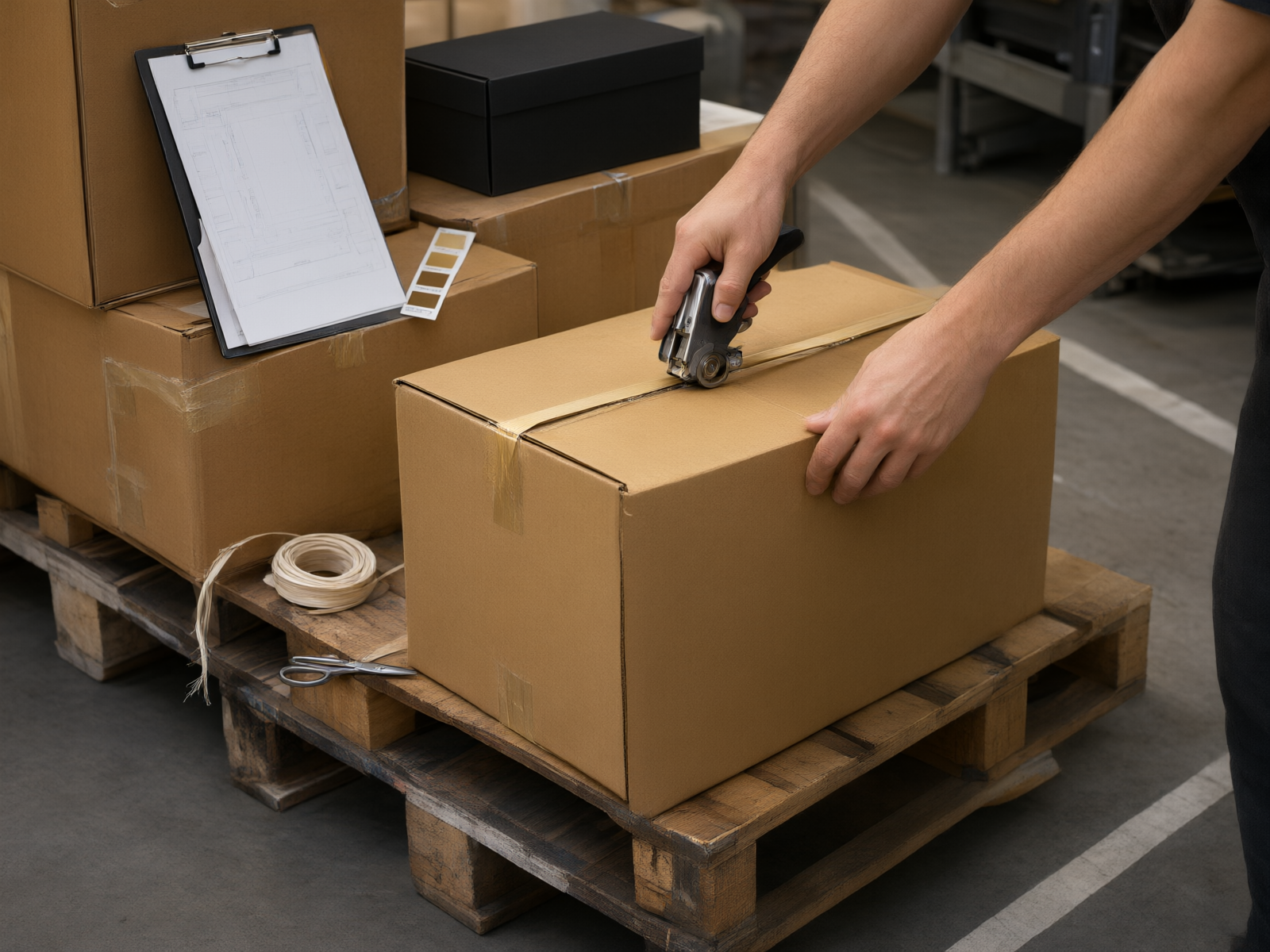
Export-standard packing is a specification of its own: inner carton quantities, master carton dimensions and weight, pallet configuration, marking. For a large program those choices are decided before packing day, because the count per carton determines how many cartons must pass through final inspection, and inspection capacity is finite. Freight mode follows from the same numbers. Sea freight, air freight and express courier each impose different carton strength, pallet height and documentation expectations, and door-to-door service means commercial invoice, packing list and shipping marks all describe the same pallets the factory actually built. Mixed programs consolidate at this stage, with one set of paperwork reconciling several production lines.
Judging the planning, not only the press
Execution quality is visible at delivery. Planning quality is visible earlier, and it is what a buyer can interrogate before any machine starts: a dieline checked against final fitted dimensions, a physical sample signed before material is cut, a material specification that the finishing departments do not have to interpret. Factories that talk about those items in the first conversation are managing the same program with fewer surprises later.
Interested in Custom Paper Tube Packaging?
Send us your specifications and get a detailed quote within 24 hours.
Get a Free Quote