A Step by Step Look at Custom Packaging Production
Custom paper packaging is not a commodity you order and receive. It is a manufacturing process that moves through distinct stages, each with its own technical requirements and decision points. This guide walks through the complete production workflow for custom boxes, bags, tubes and cartons from concept to finished product.
Custom paper packaging is not a commodity you order and receive. It is a manufacturing process that moves through distinct stages, each with its own technical requirements and decision points. Understanding how a custom box or bag moves from concept to finished product helps B2B buyers make informed decisions about timelines, costs, and quality control.
This guide walks through the complete production workflow for custom paper packaging, using real manufacturing practices as reference points. The steps apply whether you are producing rigid gift boxes, paper tubes, folding cartons, or custom paper bags.
Pre-Production: From Requirements to Approved Design
Customer Requirements and Product Measurements
Every custom packaging project begins with a clear specification. Buyers provide dimensions, quantity, intended use, and design references. At this stage, the packaging manufacturer reviews the requirements against production capabilities and identifies any technical constraints.
Product measurements must account for both the contents and the packaging structure. A rigid gift box, for example, requires internal dimensions that fit the product snugly, plus external dimensions that reflect the board thickness and finishing layers. Getting these measurements right at the start prevents costly revisions later.
Structural Development
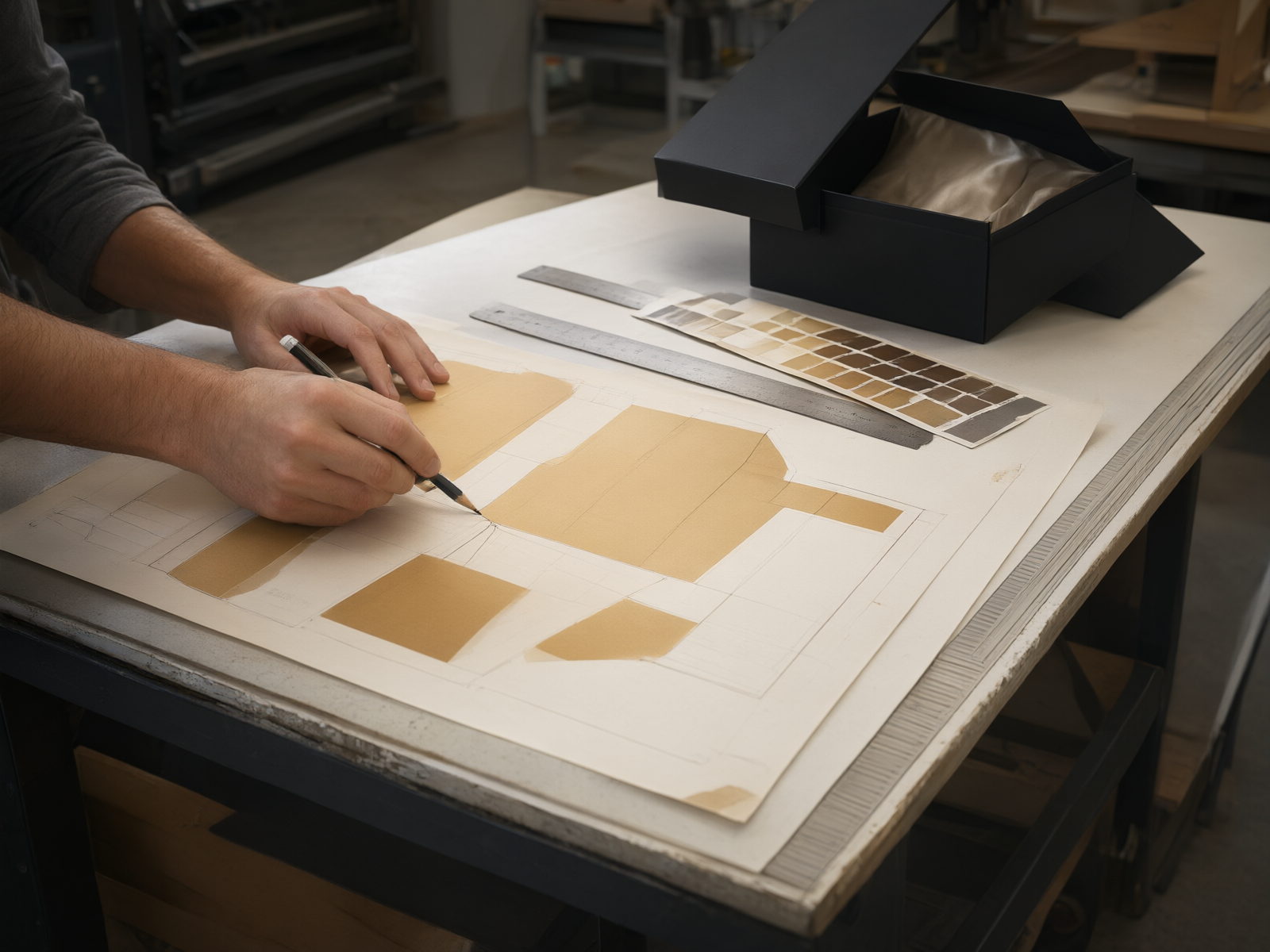
Once the basic requirements are clear, the structural design begins. This involves creating a dieline — the flat pattern that will be cut, folded, and assembled into the final package. Structural development determines how the box opens, closes, and holds its shape under load.
For rigid boxes, the structure typically involves a separate lid and base, with precise tolerances for fit. For folding cartons, the structure must balance strength with efficient flat-packing for shipping. The structural engineer considers material grain direction, glue application points, and assembly sequence.
Material Selection
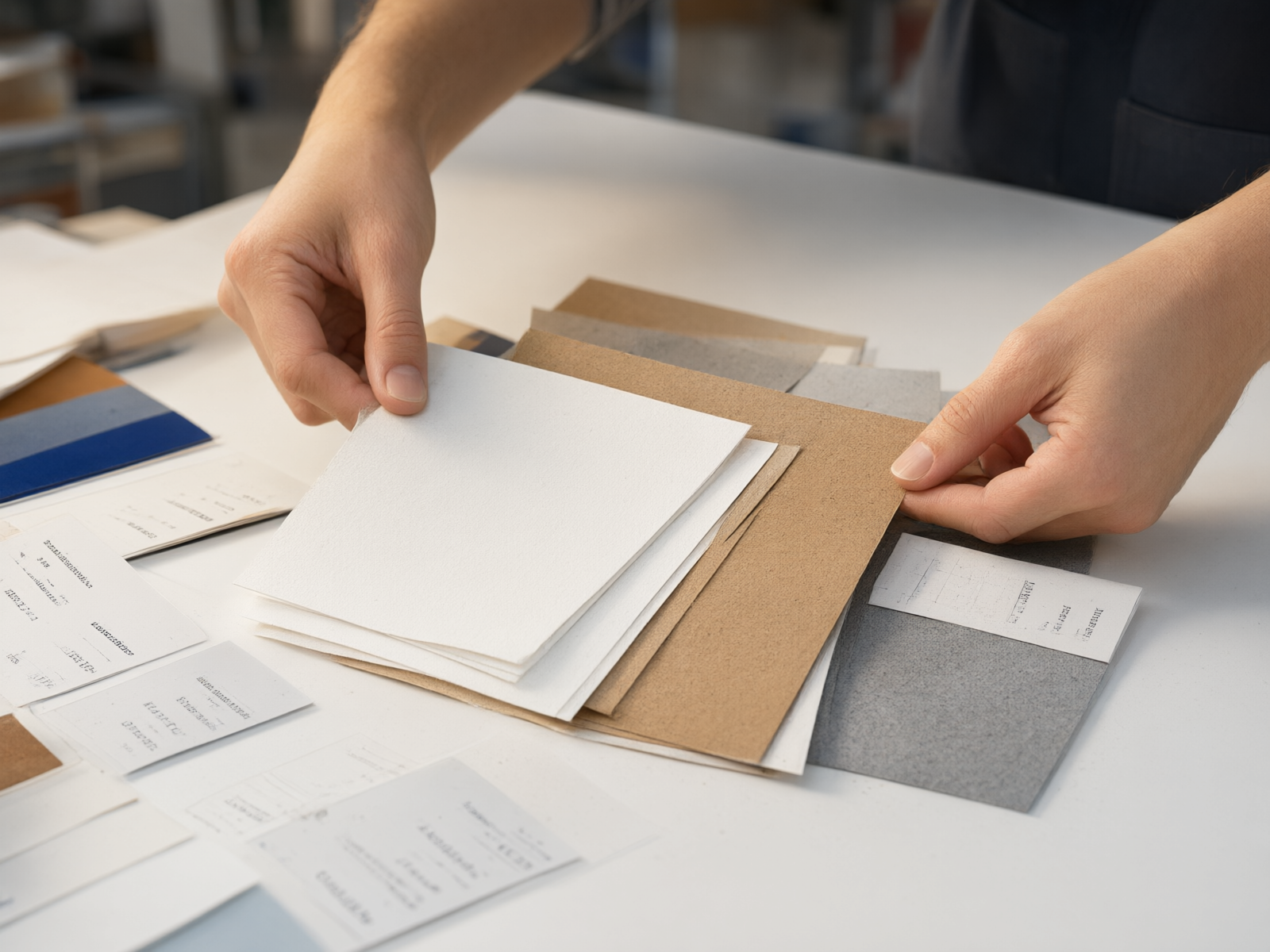
Material choice affects appearance, durability, cost, and sustainability. Common options include:
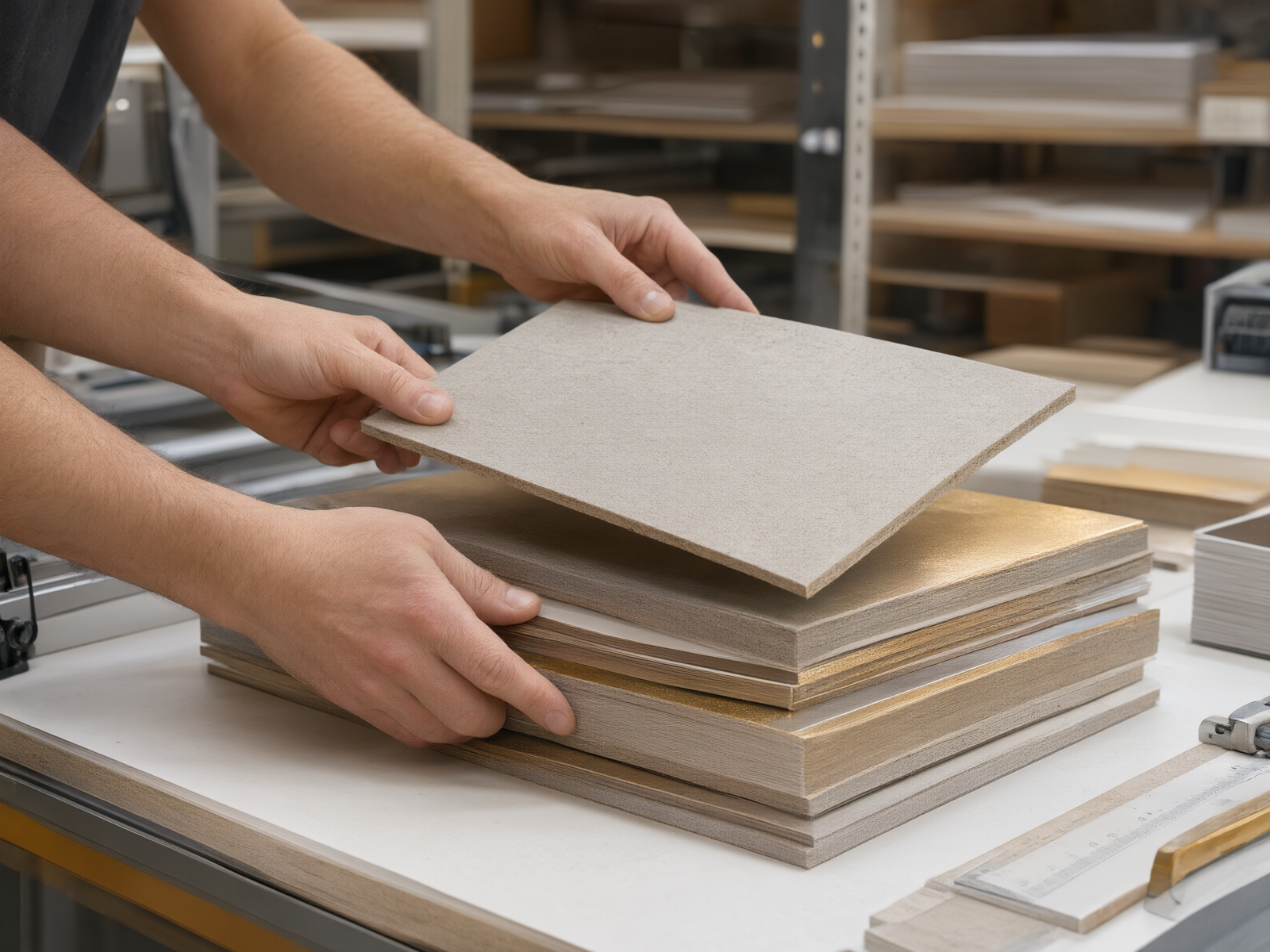
Art paper (coated on one or both sides) for high-quality printing. Kraft paper for natural appearance and strength. Chipboard (grey board) for rigid box structure, available in various thicknesses from 800gsm to 1500gsm. Specialty papers with texture, metallic finish, or unique color.
The material selection depends on the product being packaged, the desired aesthetic, and the budget. A luxury cosmetic box might use 1500gsm chipboard wrapped in textured paper, while a food packaging box might use food-grade kraft paper with a protective coating.
Artwork Preparation
Artwork preparation involves placing all design elements — logos, text, barcodes, regulatory information — onto the dieline. This requires coordination between the buyer’s design team and the packaging manufacturer’s prepress team.
Key considerations include bleed areas, safe zones for folding and cutting, color separation for CMYK and Pantone spot colors, and resolution requirements for printing. The manufacturer reviews the artwork for printability and suggests adjustments if needed.
Prototyping: Validation Before Mass Production
Prototype or White Sample
Before committing to full production, a physical sample is created. A white sample (also called a dummy sample) is an unprinted prototype that verifies the structure, size, and fit. It allows the buyer to hold the actual package, test how the product sits inside, and confirm that the opening and closing mechanism works as intended.
For complex structures like magnetic closure boxes or telescoping rigid boxes, the white sample is essential. It reveals whether the tolerances are correct and whether the assembly sequence is feasible at production scale.
Sample Approval
Once the white sample is approved, a printed sample may be produced if the buyer wants to verify color accuracy, finishing effects, and overall appearance. This pre-production sample uses the actual materials and printing processes planned for mass production.
Sample approval is a critical gate. Once the buyer signs off, the manufacturer proceeds to mass production with confidence that the specifications are correct. Changes after this point typically require new samples and may delay the timeline.
Production: Printing, Finishing, and Assembly
Printing
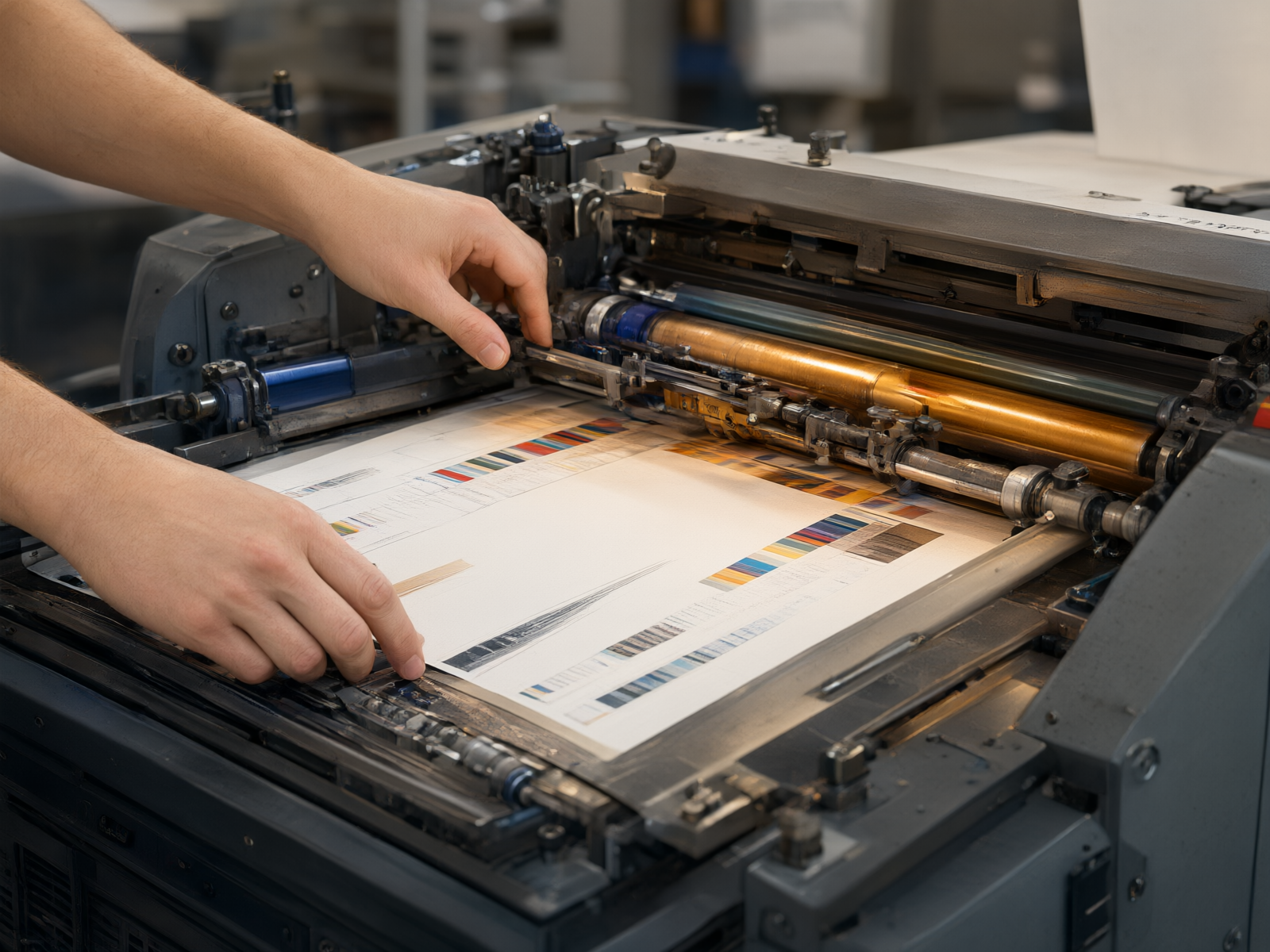
Printing transfers the artwork onto paper. The most common method for custom packaging is offset printing, which delivers precise color reproduction and sharp detail. Offset printing uses separate plates for each color — typically CMYK (cyan, magenta, yellow, black) plus any Pantone spot colors.
For simpler designs or shorter runs, digital printing or flexographic printing may be used. The choice depends on the design complexity, color requirements, and quantity.
Finishing
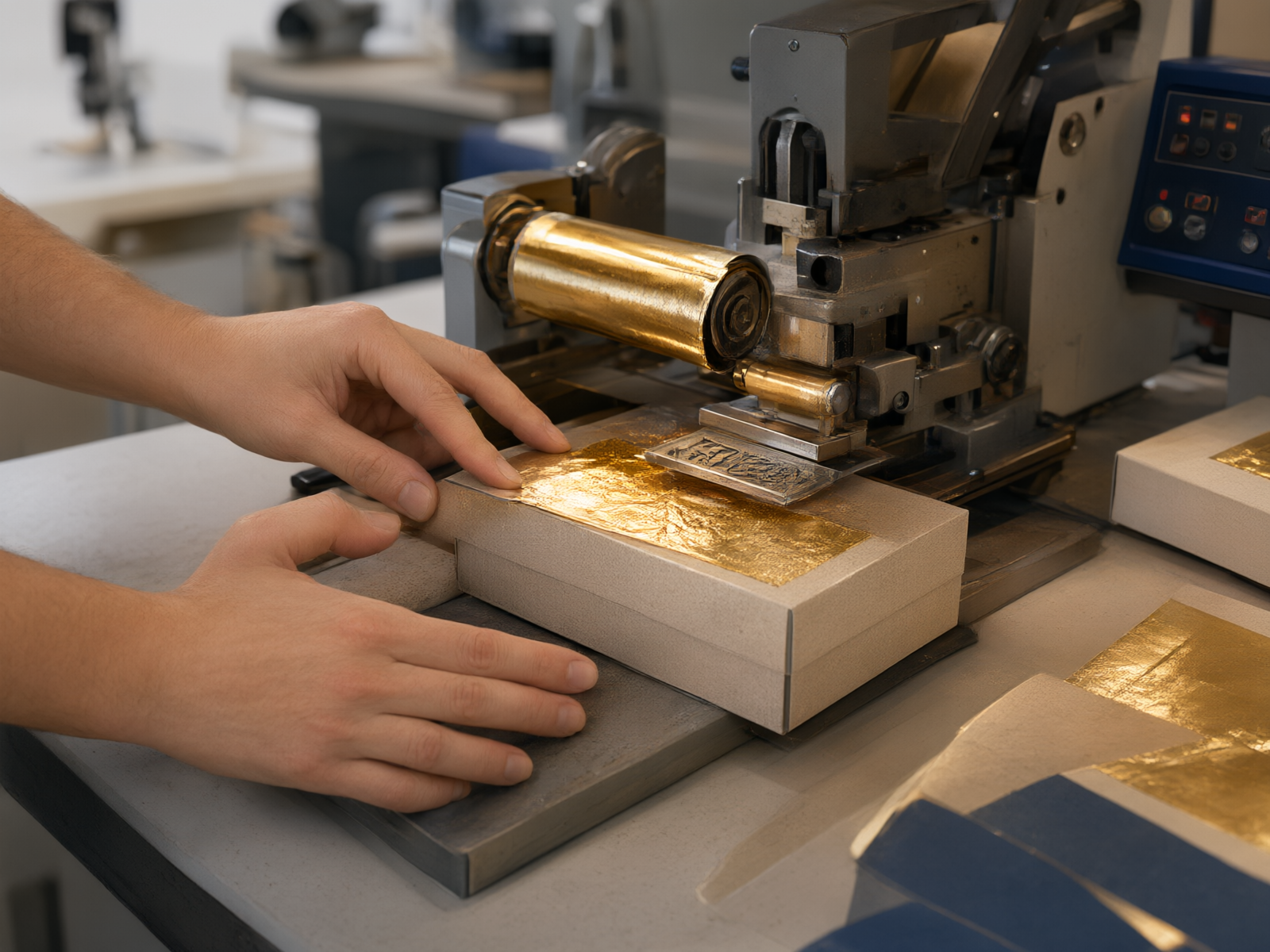
Finishing processes add visual and tactile effects that elevate the packaging. Common finishing options include:
Lamination (matte or gloss) for protection and surface feel. Hot foil stamping for metallic or pigmented foil effects. Spot UV for localized gloss highlights. Embossing or debossing for raised or recessed textures. Scodix for digital enhancement with variable relief and texture.
Finishing is applied after printing, either inline or as a separate pass through the press. Each effect adds cost and production time, so the selection should align with the brand’s positioning and budget.
Die Cutting
Die cutting separates the printed sheet into individual components along the dieline. A custom die (steel rule die) is created for each unique box style. The die cuts the outline, fold lines, and any perforations or windows.
Precision is critical here. Misaligned cuts result in boxes that don’t fold correctly or have visible gaps at the seams. Modern die-cutting machines maintain tight tolerances, typically within ±0.2mm.
V Grooving
V grooving is a specialized process used primarily for rigid boxes. It involves cutting a V-shaped groove into the chipboard, which allows the board to fold at a precise 90-degree angle with a sharp, clean edge. This technique is essential for high-end rigid boxes where crisp corners are a quality marker.
The V grooving process requires precise depth control. Cut too deep, and the board breaks through; cut too shallow, and the corner doesn’t fold cleanly.
Box Making
Box making is the assembly of the cut and grooved components into the final structure. For rigid boxes, this involves wrapping the printed paper around the chipboard structure, applying glue at precise locations, and pressing the assembly until the adhesive sets.
For folding cartons, the box making process is simpler — the carton is folded and glued in a single pass through a folding-gluing machine. The machine folds the panels, applies glue to the flap, and presses it into place.
Assembly
Assembly includes any additional steps required to complete the package. This might involve inserting a magnetic closure, adding a satin lining, attaching a ribbon or handle, or placing an insert (such as a foam tray or cardboard divider) inside the box.
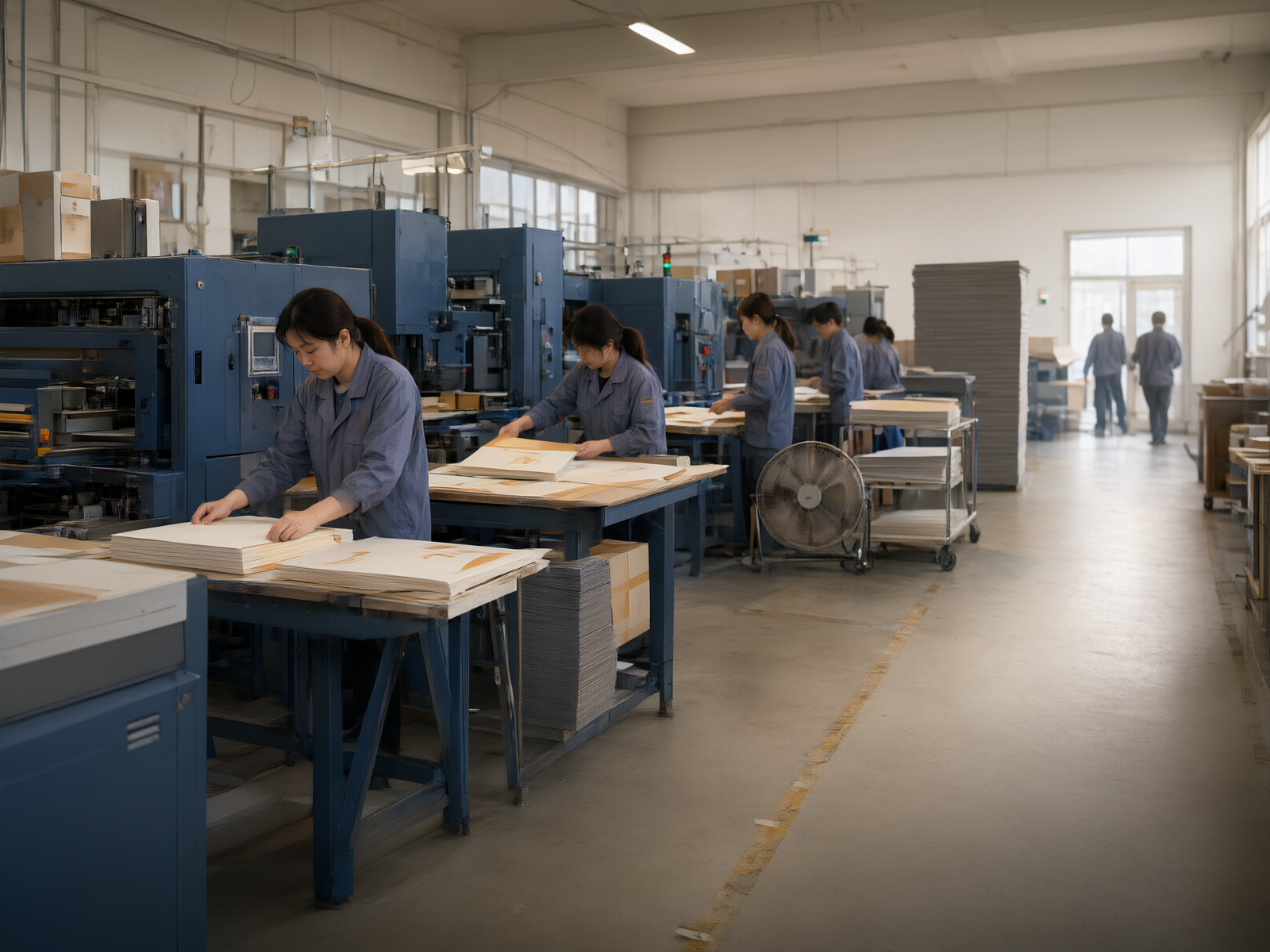
Assembly is often labor-intensive, especially for complex rigid boxes with multiple components. Manufacturers plan the assembly sequence to maximize efficiency and minimize handling damage.
Final Stages: Quality Control and Delivery
Quality Inspection
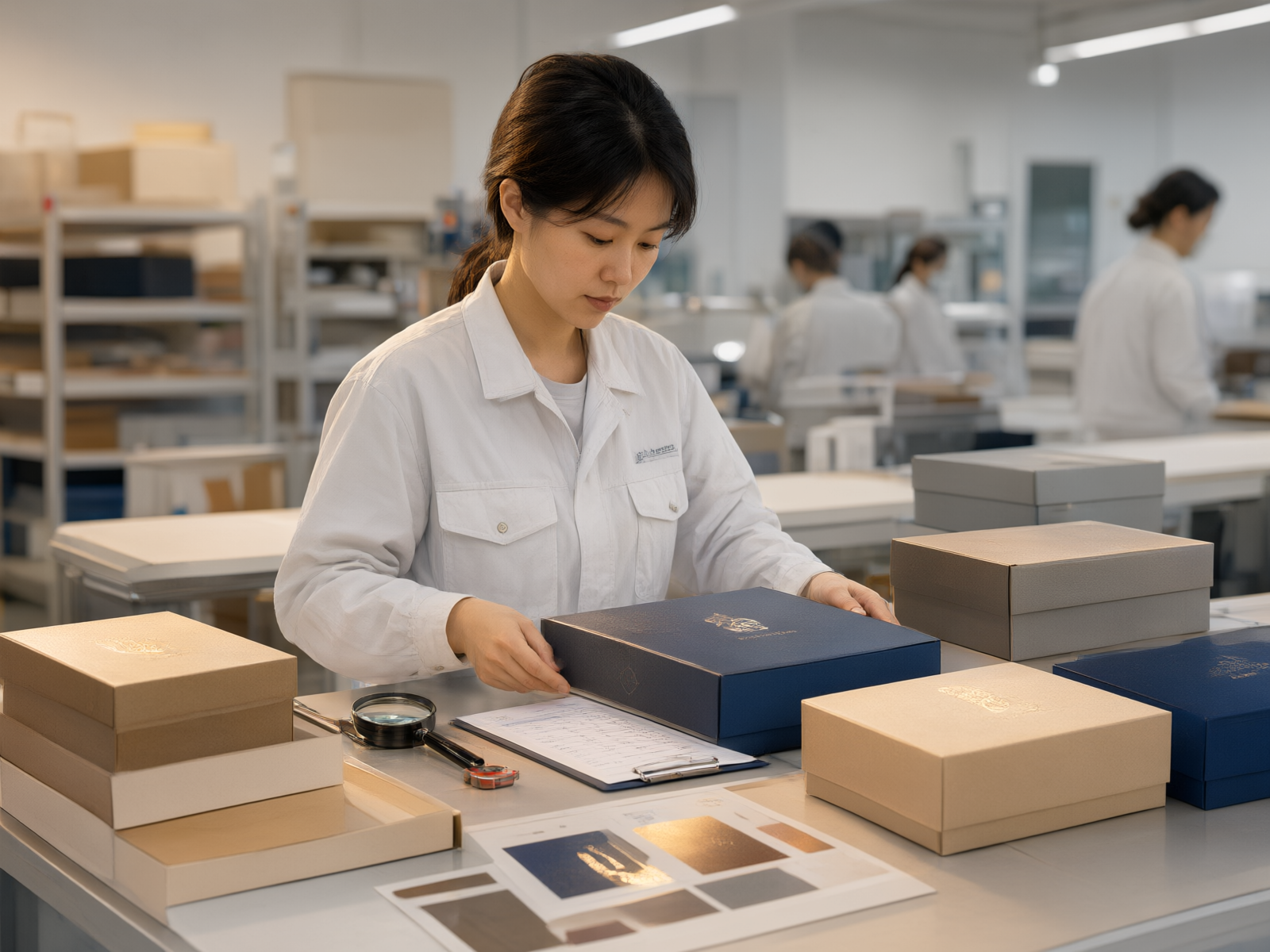
Quality inspection occurs at multiple stages throughout production, not just at the end. Incoming materials are checked for defects, printing is inspected for color accuracy and registration, finishing is verified for alignment and adhesion, and the final assembled package is checked for structural integrity and appearance.
A multi-stage inspection process catches defects early, when they are easier and less costly to correct. Final inspection before packing ensures that every unit meets the agreed standard.
Packing
Packing for shipment requires careful planning. Packages are typically packed in export cartons with protective materials to prevent damage during transit. The packing method depends on the product type, quantity, and shipping mode.
For rigid boxes, individual poly bags protect against moisture and scratching. Cartons are stacked on pallets and secured for container loading. The packing plan considers weight distribution, container utilization, and ease of unpacking at the destination.
International Delivery
International delivery involves export documentation, customs clearance, and logistics coordination. Packaging manufacturers with export experience handle the full process, from preparing commercial invoices and packing lists to arranging sea freight, air freight, or express courier delivery.
Door-to-door delivery service simplifies the process for buyers, who receive the shipment at their facility without managing multiple logistics providers. Lead times vary by shipping method — sea freight typically takes 25-35 days, air freight 5-7 days, and express delivery 3-5 days.
Conclusion
Custom packaging production is a structured process with clear decision points at each stage. From initial requirements through structural design, material selection, sampling, printing, finishing, and final assembly, each step builds on the previous one. Understanding this workflow helps buyers communicate more effectively with their packaging supplier, anticipate timelines, and identify potential issues before they become costly problems.
The manufacturers who deliver consistent quality are those who treat each stage as a checkpoint — verifying specifications, validating samples, and inspecting output at every step. For B2B buyers, working with a manufacturer who follows this disciplined approach reduces risk and ensures that the final packaging meets both functional and aesthetic requirements.
Interested in Custom Paper Tube Packaging?
Send us your specifications and get a detailed quote within 24 hours.
Get a Free Quote