Custom Paper Bags: A Complete Buyer's Guide for Retail & Luxury Brands
A technical guide covering the six variables that determine paper bag performance: paper weight and base material, handle types and load limits, printing and finishing, bottom construction, sampling, and RFQ specification.
Custom paper bags rarely get the engineering attention they deserve. Most buyer conversations start with a design file and a Pantone number, then push technical questions down to the sample stage. That ordering is what generates expensive surprises, because almost every visible problem in a finished bag — sagging handles, ink that looks washed out on kraft edges, bottom seams that split at 2 kg — is traceable to a specification decision made earlier. Based on our experience producing paper packaging for retail, fashion, jewelry, and cosmetics brands across the US, Europe, and the Middle East, this guide walks through the six variables that determine whether a bag performs. Procurement teams who quote with these specifications in hand can also screen suppliers faster.
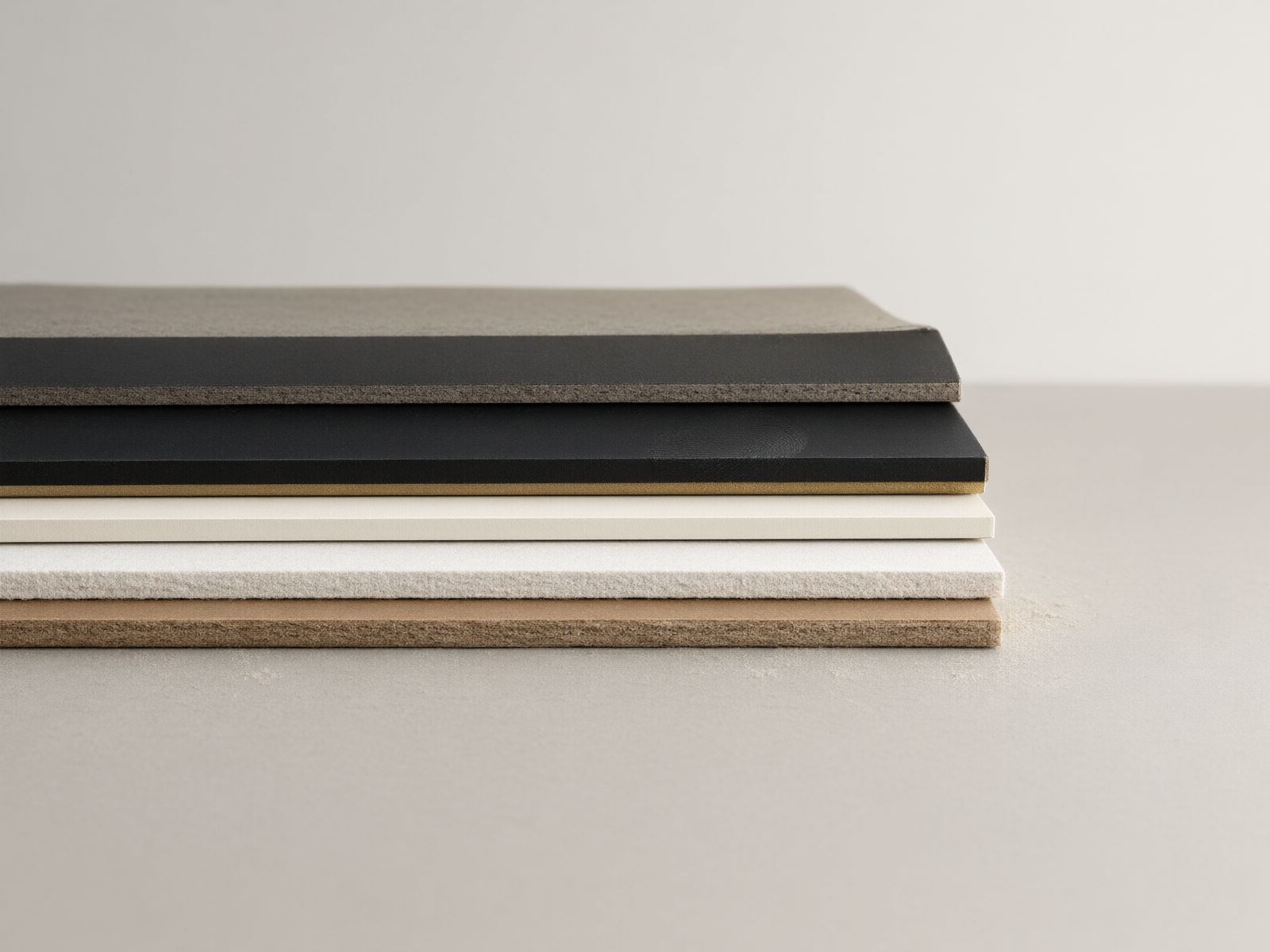
Paper Weight and Base Material
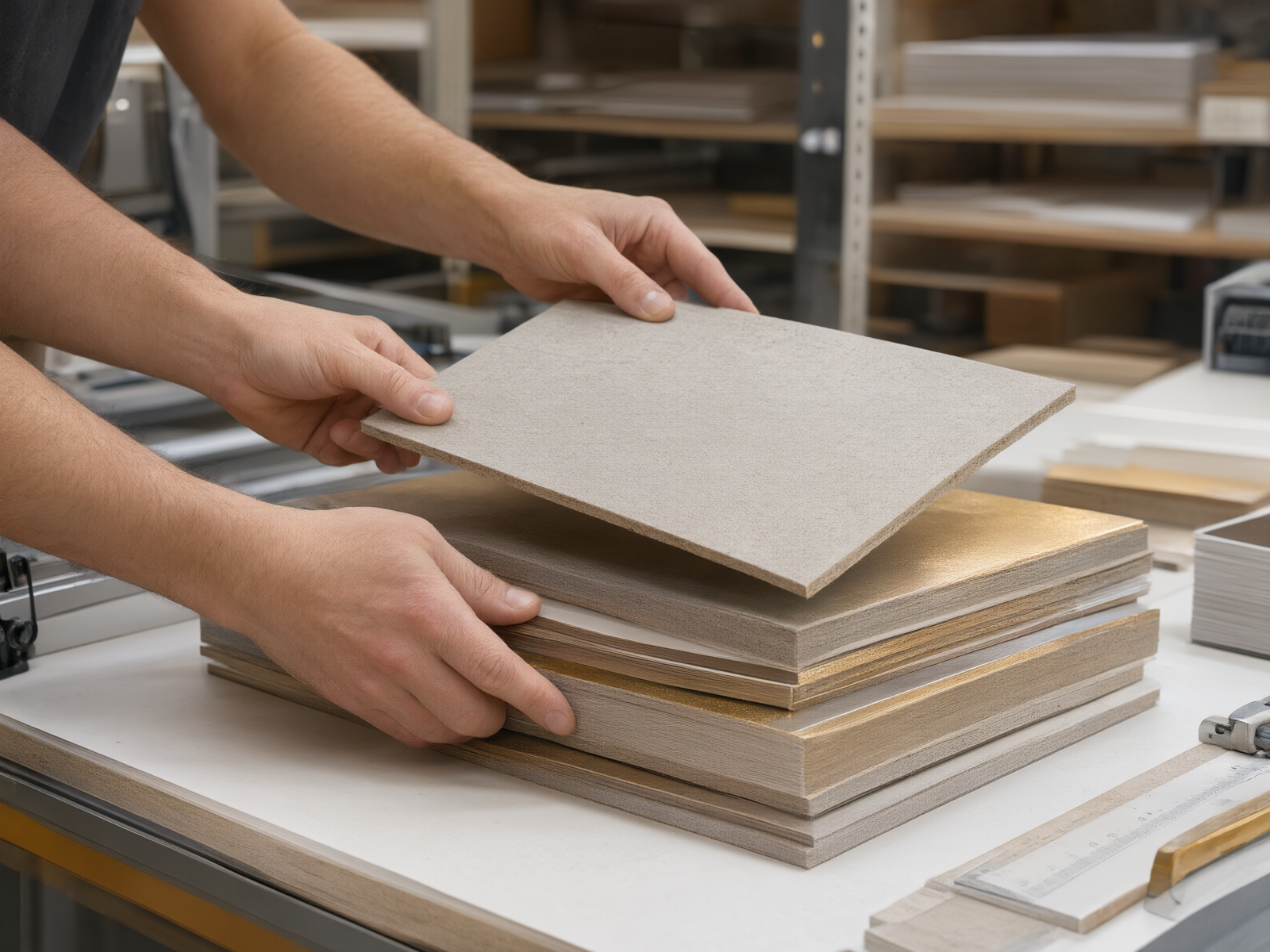
Paper weight is measured in GSM (grams per square meter) and drives everything downstream: how the bag hangs, how it prints, and how it folds. For lightweight retail bags carrying a few small items, 120–140 GSM is standard. Boutique shopping bags usually sit at 170–250 GSM. Structured luxury bags with a reinforced base typically use 250–300 GSM. Above 300 GSM the bag moves into presentation territory and the cost curve steepens sharply.
Two base stocks dominate. White kraft has a smooth, recyclable surface and is the most common choice for fashion shopping bags. Brown kraft carries a natural, unbleached look favored in specialty food and organic retail. Art paper (coated stock) accepts deeper color saturation, sharp fine-line detail, and foil work noticeably better than uncoated kraft, which is why coated stock is nearly universal in luxury applications.
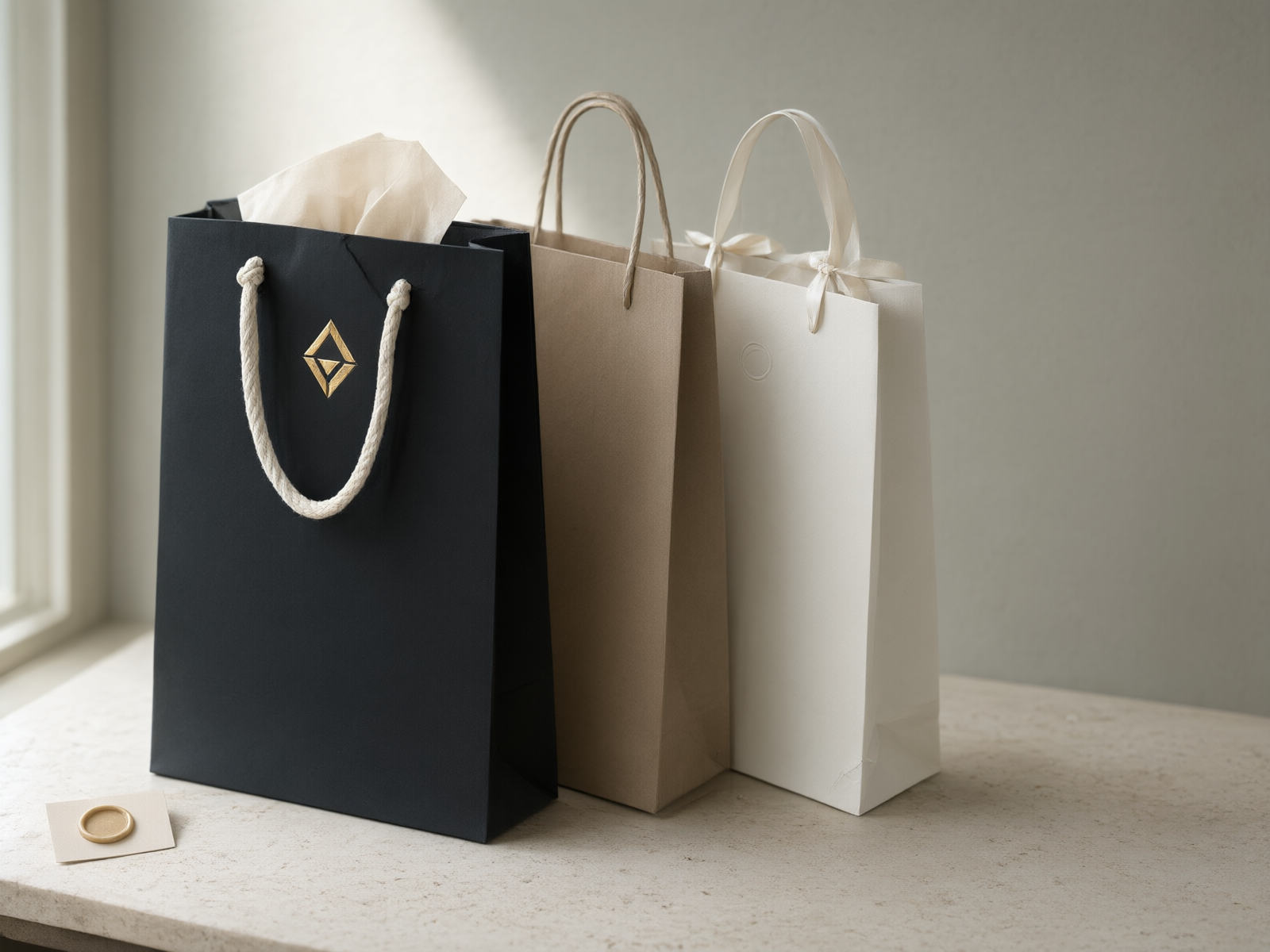
A real build from our factory line makes the relationship concrete: a 200 GSM white kraft fashion shopping bag at 330 × 260 × 120 mm runs matte lamination over CMYK offset plus a Pantone spot color, finished with a cotton rope handle. That combination — medium-to-heavy stock, coated-look finish, precise color work, load-bearing handle — is the current baseline for premium retail.
Handle Types and Structural Limits
Handles are usually specified by appearance, but the real constraint is load-bearing per centimeter of attachment.
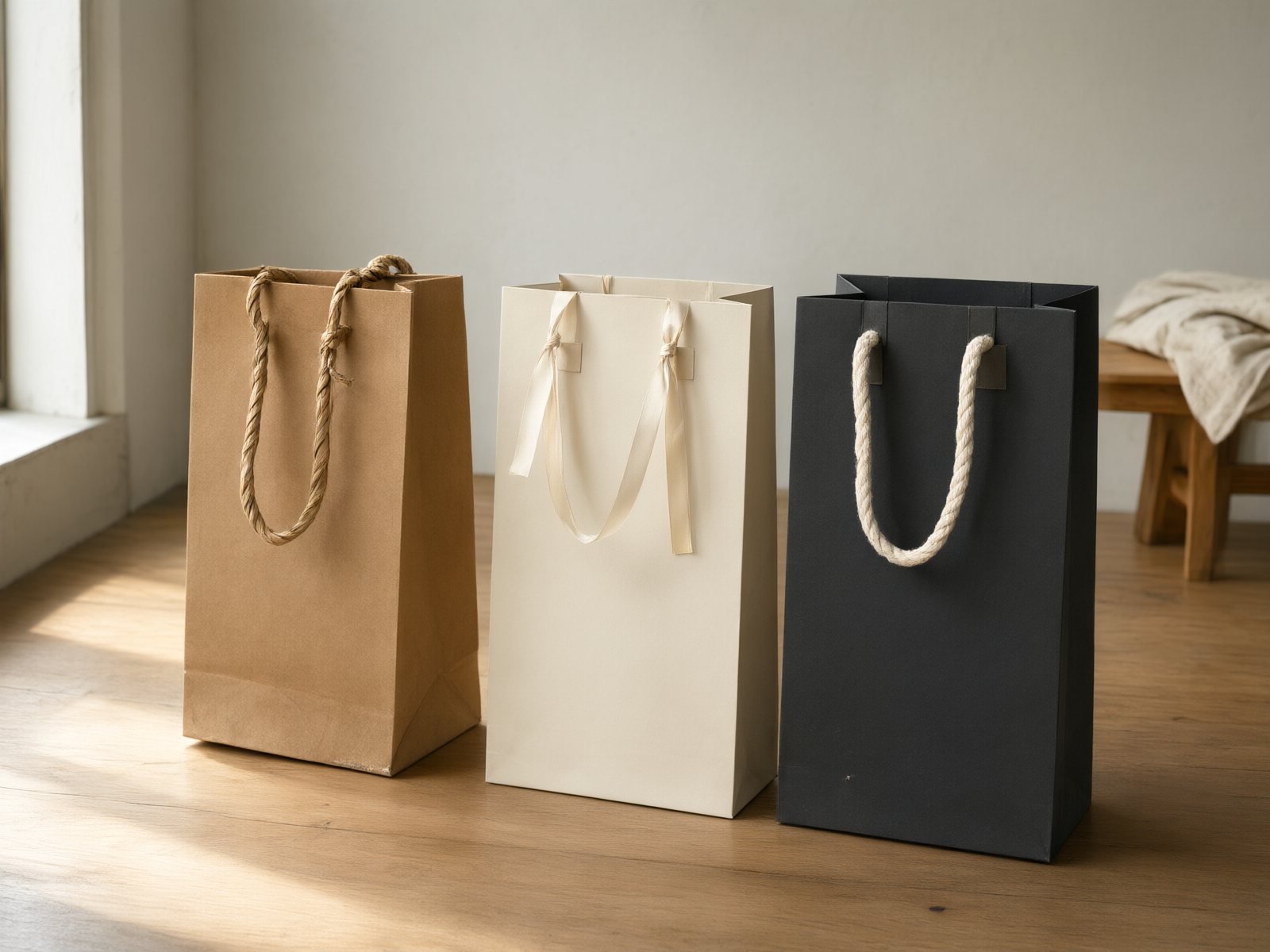
Twisted paper handles are the lowest-cost option and compost with the bag. They carry two to three kilos reliably on 170 GSM or heavier paper when the glue tab is sized correctly. The failure point is moisture — a light rain softens the twist and loosens the glue.
Ribbon handles (satin, grosgrain, or cotton webbing) are attached to an interior reinforcing patch and are the norm for perfume, jewelry, and cosmetics bags. Ribbon looks refined within a 1.5 kg load; above that, the ribbon compresses and the interior patch shows visible tension marks through the paper.
Cotton rope is the default for luxury retail. A 4–5 mm knotted cotton rope with a reinforced interior tab sits comfortably on the shoulder and is safe up to 5–8 kg depending on paper weight. The trade-off is amplification: a rope handle on a low-GSM bag exaggerates the crease line, and no finishing choice will hide that deformation. This is why cotton rope appears almost exclusively on 250 GSM and above.
Flat paper handles, die-cut or folded from card stock, suit garment and wine bags that need to stack flat in transit. The structural risk concentrates at the die-cut edge, so the design must widen the grip zone rather than cut a thin slot.
Printing, Foil, Embossing, and Lamination
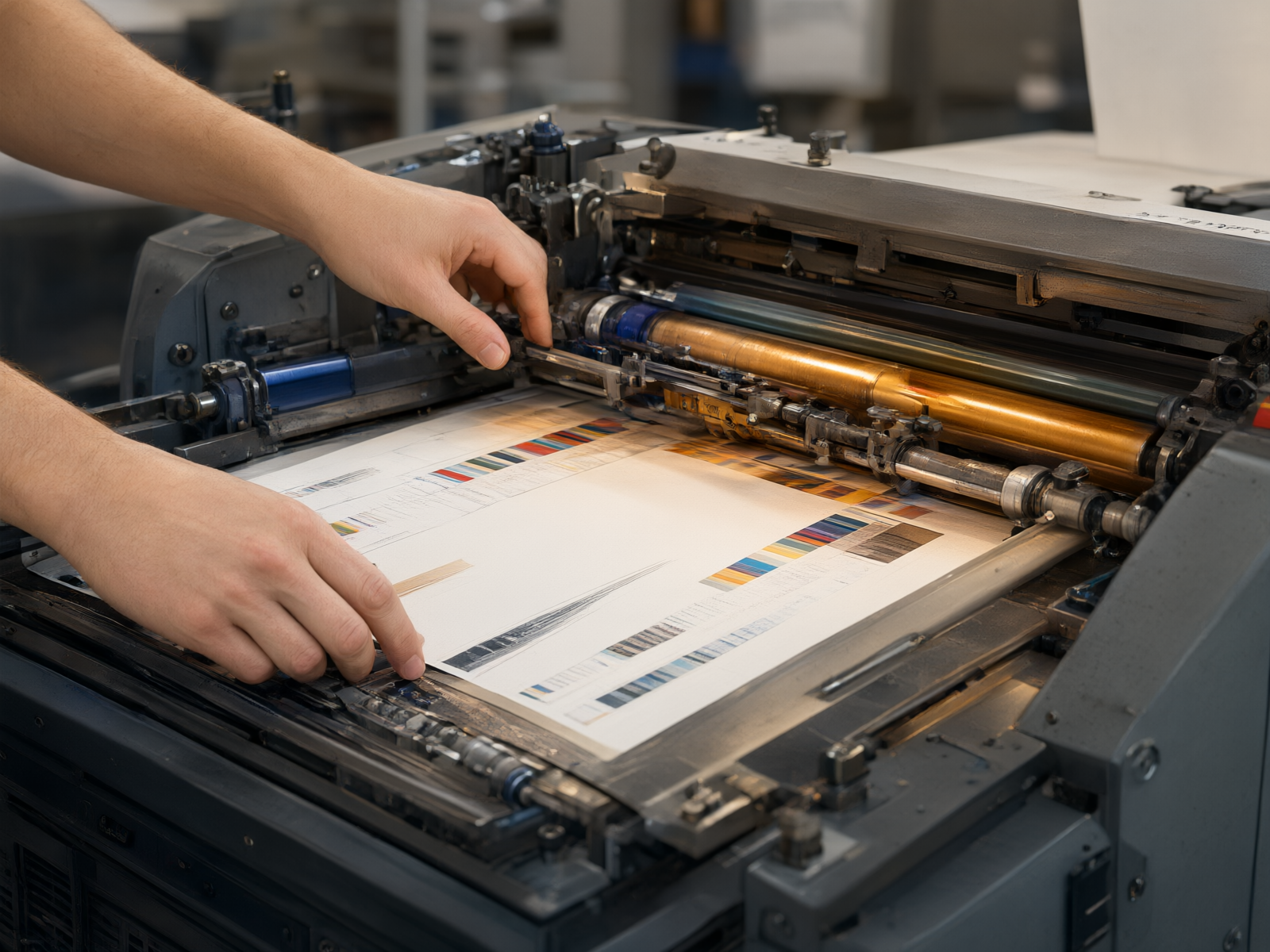
Offset printing is standard at volumes above 1,000 pieces; flexo covers simple one- to three-color runs on kraft; digital fills below that, with the caveat that true Pantone matching and metallic inks remain constrained.
Foil stamping (hot stamp) presses metallic or matte film into the paper surface. It reads cleanly on dark stocks where ink alone would disappear. Embossing and debossing create raised or recessed tactile marks without ink, and they only hold definition on stocks thick enough — usually 250 GSM and up — to support relief.
Lamination is the least visible but most structural finishing layer. Matte lamination protects against fingerprint oil and scuffing while giving the bag a soft appearance; gloss intensifies color and is common on food and gift bags; soft-touch film adds a velvet hand feel that is the standard for premium cosmetic and watch brand packaging.

Bottom Construction and Load Capacity
Four bottom constructions cover most needs: straight glue, V-fold, double-reinforced, and rigid base board.
Straight glue is the economical choice and is sufficient up to about 3 kg when the paper is 200 GSM or heavier. V-fold produces a cleaner shape when empty and distributes weight slightly better. Double-reinforced bottoms add a second adhesive pass for heavier retail loads. Rigid bases require an internal board plus heavier paper — expect a 30–60 percent unit cost increase versus standard construction — and are reserved for dense gift sets and bottle carriers.
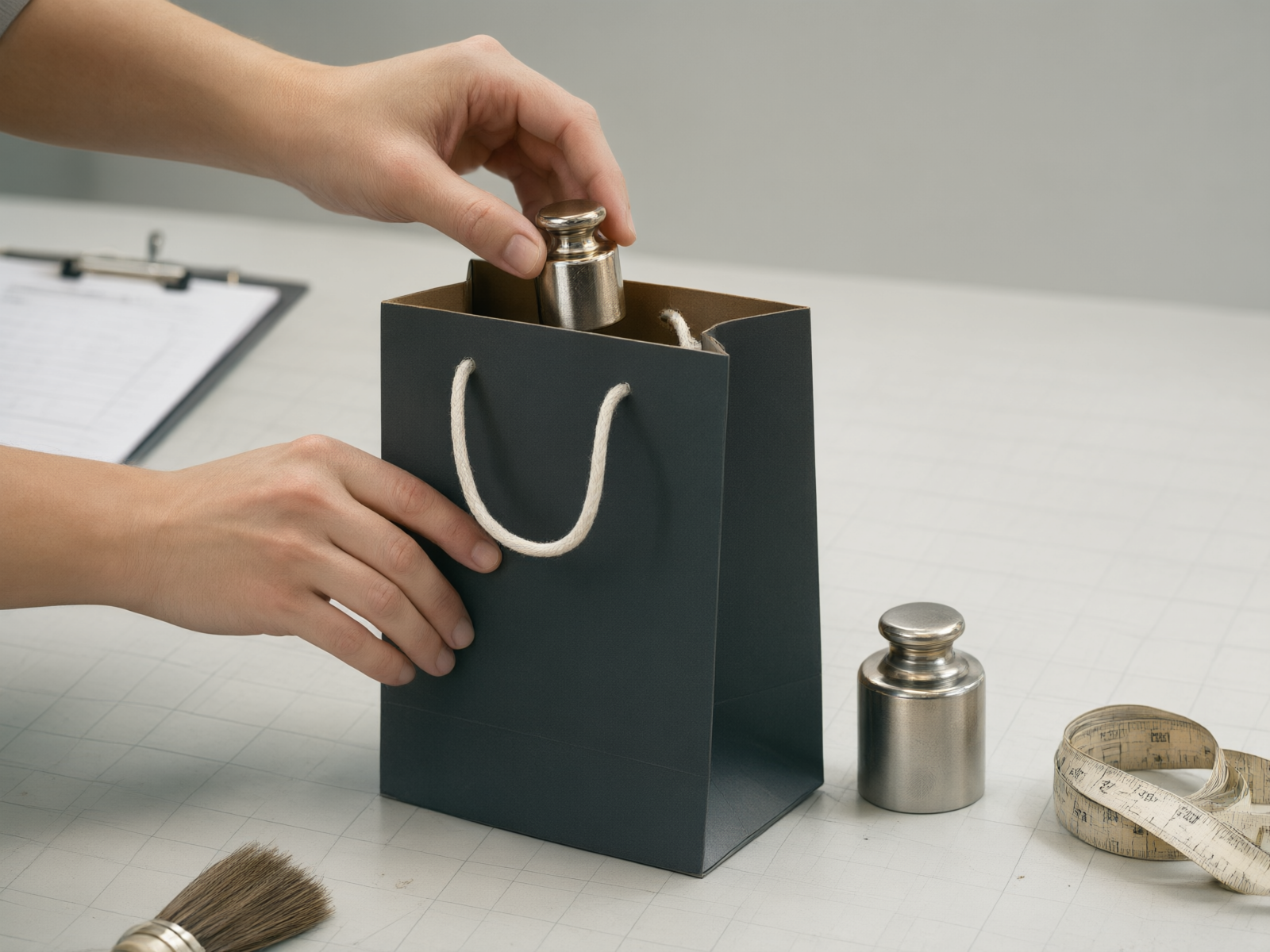
For any bag carrying bottles, ceramics, or dense product, specify a load test on the production sample: fill to the stated working weight, hold the bag by the handle for ten seconds, and inspect both the handle attachment point and the corner creases. A correctly engineered bag survives that test without visible deformation.
Sampling
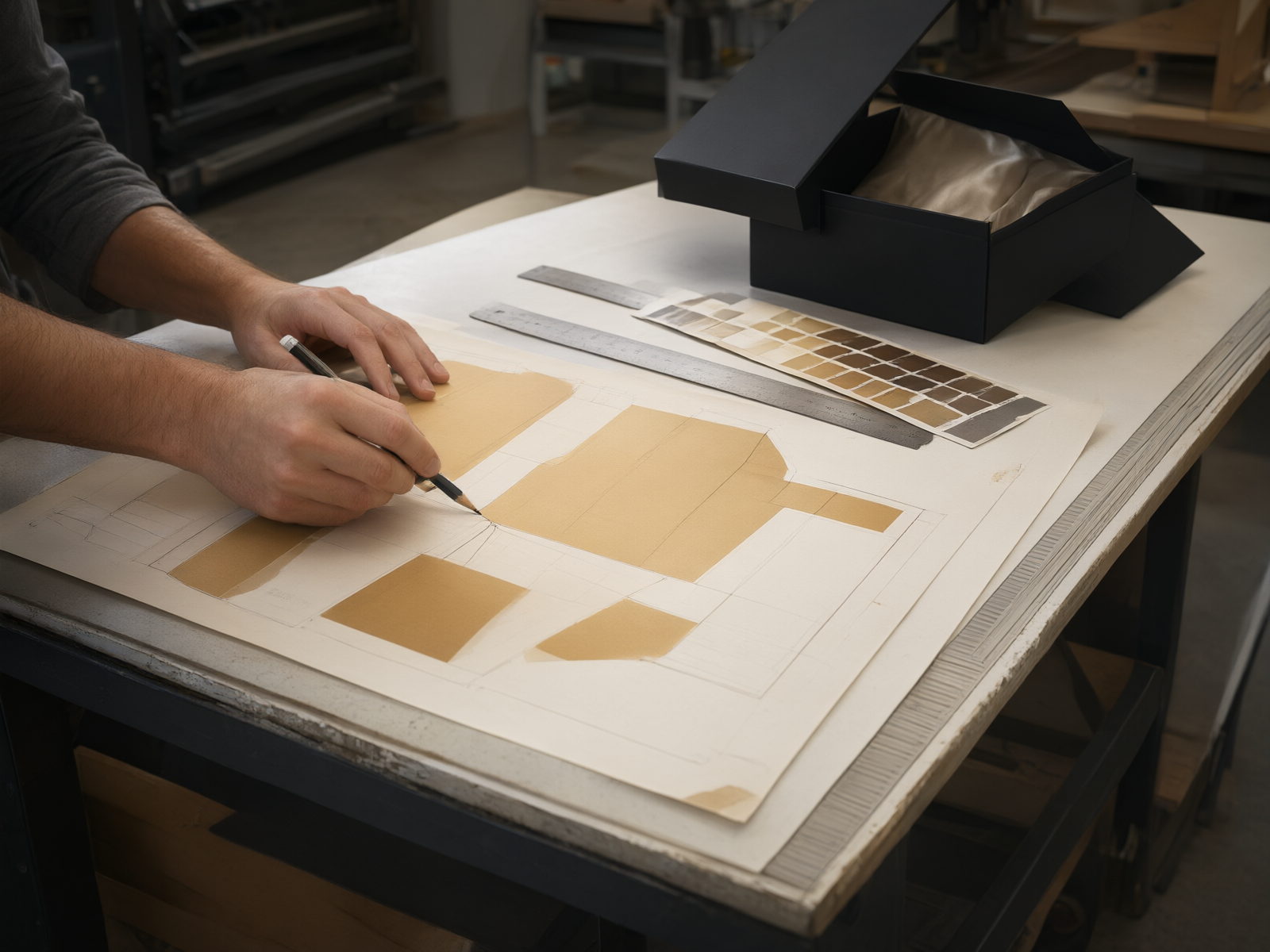
Sampling is the last chance to prevent a bulk failure. The minimum is a digital proof for color and layout plus a physical pre-production sample for construction. Confirm in writing that the sample is identical to bulk in paper source, ink lot, glue formula, and lamination temperature — a 5° variation in laminating temperature changes the hand feel of soft-touch film on some stocks, and only a physical sample exposes that. Order a full sample of every size and every color variant, not just one master per line. This adds 7–10 days to the timeline and usually prevents weeks of rework.
How to Use This Guide in an RFQ
Cost and quality are decided in the specification stage, not the printing stage. Paper weight, handle choice, finishing stack, bottom construction, and an approved production sample are the variables that separate a bag that reads expensive from one that reads cheap. We recommend that buyers list the target GSM, chosen handle type, finishing stack, bottom build, and the sample requirement clearly on the first RFQ, and treat any supplier who ignores one of those five items as insufficient — regardless of unit price.
BOYU LUXE PACK is a direct paper-bag manufacturer based in Shenzhen. Custom paper bags start at MOQ 200 pieces and include free structural and graphic design support, with pre-production samples shipped worldwide for verification before bulk approval.
Interested in Custom Paper Tube Packaging?
Send us your specifications and get a detailed quote within 24 hours.
Get a Free Quote