Custom Packaging Samples: Why Prototypes Matter Before Mass Production
A breakdown of the five sampling gates every custom packaging project should pass before mass production: artwork proof, structural prototype, physical sample, written approval, and production release.
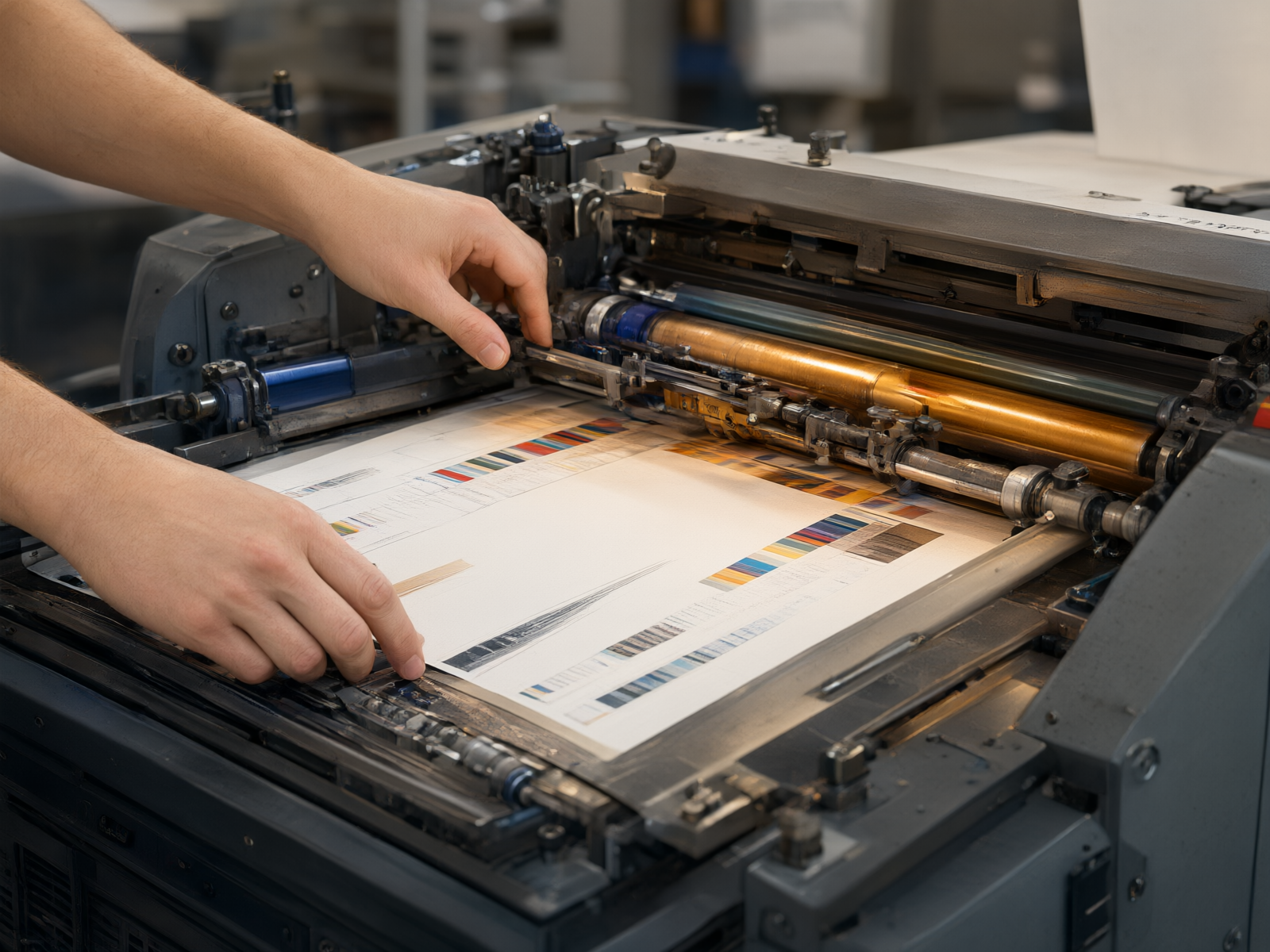
The most expensive packaging mistake is not a printing error. It is approving a design on a screen and discovering the real problem only after 50,000 units have run through the press. At BOYU LUXE PACK, we work with buyers who import custom rigid boxes, gift boxes, paper tubes, and paper bags for cosmetics, food, fashion, and retail brands, and the projects that go wrong almost always skip one step: they treat the sample as optional. They are not optional. A sample is a decision gate, and each gate exists to catch a different category of failure before it reaches mass production.
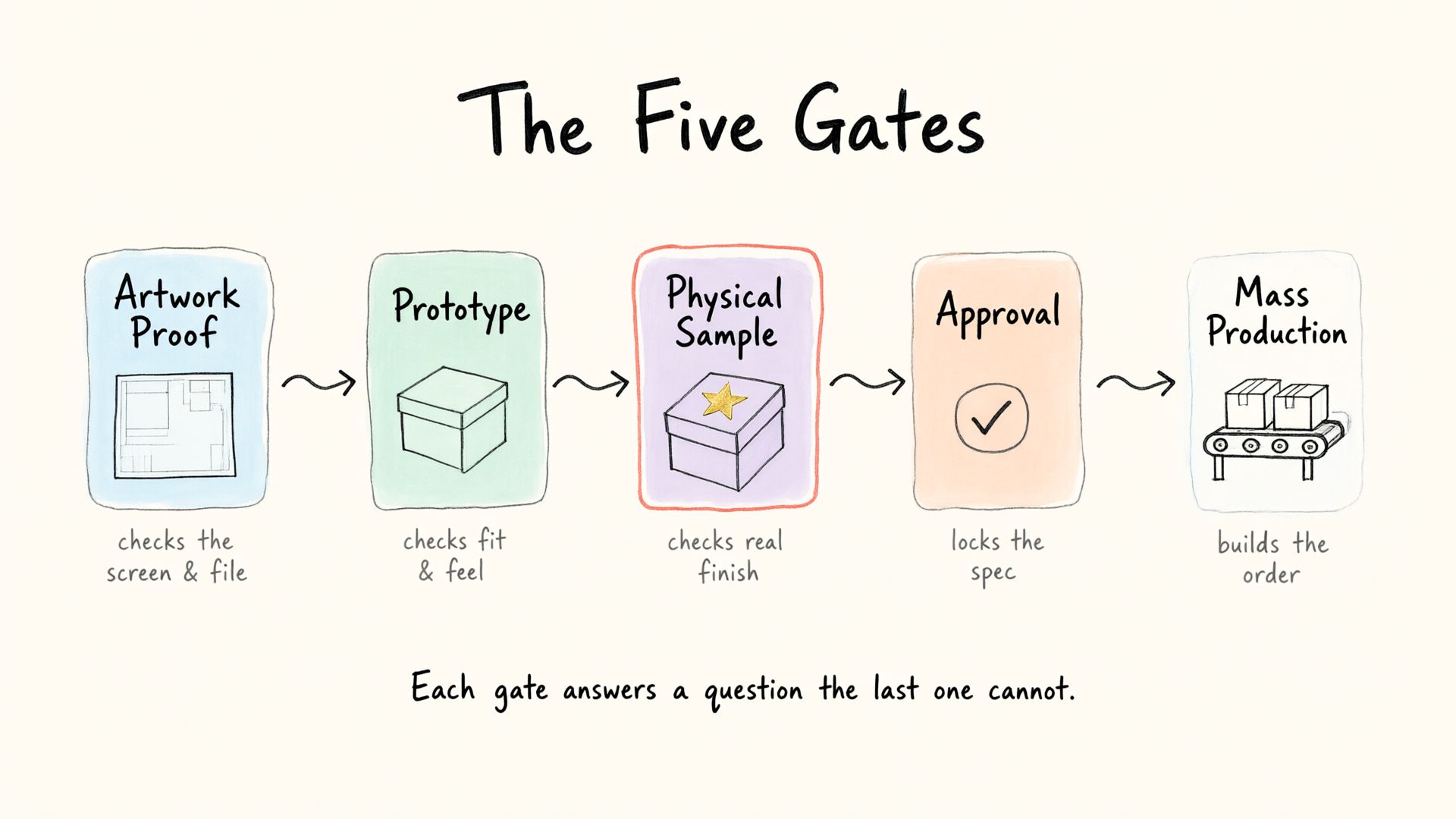
The order we follow on every project is fixed. Artwork Proof comes first, then a structural Prototype, then a finished Physical Sample, then written Approval, and only then does Mass Production begin. Each stage answers a question the previous stage cannot. Understanding what each gate checks is the difference between a controlled launch and an expensive rework.
What Skipping Samples Actually Costs
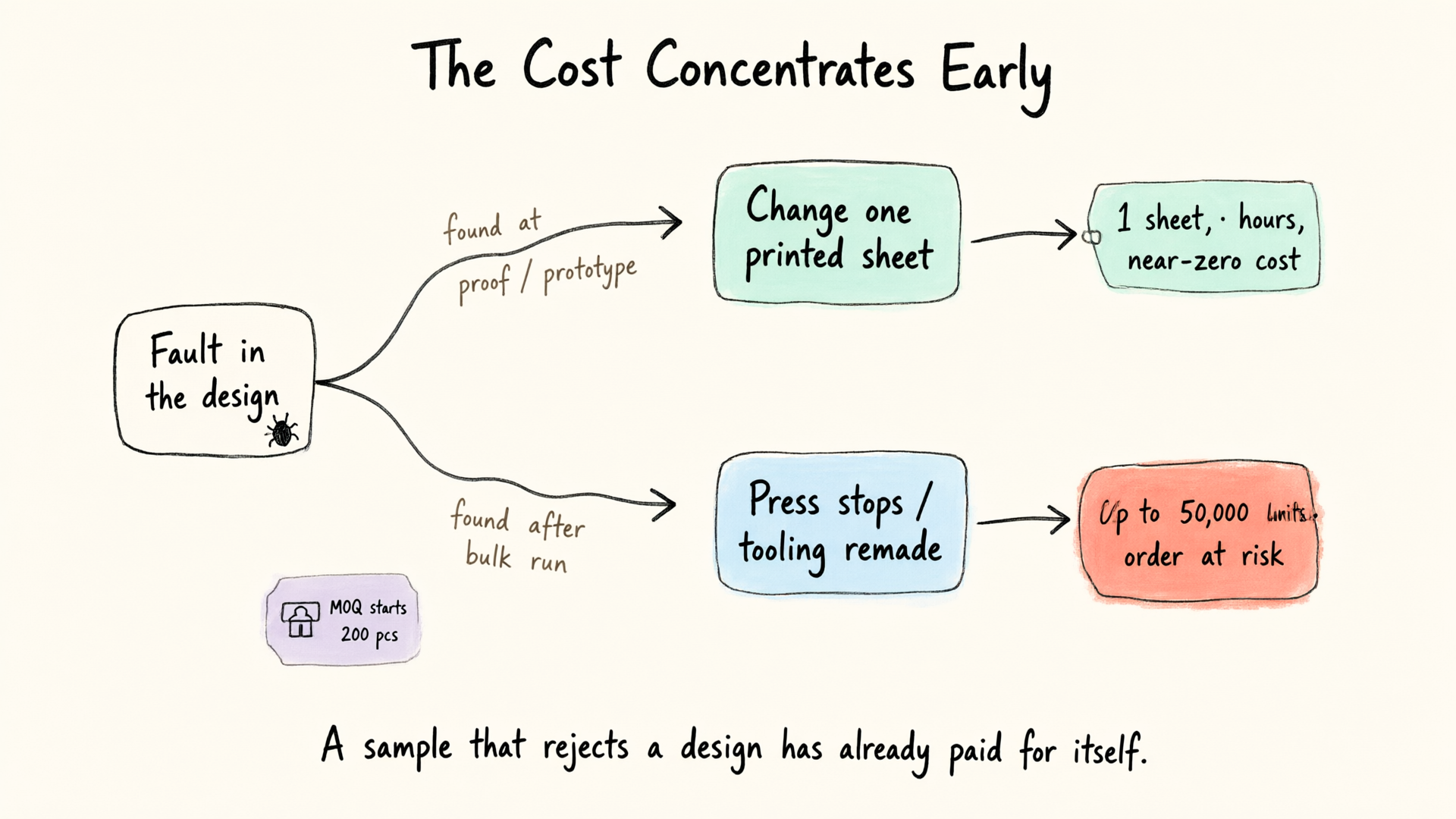
In custom packaging, cost concentrates early. Once printing plates, a foil die, an embossing tool, or a die-cutting mold are made for a specific size and structure, those assets cannot be reused if the design changes afterward. A revision that costs hours at the proof stage can cost days and new tooling at the production stage, because the press line has to stop and physical assets have to be remade.
Quantity magnifies this. Our low MOQ options start at 200 pieces, which keeps first runs accessible for new brands, but the same 200 units that look safe in a sample become a liability if a magnetic closure is misaligned or a perfume bottle is 3 mm too tall for its insert. A prototype that costs one printed sheet to produce catches faults that would otherwise repeat across an entire order. The sample pays for itself the first time it rejects a design.
Gate 1 — Artwork Proof
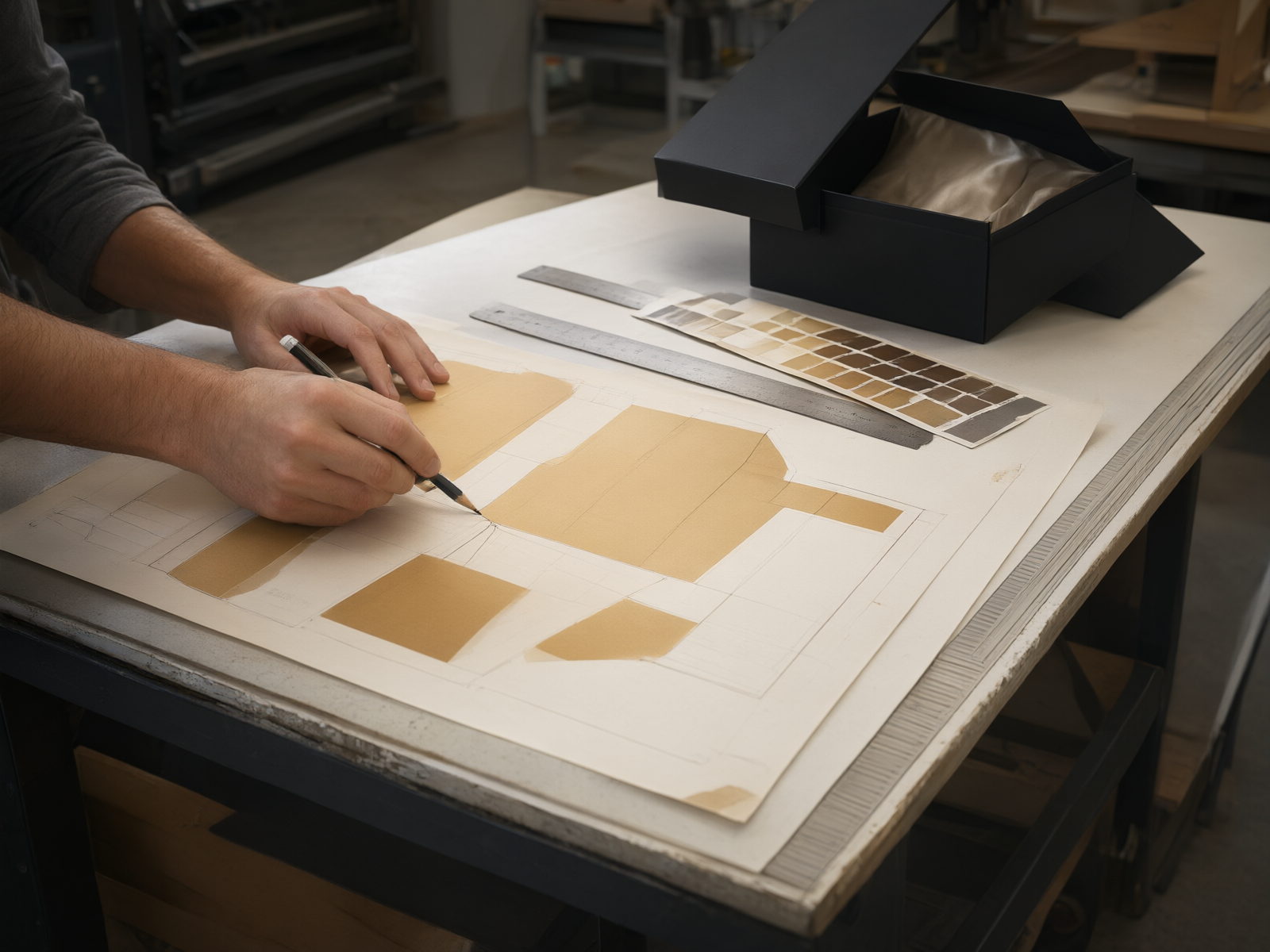
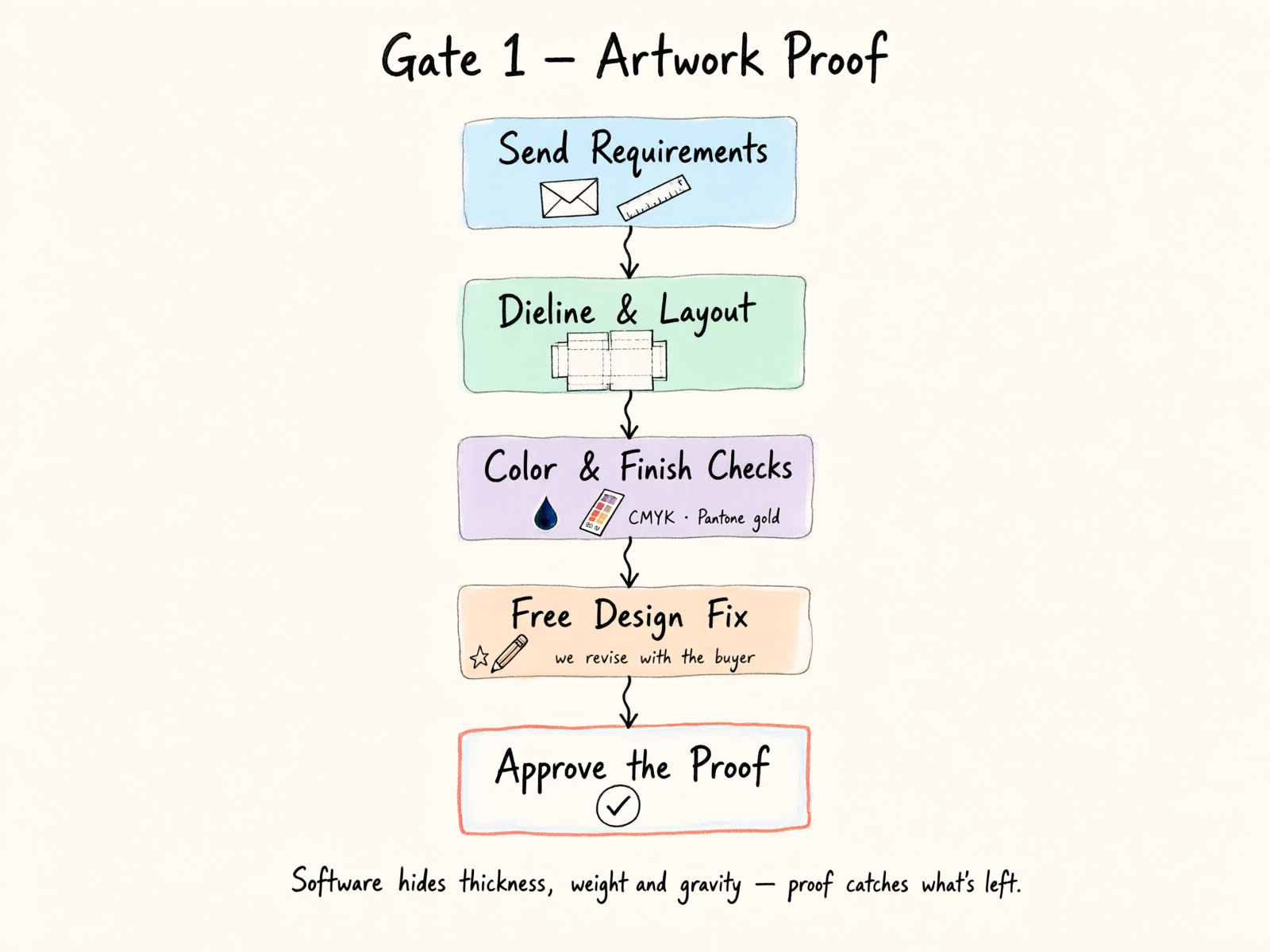
The artwork proof checks the design on paper before anything is built. We return a dieline (the flattened structural outline showing every fold, cut, glued seam, and bleed line) with the buyer’s logo, color separations, and finishing marks laid onto it. This is the stage that catches the problems software hides: text too close to a fold, a logo spanning a glued edge, an unconverted color, or a spot-finish layer that will not register with the print. We provide free design support here, so structural layouts are revised with the buyer rather than sent back as a file to be guessed at. Color is verified against named references, such as Pantone matches alongside the CMYK build (the four-ink process used for full-color printing), so that a brand gold does not arrive as a different gold on the production floor. No physical box exists yet, and none should; this gate only confirms the drawing is sound.
Gate 2 — Prototype
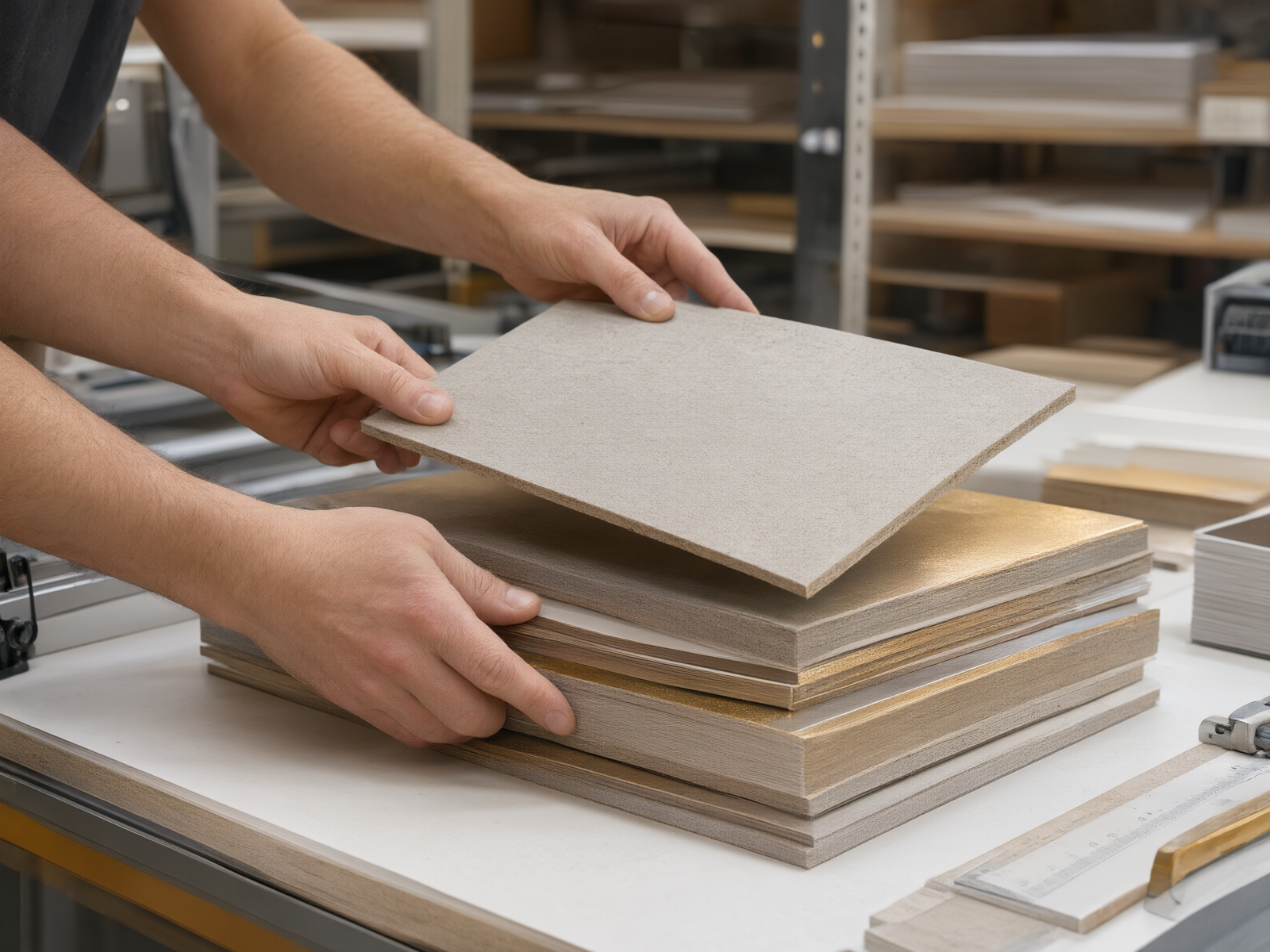
The prototype is a structural mock-up, usually unprinted, made to the real size and material weight. Its only job is fit and feel. Does the lid close with the right resistance, does a product sit square in its insert, does the assembled box match the dimension the freight plan assumed. A magnetic-closure project, for example, is built at its intended size of 180×120×80 mm from 1500 gsm chipboard so the buyer can judge the closure pull before foil and velvet interiors are committed. At this stage a wrong dimension is corrected by cutting a new sheet, not by scrapping a production run. Many structural faults are invisible in proof files precisely because files have no thickness, no weight, and no gravity. The prototype supplies all three.
Gate 3 — Physical Sample
The physical sample is the first object that looks like the finished product: real material, real printing, real finishing. Hot foil, spot UV, embossing, matte lamination, and satin or velvet linings are all applied at this point, because finish behavior has to be seen on the actual substrate. A skincare gift set built on 1200 gsm chipboard with an art-paper wrap, for instance, will read its Pantone gold and hot-foil detail differently than a screen render suggests; sample light, not screen light, is what the end customer sees. This is also the stage where we evaluate surface quality, edge wrapping, and handle attachment on bags such as a 200 gsm white kraft shopping bag at 330×260×120 mm. Buyers evaluate the sample against the artwork proof, and the two documents have to agree.
Gate 4 — Approval
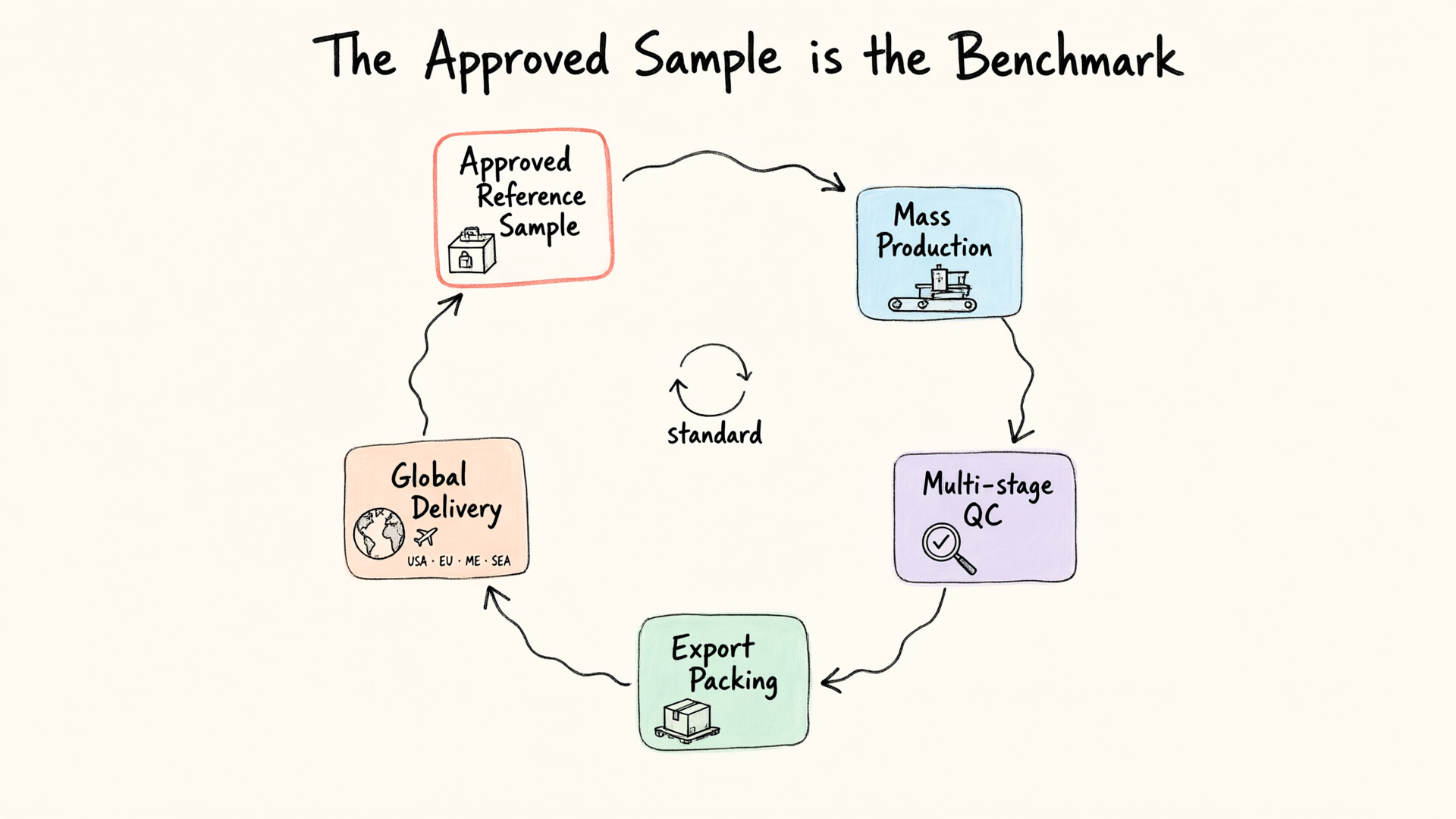
Approval converts a liked sample into a locked specification. We require a written sign-off against one retained reference sample, so that the color, structure, materials, and finishes are fixed and traceable. Without an approval record, two parties can hold two honest but different memories of what was agreed, and a press run will follow whichever one is closer to the machine. The approved sample becomes the measurement standard for every unit that follows. This is why we ask buyers to request free samples to evaluate quality before starting a project, rather than relying on catalog images or a competitor’s reference.
Gate 5 — Mass Production
Mass production runs after the specification is frozen. Because the sample defined what correct looks like, our multi-stage quality control measures output against the approved reference, not against expectation. This is the point where strict quality control stops being a promise on a website and becomes a process with a physical benchmark on the line. Full-scale manufacturing follows export-standard packing, supported by export experience across the USA, Europe, the Middle East, and Asia, with sea, air, and door-to-door express shipping for delivery. The reason this stage can be trusted is that the four gates before it already removed the variables that could not be corrected later.
Where to Start
A sample program costs lead time and one printed set. Mass production without a sample costs lead time, tooling, materials, and the order. At a direct factory that handles its own printing and structural design under one roof, the gates are cheap and fast, which is exactly why we run them. Buyers who send size, quantity, and artwork or reference images receive a packaging solution and a free quote, and can request free samples to confirm quality before any production decision is made. The first question is never how fast a factory can print. It is whether the sample, not the screen, has approved the product.
Interested in Custom Paper Tube Packaging?
Send us your specifications and get a detailed quote within 24 hours.
Get a Free Quote