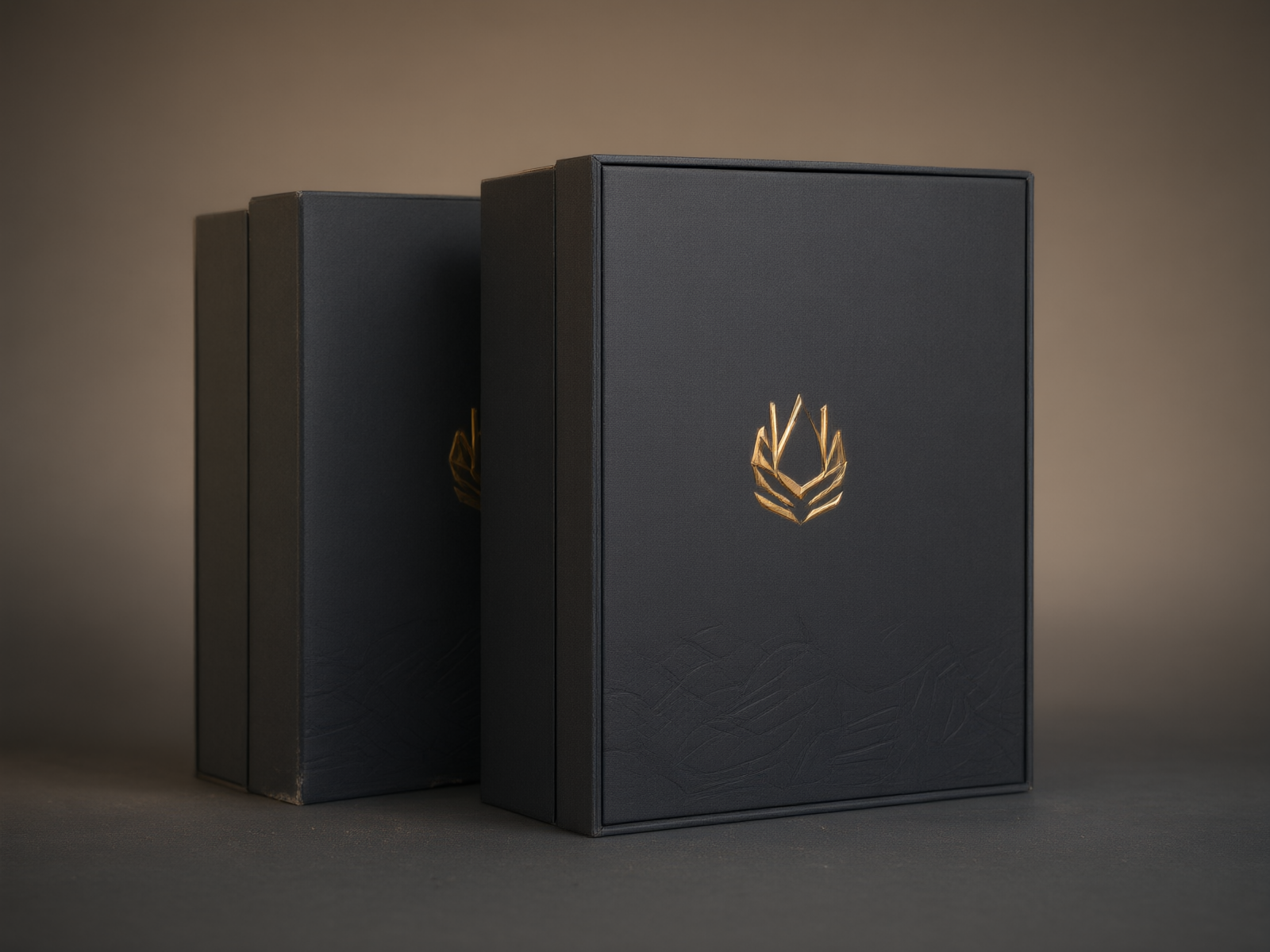
Recyclable Paper Boxes: Materials, Coatings & Design Considerations
A technical breakdown of the material, coating, and design variables that determine whether a paper box truly enters the recycling stream or ends up diverted as contamination — covering substrate selection, barrier chemistry, structural geometry, testing protocols, and format comparison.
Sustainability mandates are reshaping packaging procurement across the EU, North America, and parts of Asia-Pacific. Retailers and brand owners now specify recyclability as a baseline requirement, not a premium feature. Yet “recyclable” is a loose term in packaging sourcing — two paper boxes that look identical on a shelf may behave very differently at a recovery facility.
Drawing on our production experience across thousands of custom packaging runs for global brands, we break down the material, coating, and design variables that determine whether a paper box truly enters the recycling stream or ends up diverted as contamination.
Substrate Selection: The Foundation of Recyclability
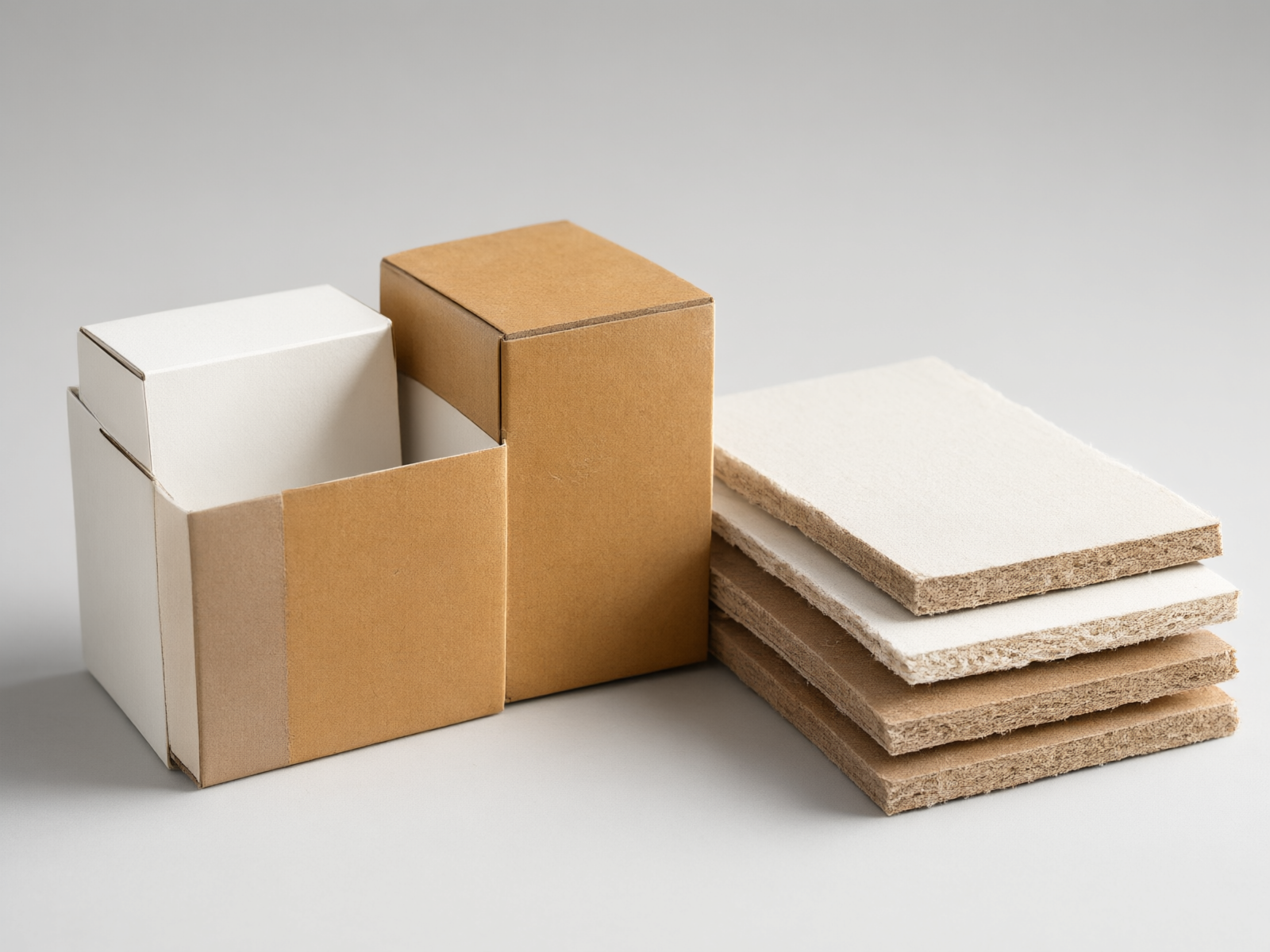
The paper grade and board construction underneath any decorative finish dictates the recycling pathway. Three substrate families dominate the recyclable paper box market:
Solid Bleached Sulfate (SBS) board — the standard for folding cartons in cosmetics, pharmaceuticals, and food service — is a virgin-fiber, sulphite pulp product. It repulps cleanly and is accepted by virtually all mixed-paper recycling programs. We routinely run SBS between 250gsm and 400gsm for luxury gift boxes requiring a smooth print surface.
Kraft paperboard (white-top or natural-top) contains 70–80% recycled fiber in its corrugated medium and liner layers. Its lignin-rich brown face makes it inherently recyclable and compostable, though the darker fiber limits bright color reproduction. Our fashion-brand shopping bag production uses 200–300gsm white kraft precisely because it balances print fidelity with fiber recovery.
Chipboard (also called duplex or triplex board) — 800gsm to 1,500gsm compressed recycled pulp — forms the rigid core in luxury rigid boxes. It is recyclable but heavier to process; some facilities sort it as coarse paper rather than fine fiber, which affects bale value. Understanding this distinction helps buyers set realistic recovery expectations with their municipal contracts or compliance schemes (e.g., Extended Producer Responsibility reporting).
Coatings and Laminations: Where Recyclability Gets Compromised
A coating that extends shelf life by 20% may reduce recyclability to zero. The critical variable is barrier chemistry.
Polyethylene (PE) dispersion coatings — applied at 5–15µm for moisture resistance in frozen food packaging — create a film that separates from fiber during repulping but can pass through as fine plastic residue. Boxes with more than 12µm PE loading are typically rejected by mills in the EU and North America. We recommend specifying PE-free aqueous barrier coatings for any foldable carton or gift box sold into regulated markets.
BOPP and PET lamination — common on high-gloss rigid boxes — bonds a continuous plastic skin to the board. Recovering usable fiber afterward requires chemical delamination at the mill, which only a fraction of facilities perform. If a glossy shelf presence is non-negotiable, consider aqueous gloss varnish (a water-based coating that repulps with the fiber) or UV-cured varnish. Neither adds a plastic layer; both survive typical recycling conditions within the 5–10µm film range.
Metallic foil stamping (hot foil) uses a thin PET carrier layer bonded by heat-activated adhesive. At coverage below 10% of surface area, fiber recovery remains viable. Above that threshold, the foil flecks contaminate the pulp and downgrade the output grade. In our production workflow, we cap foil coverage at 8–10% for recyclable rigid-box clients and confirm results against our mill partner wash-test data before mass production.
Structural Design Choices That Affect Processing
Beyond substrate and coating chemistry, geometry influences how efficiently a box runs through a material recovery facility (MRF).
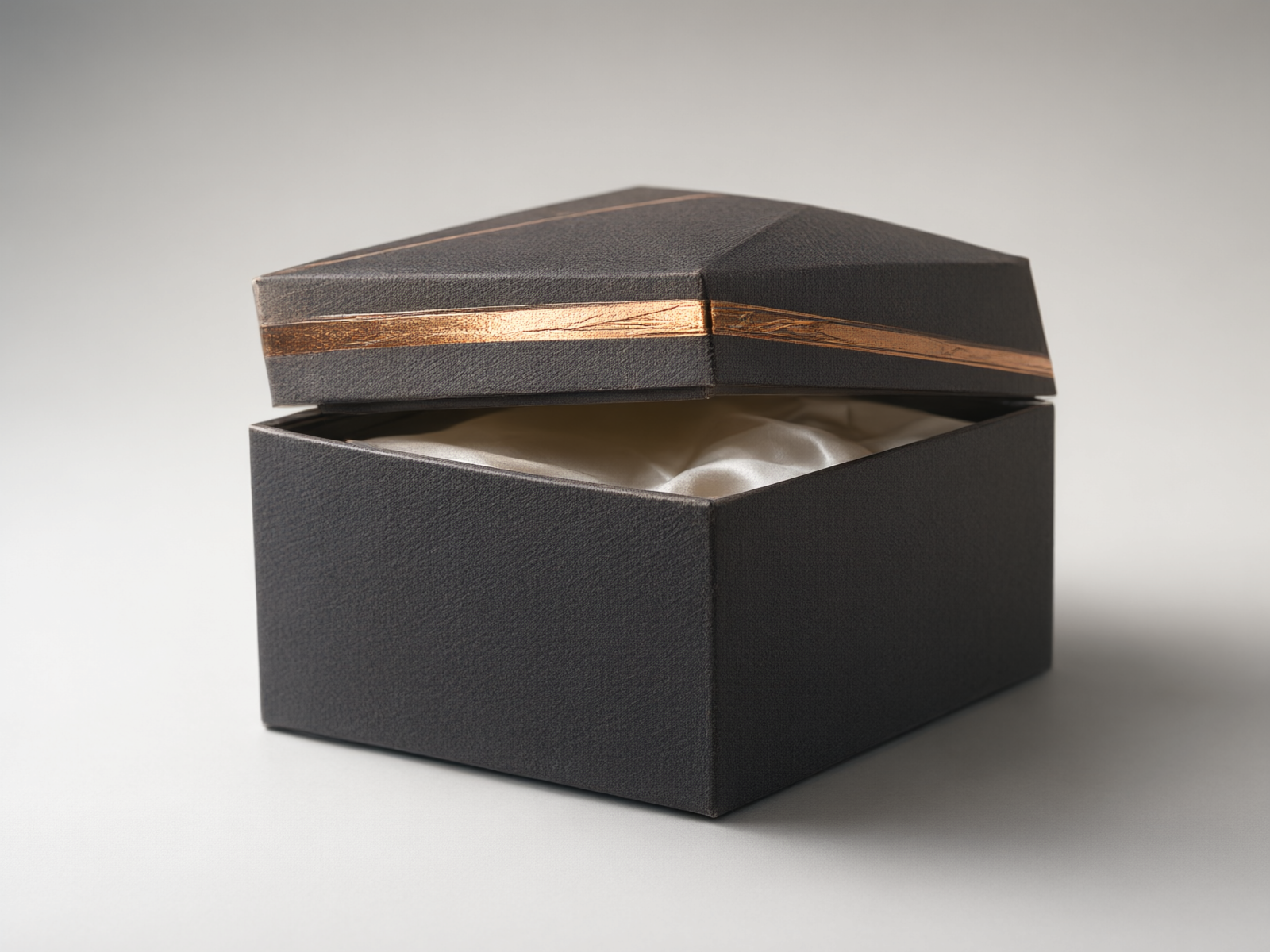
Avoid permanent plastic-to-paper bonds in closures, hinges, and tear strips. Magnetic-closure gift boxes — one of our best-selling formats — remain recyclable only when the magnet assembly pops free during sorting or is accessible for manual separation. Boxes with magnetically bonded rigid frames require a documented de-assembly step; without it, recyclers treat the whole unit as plastic-contaminated.
Limit adhesive types to water-based PVA or hot-melt EVA. Solvent-based adhesives (some cyanoacrylates, polyurethanes) leave residue that interferes with flotation deinking. Our finishing team specifies solvent-free bonding in all eco-line product runs.
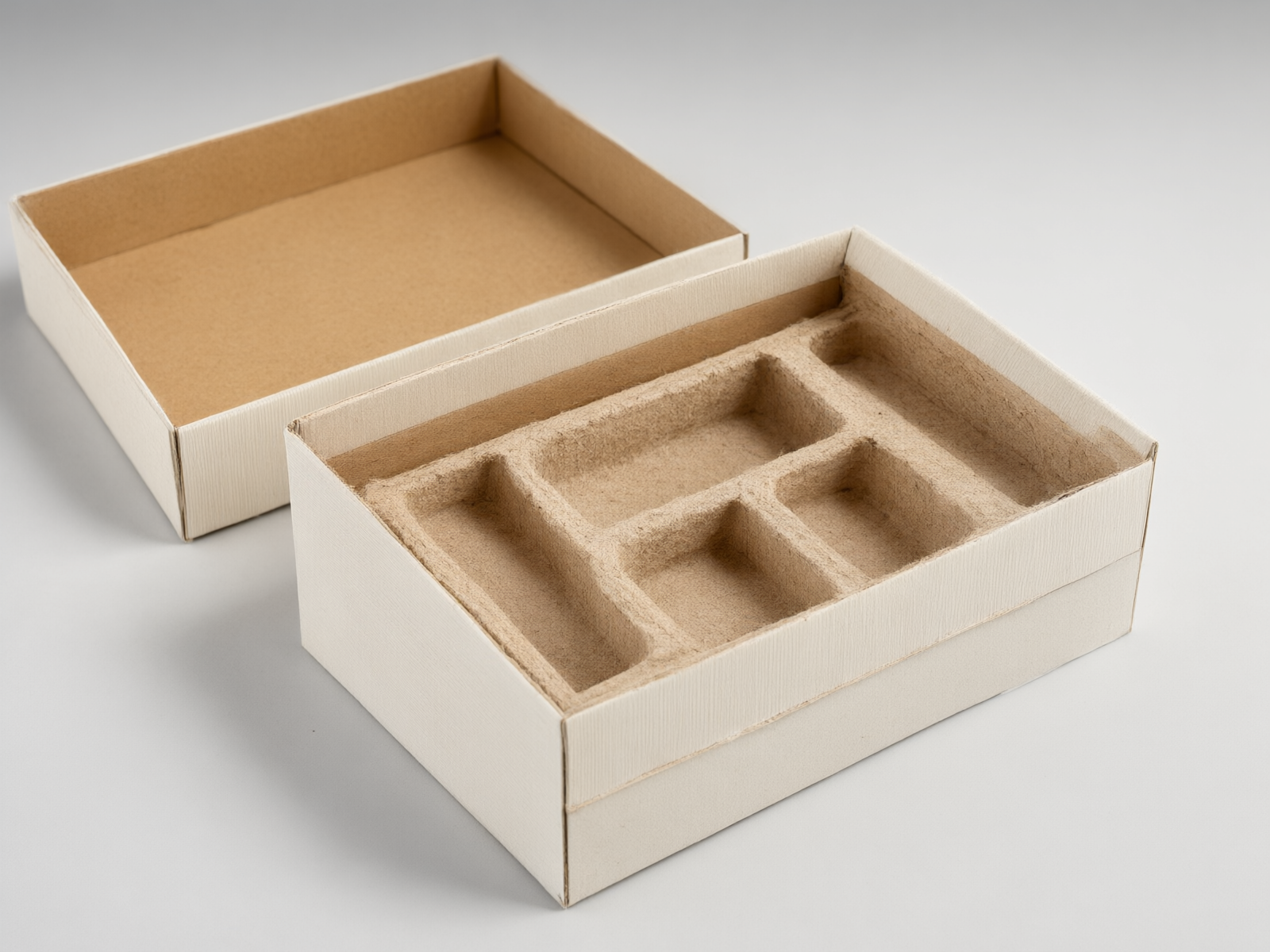
Minimize the number of distinct material layers. A rigid box combining chipboard core, paper wrap, foam insert, satin ribbon, and plastic window can carry five or six separate materials. Each layer adds disassembly labor at recovery. Where product protection requires internal inserts, molded pulp trays or corrugate die-cuts are single-fiber alternatives that remain in the same recycling stream.
Testing and Certification Before You Commit
Do not rely on supplier “recyclable” labeling alone. Three verification steps we advise before approving production tools:
The box sample should pass a standard repulpability test (TAPPI T-553 or equivalent) at your regional mill or a third-party lab such as Intertek or PTS. The output is a brightness and retention score; values above 85% fiber recovery generally signal commercial recyclability.
The CEPI (Confederation of European Paper Industries) Voluntary Testing Protocol provides packaging designers a structured framework for classifying corrugated and solid-board boxes into recyclability grades A through C, factoring adhesives, inks, and barrier layers. Request the full test report from your packaging manufacturer — not just a claim letter.
For EU-bound shipments, confirm alignment with the Packaging and Packaging Waste Regulation (PPWR) requirements taking effect from 2025 onward, including minimum recycled-content thresholds and labeling. A pre-production compliance checklist specific to the destination market prevents costly re-tooling after a rejection at the border.
Choosing Format: Boxes vs. Tubes
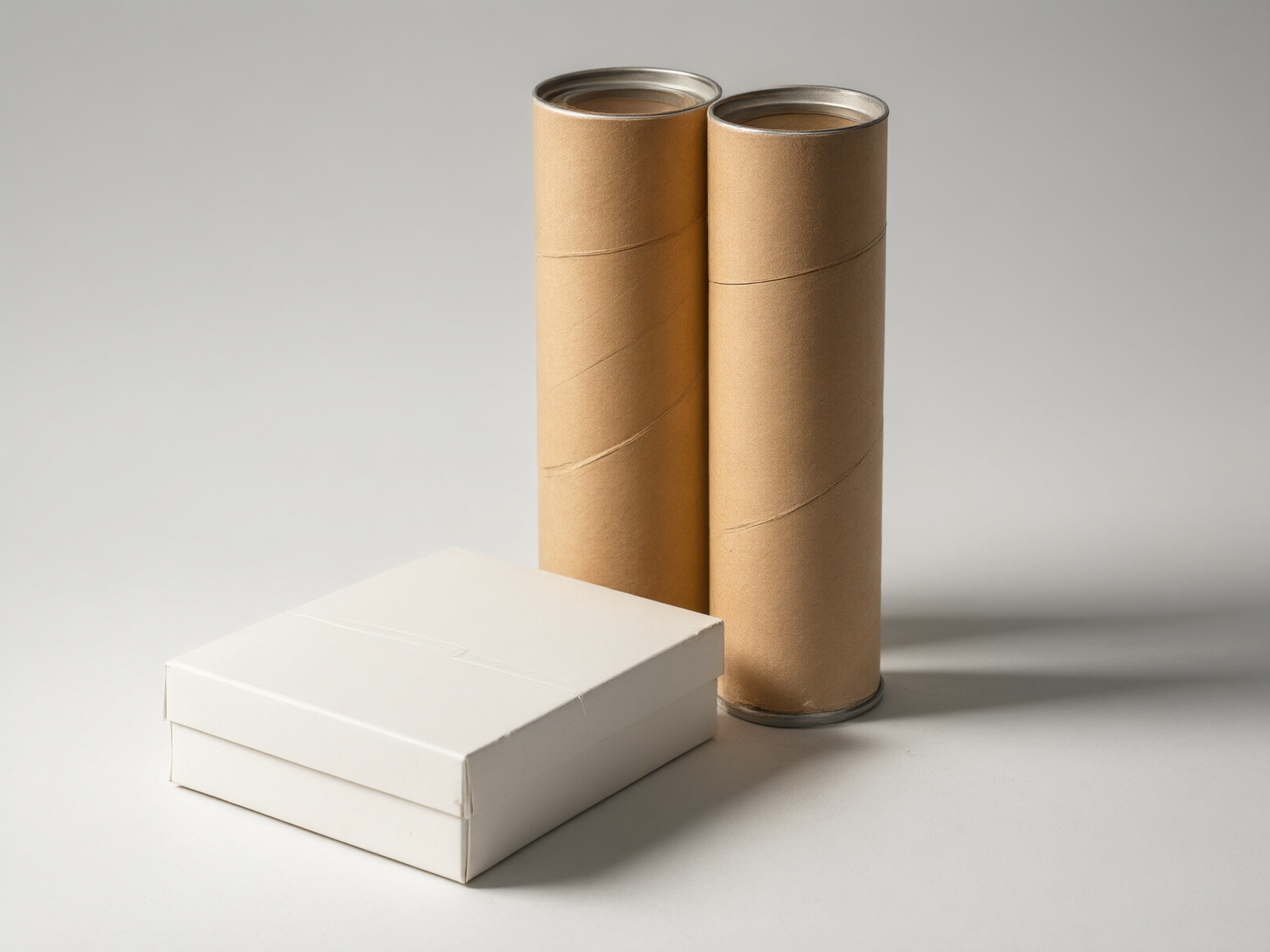
If your product line includes both square/rectangular boxes and cylindrical containers, material and coating logic applies similarly — but the production path differs. Cylindrical paper tube structures compress spiral-wound kraft or chipboard layers around a mandrel, achieving higher compression strength per gram of material and fewer bonded seams, which simplifies fiber separation at recovery. The structural advantages (and coating trade-offs) of recyclable paper tubes are covered in detail in our companion guide.
Get Production-Verified Recyclable Samples
At BOYU LUXE PACK, every custom box order — from a 200-unit cosmetic gift set to a 50,000-unit food-service folding carton program — starts with material and coating selection aligned to the destination market’s recycling infrastructure. Send us your box size, target quantity, and compliance requirements, and we will return a structural proposal with a documented recyclability assessment before you commit to tooling. Request free samples to evaluate paper feel, finish quality, and closure integrity on your own bench.
Interested in Custom Paper Tube Packaging?
Send us your specifications and get a detailed quote within 24 hours.
Get a Free Quote