How to Choose Paper Tube Wall Thickness for Food, Cosmetic & Gift Packaging
Wall thickness is not a product feature — it is the structural answer to a specific set of loads, tolerances, surface finishes and freight conditions. This guide explains how wall construction drives performance across five common applications.
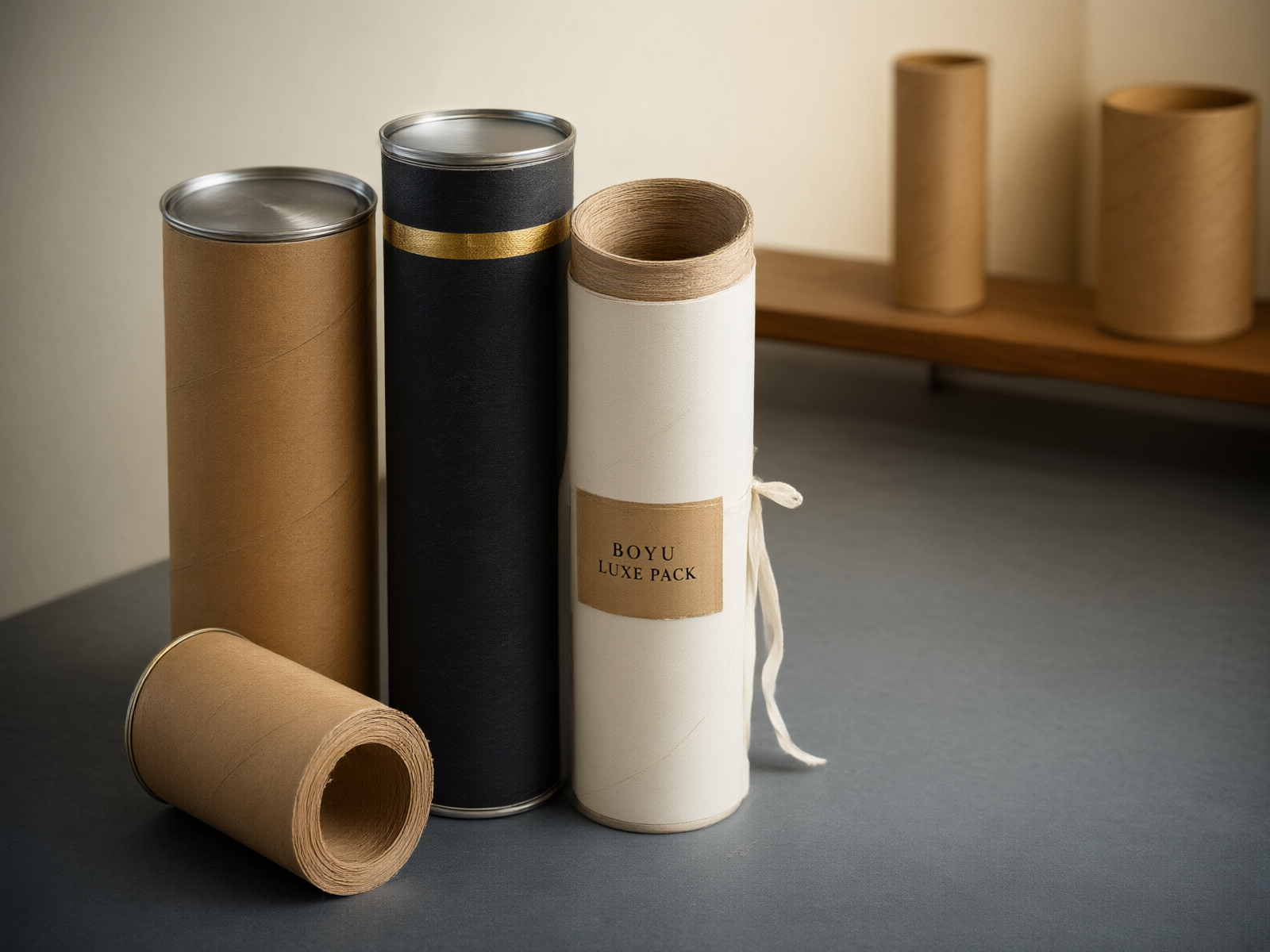
Ask a factory for “the right” wall thickness on a paper tube, and an experienced manufacturer will return with more questions. That is because wall thickness is not a product feature — it is the structural answer to a specific set of loads, tolerances, surface finishes and freight conditions. Two tubes of the same diameter can differ by a factor of three in wall build-up depending on whether the package holds 60 grams of loose tea or a 250-gram glass perfume bottle moving through a parcel network.
This guide explains how wall construction drives performance, how requirements shift across five common applications, and what a manufacturer needs before locking the structure in.
What Wall Thickness Actually Controls
Compression Strength and Stacking
A spiral-wound paper tube carries vertical load through plies of paperboard bonded under tension around a steel mandrel. Stacking load on a warehouse pallet scales with the number of tiers and the weight of each case; wall thickness sets how much of that load the tube absorbs before it buckles.
A tube that survives retail shelf stacking can still fail inside a shipped carton, where the outer box compression transfers into the tube walls over months of transit. Brands shipping e-commerce quantities should weight the construction toward stacking strength, because fulfillment centers rarely handle cartons with ceremony.
Rigidity and Dimensional Stability
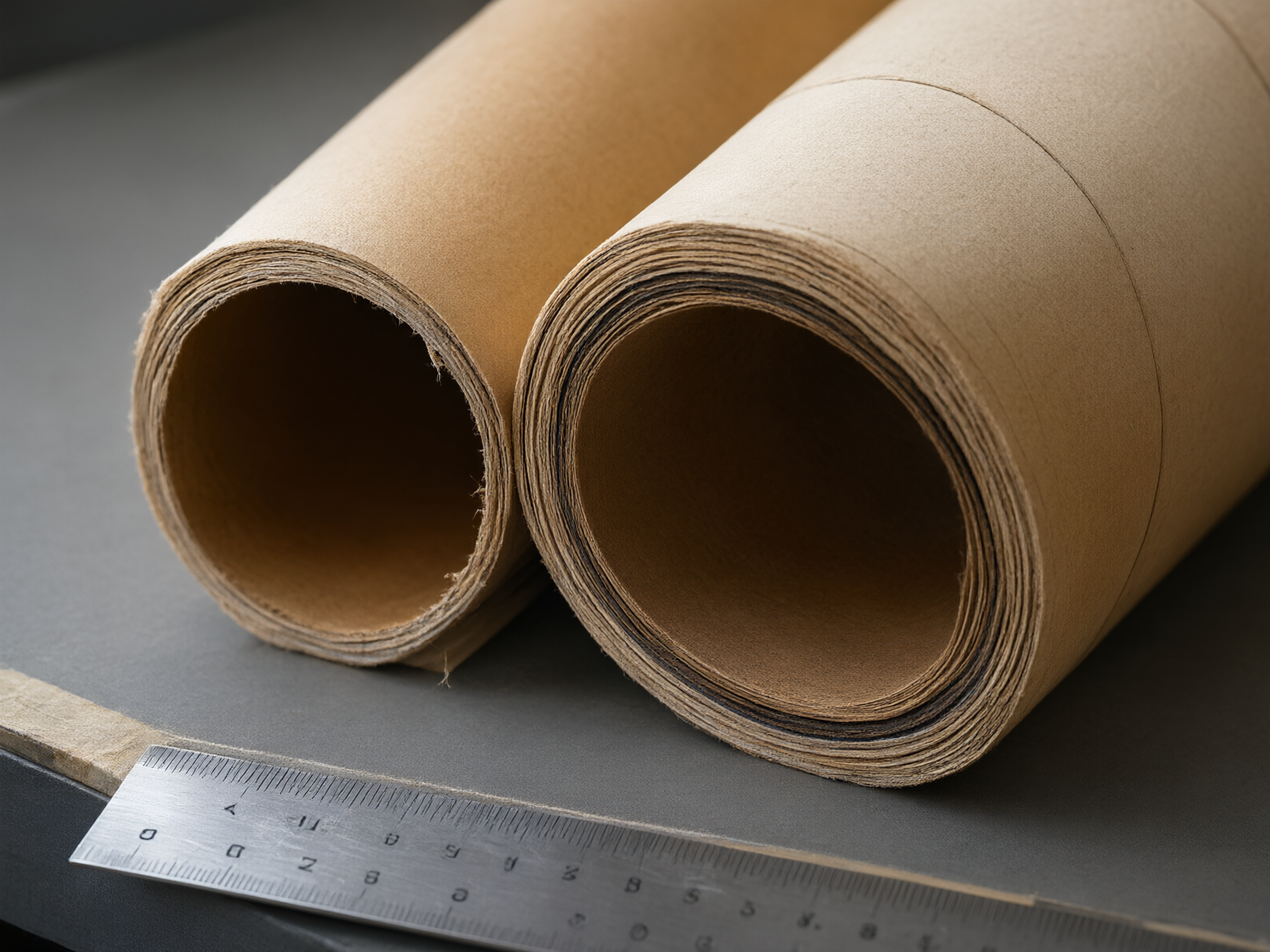
Bending stiffness of a cylindrical wall rises roughly with the square to cube of thickness, which is why the difference between a 0.6mm and a 1.5mm wall is far more noticeable in the hand than the numbers suggest. Thin walls dent at the seam, ovalize under clamping, and recover poorly after compression.
Dimensional stability matters beyond feel: an out-of-round tube cannot seat a metal end or hold a friction lid at consistent torque, so the tolerance on the bore diameter becomes part of the wall specification from the beginning.
Product Protection and Lid Fit
The wall is the shock mass between product and environment. For fragile contents — glass, ceramic, pressed powders — the construction has to resist point impact from the outside and crush load from the inside during sealing operations.
Lid fit moves directly with the wall: every ply added changes the inner diameter, and a friction-fit overcap that feels perfectly tight on a 0.8mm wall will bind or loosen on a 1.2mm wall unless the mandrel and plug design are adjusted. This interdependency is the single most common cause of failed first articles, and it is resolved at the structure stage or not at all.
Premium Feel, Weight, and Shipping Cost
Wall thickness is the rare specification that changes unit cost and freight cost in the same direction. A heavier wall reads as luxury at unboxing — the weight in the hand is the first thing a customer measures — but it also adds grams per unit multiplied by thousands of units of dimensional weight.
At our factory, the material cost of a tube tracks the number of winding cycles as much as the paper grade; doubling the wall roughly doubles machine time. The commercial answer is to put thickness where performance and perception require it, and to recover it elsewhere through paper grade selection.
Wall Requirements by Application
Cosmetic Products
Small-diameter push-up tubes for lip balm, deodorant and stick products typically call for a moderate 0.5–1.0mm spiral wall: enough rigidity to survive an automatic crimping or press-fill station, thin enough to keep the tube light on a vanity shelf. Premium cosmetic canisters lean thicker because the wall has to carry hot foil stamping and embossing without telegraphing the spiral seam through the wrapper paper.
Perfume Packaging
A perfume tube protects the most transit-hostile product in this list: glass containing volatile liquid. The construction is chosen around bottle weight, neck protection and drop performance, which usually pushes the wall toward 1.5mm and above, paired with cushioned internal fixings.
Because alcohol carries scent through unsealed paper, an interior lamination (PE or foil-backed liner) belongs in the specification alongside the wall gauge.
Food Packaging
For direct-contact dry food, the paper itself is part of the barrier. Food-grade kraft board with a printed interior film is the baseline; recycled content is excluded from this role. Fill weight and the closing method decide the load, and heat-sealed or press-closed formats require walls that resist collapse under jaw pressure without distorting the bore.
Coffee and Tea
Aroma protection is the structural driver. Roasted coffee is dispensed through degassing, while tea wants a still, light-tight cavity, which points to an interior barrier laminate and a metallic lid with a reliable seal rather than raw paper thickness alone.
Our Artisan Tea Collection runs 85mm diameter by 180mm in food-grade kraft with metal end caps — a build that stacks cleanly on retail shelves at a wall weight that keeps parcel economics workable.
Gift Packaging
Here the wall answers to perception first and mechanics second. The tube is opened by hand, once, in front of someone; rigidity during that moment is the entire product experience. Thick walls with textured specialty paper and a deep-seating lid deliver that, at the cost of weight — acceptable when the package itself is the message.

Why No Single Thickness Fits Everything
Two tubes of the same diameter fail for different reasons. Wall thickness answers three independent equations at once — load, tolerance and cost — and every application places different weight on each. That is why a thickness copied from one project to the next routinely causes the next launch to fail.
What to Provide Before the Wall Is Finalized
1. Inner and outer diameter targets, with acceptable tolerance bands. 2. Contents: product weight, material (glass, powder, liquid, solid), and how fragile it is. 3. The lid or closure system, and whether it is friction-fit, threaded or seamed metal. 4. Filling and closing method — manual, semi-automatic or fully automatic — and the pressure the station applies. 5. Barrier needs: moisture, grease, aroma, or direct food contact, with target shelf life. 6. Surface decoration: foil stamping, embossing, screen, label — each one changes the wrapper requirement. 7. Distribution channel: retail stacking heights, or parcel drop-test standard, or both. 8. Target unit landed cost and annual quantity, since wall grade is always traded against paper grade.

FAQ
Is there a standard wall thickness for paper tubes?
No. Practical spiral walls range from about 0.4mm on small promotional tubes to 3mm and beyond on rigid canisters, and both ends of that span are “correct” for the right job. The specification follows from the eight inputs above, never from a default.
Does a thicker wall always mean a better tube?
It means a stronger tube within limits. Excess thickness adds ovality risk in winding, shifts bore diameter against the lid design, and raises weight cost the product may not need to carry.
Can the wall thickness change without changing the lid?
Not safely. Because the inner diameter shifts with each ply, lid design and wall build are confirmed together on a physical sample before tooling is committed.
How is wall construction verified before bulk production?
Through a pre-production sample: actual board, actual bore, actual lids. BOYU LUXE PACK supports stock samples and custom sampling under multi-stage quality control, so the structure is tested with the real product before the order is locked.
Confirm the Structure Before the Cost Is Fixed
Send the diameters, fill weights, closure type and distribution channel, and our engineering team will return a wall construction proposal with matched paper grades and realistic unit pricing — direct factory, low MOQ options starting from 200 pieces, free design support, and export shipments to the USA, Europe, the Middle East and Southeast Asia.
Request a free quote or free samples, and the wall structure is proven before any tooling decision is made.
Interested in Custom Paper Tube Packaging?
Send us your specifications and get a detailed quote within 24 hours.
Get a Free Quote