Kraft Paper Tube vs Printed Luxury Paper Tube: Cost & Branding Comparison
A section-by-section comparison of unprinted kraft paper tubes and fully printed luxury paper tubes, covering brand positioning, color reproduction, finishing, sustainability, product categories and cost structure.
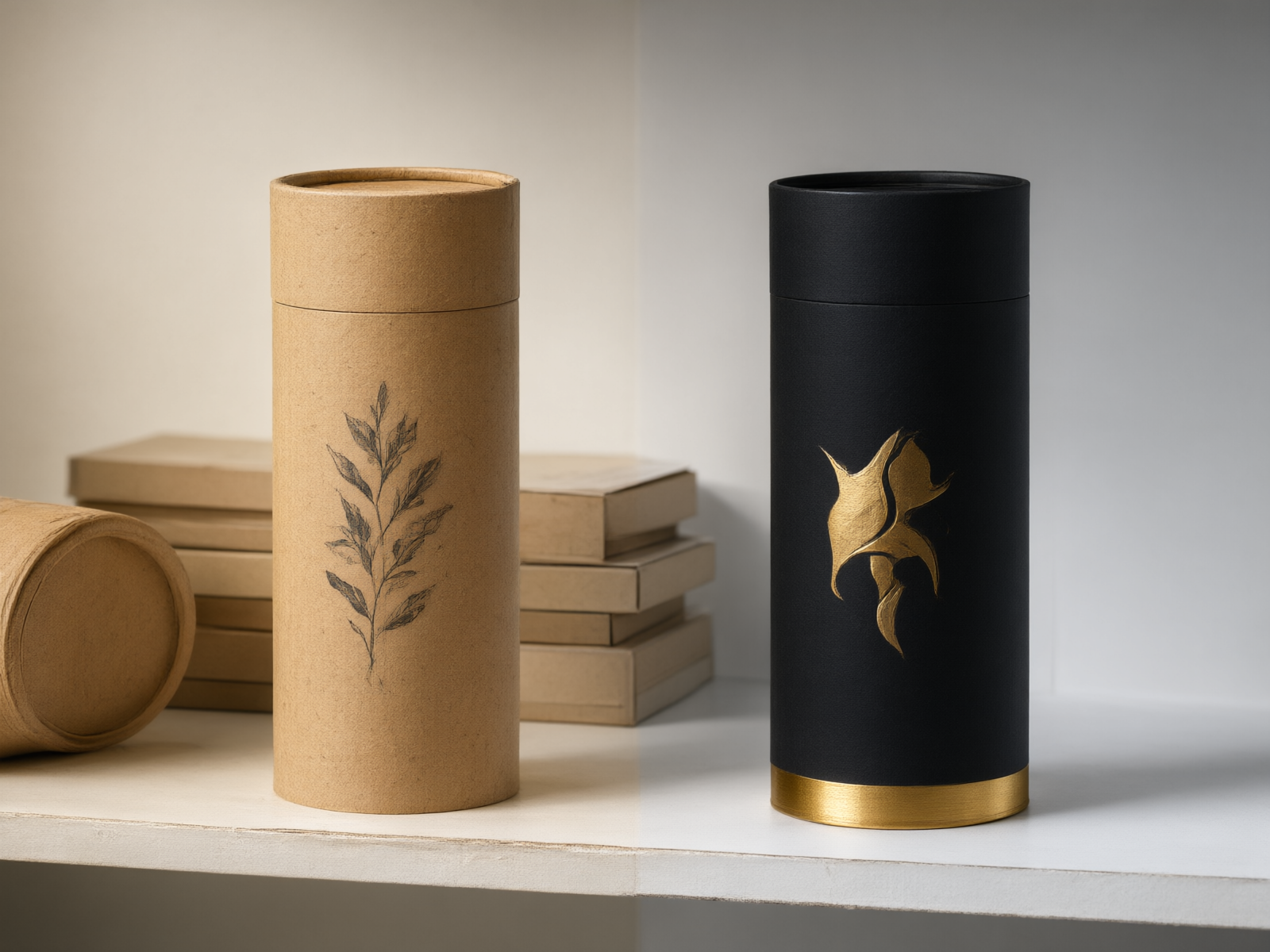
At BOYU LUXE PACK, we produce both unprinted kraft and fully printed luxury paper tubes for cosmetic, skincare, perfume, food, coffee, tea and gift brands as a direct factory and paper packaging manufacturer. The most common misunderstanding we see is a pricing one. Buyers often assume the printed tube simply costs more and looks better, while the kraft tube is the cheaper, greener default. The real decision is more specific: the choice determines which brand promises the packaging can actually support, which finishing options stay available, and where the unit cost comes from. This article compares the two constructions section by section so that sourcing teams can match the tube to the product, not to a habit.
What each tube actually is
A kraft paper tube is wound from kraft paper — brown paper made by the sulfate process, with most lignin retained — and is usually delivered with a printed label, a debossed logo, or a single-color print on a capped or open-end body. Its appearance comes from the substrate itself. A luxury printed paper tube starts from the same spiral-wound board core, but receives an outer wrap of white art paper, textured specialty paper, or black board, offset-printed in CMYK plus Pantone colors, then laminated and finished with foil stamping, embossing, spot UV, or soft-touch coating at our Shenzhen facility. Structure is similar; surface engineering is not, and that difference drives everything below.
Brand positioning and visual appearance
The kraft tube signals utility, honesty, and value. On a shelf holding coffee, tea, or artisan food, a brown tube reads as “honest goods, minimal processing,” which suits brands that sell on ingredient credibility rather than ceremony. The visual vocabulary is narrow by design: brown, white, black, maybe one spot color, plus the organic texture of the paper.
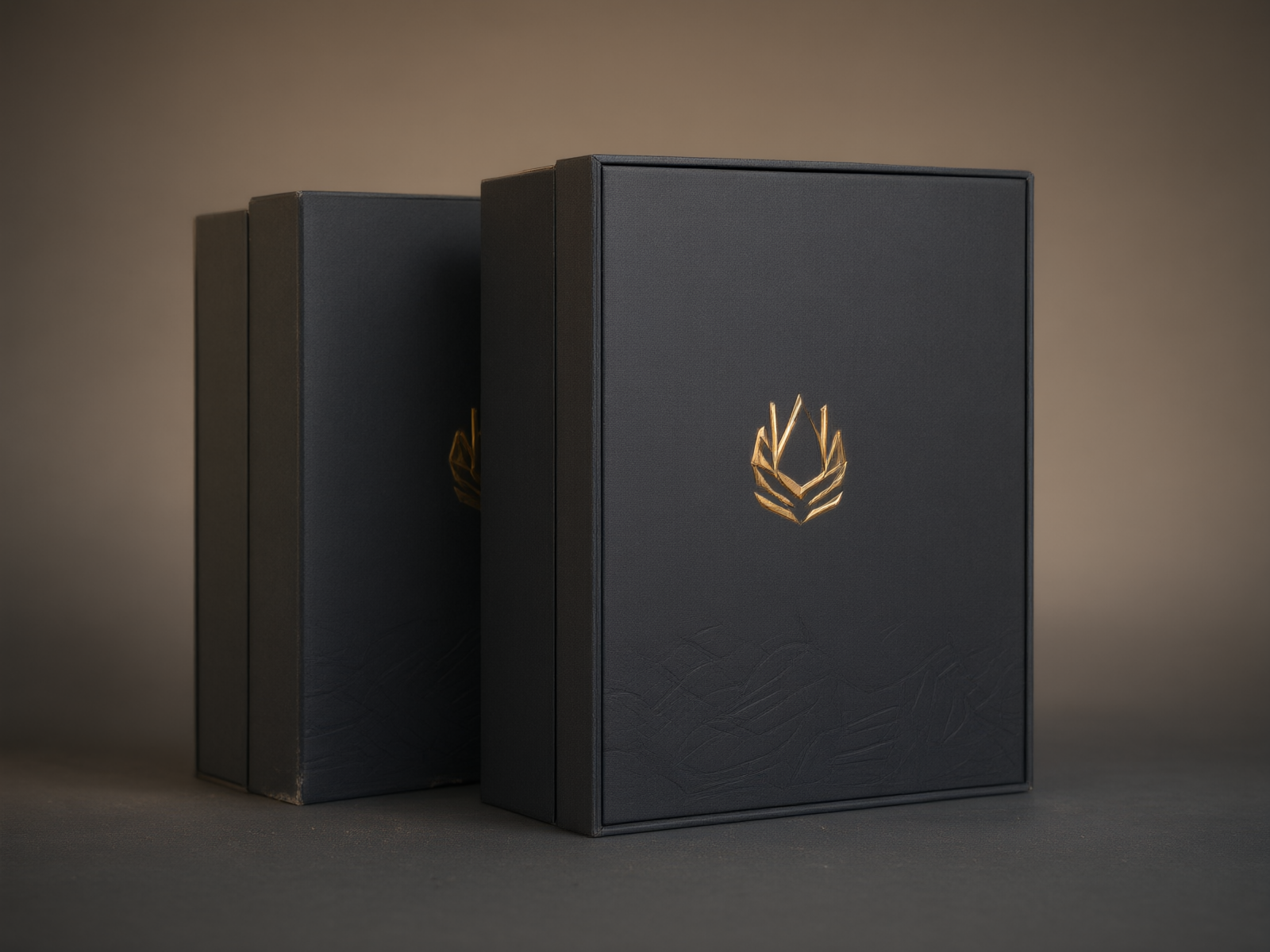
The printed luxury tube signals premium craft and brand control. A perfume or skincare line that spends real money on fragrance development needs packaging whose color, sheen, and hand-feel say the same thing. With a white or black wrap, a Pantone-matched brand color, and foil on the lid, the tube becomes a stage for the product instead of a container for it.
Color reproduction and printing
This is where the two constructions separate hardest. Offset and digital printing reproduce color against a white reference — the paper reflects the wavelengths the ink does not absorb. Kraft paper is not white; its brown base tone absorbs part of the spectrum and shifts every ink printed on top of it. A cyan logo printed directly on kraft reads greenish-brown, a magenta reads muddy, and a white element cannot be printed at all without an opaque white underbase, which adds a pass and raises cost.
Color fidelity on luxury tubes benefits from four mechanisms: the white art-paper wrap provides a high-brightness reference, so CMYK halftones stay true to the proof; opaque white ink is unnecessary for most graphics because the substrate is already bright; lamination (gloss, matte, or soft-touch) protects the printed layer and deepens contrast; a coated wrap supports process photography and gradient-heavy artwork that an uncoated surface cannot render.
The practical rule we give clients: if the design relies on brand-color accuracy or imagery, the white-wrap printed tube is the only reliable route. If the design is one or two dark colors plus a logo, kraft can carry it, and the substrate’s color shift becomes a stylistic choice in the end.
Surface texture and finishing techniques
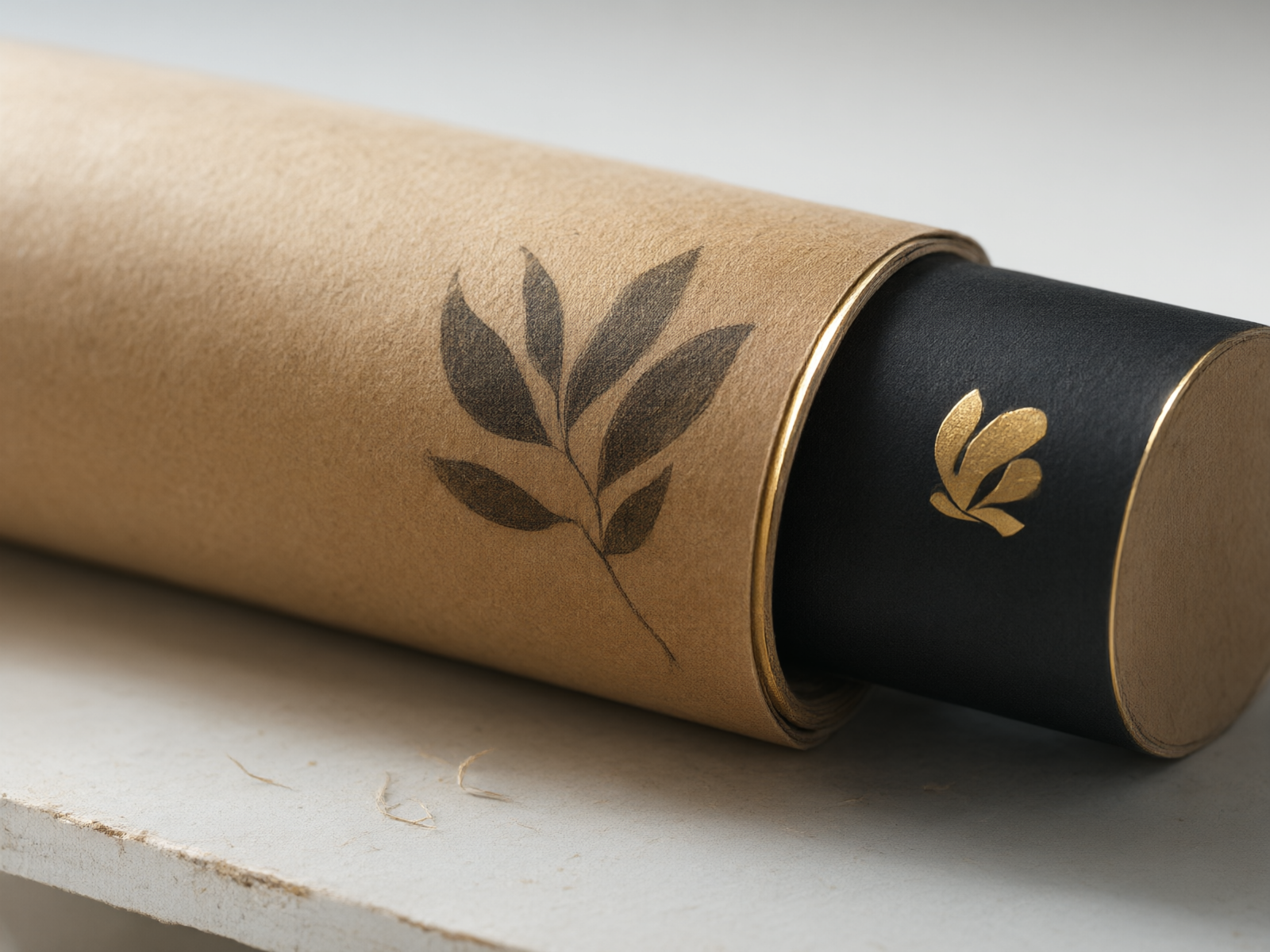
Kraft offers one strong texture — fibrous, matte, slightly uneven — plus debossing, which compresses the fibers and holds up well. Foil stamping is possible on kraft, but the bond between metallic foil and uncoated fibers is weaker than on a coated art-paper wrap; edge wear during shipping shows first on kraft foil, which is one more reason the finishing menu on kraft is short.
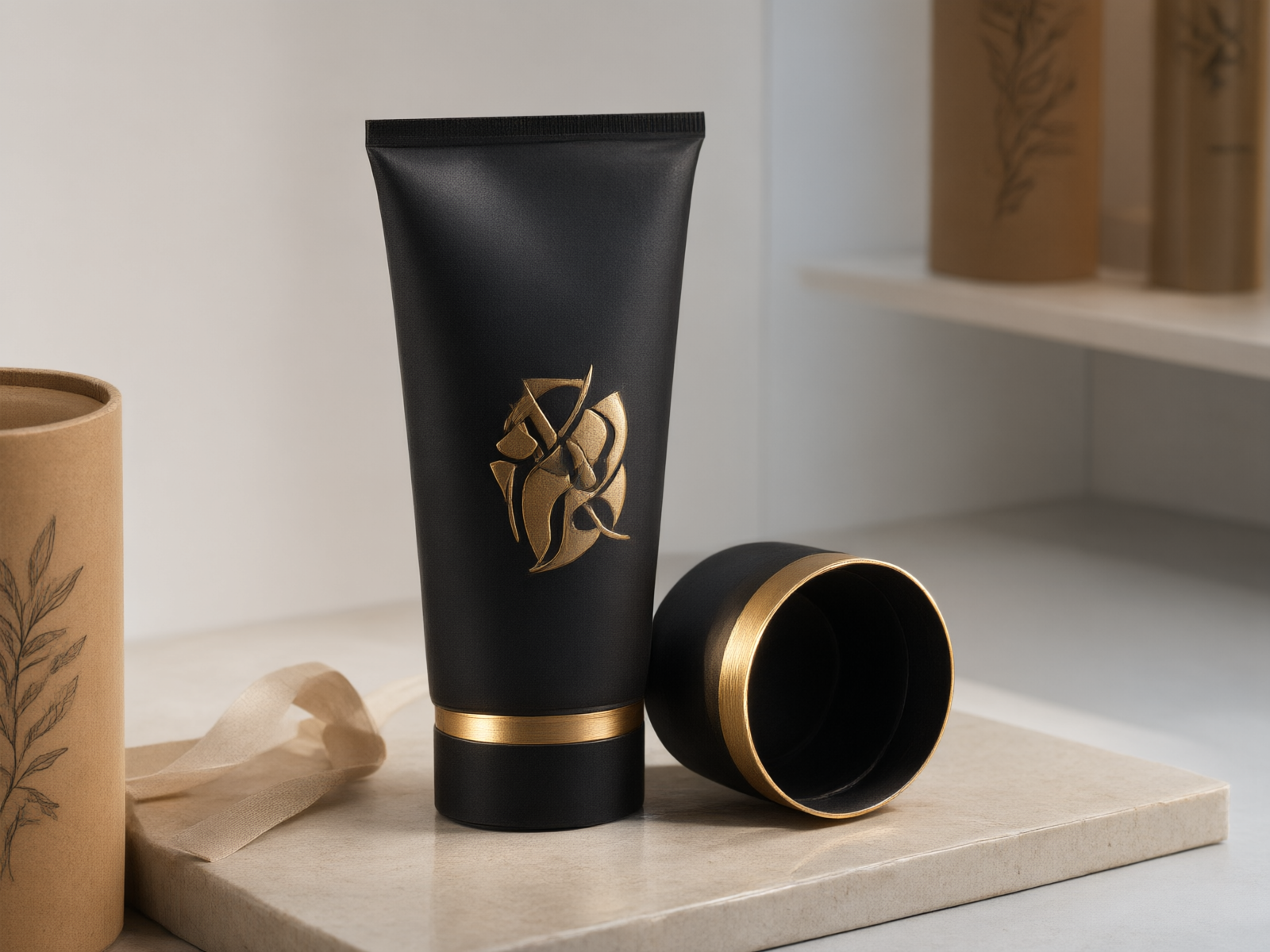
A luxury tube has a full finishing menu: hot foil in gold, silver, or holographic, embossing for raised relief, spot UV for selective gloss, and soft-touch lamination for velvet hand-feel. Embossing on rigid board yields a clean, permanent relief that customers touch at retail. We routinely pair foil plus spot UV plus a branded inner lid for perfume and gift sets, a combination that a kraft tube cannot physically imitate.
Sustainability considerations
The packaging industry carries a persistent claim: brown equals eco. Kraft appearance alone does not prove a package is more sustainable, and sourcing teams should evaluate four variables instead of the color:
Fiber source and content. Kraft is often from virgin or recycled fiber depending on grade; a luxury tube’s wrap can also be sourced in recycled or uncoated grades. Brown fiber versus white fiber is not the deciding axis.
Coatings and laminations. PE or UV coatings can interfere with repulpability on either construction. A matte-laminated white tube and a varnished kraft tube both need checking against the destination market’s recycling rules.
Inks and foils. Metallic foil is a small-area material; its mass per tube is minor, but local recycling streams vary in how they treat laminated foils, so the finishing list affects end-of-life handling more than the paper color does.
Reuse and end-of-life behavior. Rigid tubes with metal or paper lids are commonly reused by consumers for storage, which extends life regardless of color. Paper tubes in both formats are curbside recyclable where rigid-paper acceptance exists, and biodegradable when no plastic components are added.
We supply mono-material tube constructions — paper body, paper lid, paper label — on both kraft and white-wrap versions, and material composition can be documented on request to support customs and packaging-regulation declarations in the EU and US. Color is a design input; recyclability is an engineering input.
Product category and customer experience
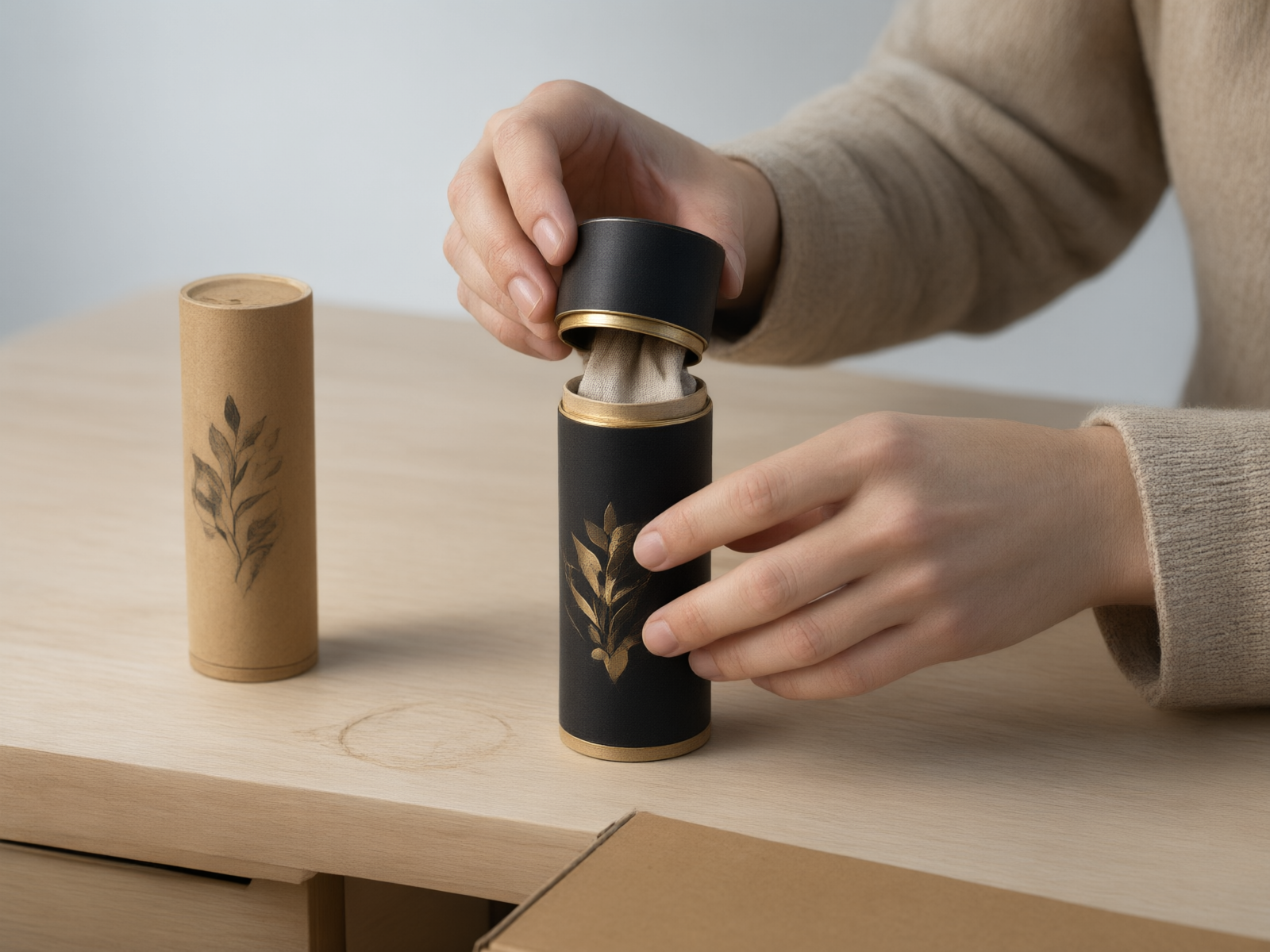
Kraft fits: roasted coffee, loose-leaf tea, honey, spices, candles, soaps, crafts, and promotional items — categories where low visual noise signals authenticity and where the buyer values the product story over ceremony. Luxury printed tubes fit: premium skincare sticks, perfume sample sets, jewelry, high-end tea gift boxes — categories where the packaging is examined, photographed, and kept, and where the customer experience of unboxing drives social proof and repeat purchase.
Cost structure and decision framework
Costs move differently on each element: substrate, tooling, and per-tube unit price, all rising with finishing complexity. A single-color printed kraft tube sits at the economy end of custom paper tube programs. A luxury tube layers costs — wrap paper, offset plates or digital press time, lamination, then each finishing pass (foil tooling, embossing die, spot-UV screen) priced separately — and every added process step is why a fully finished luxury tube prices materially above a kraft tube at the same quantity, with the exact gap set by the specification rather than by averages.
Order quantity matters on both constructions: our low MOQ options start from 200 pieces with tiered pricing, so a brand can pilot a luxury tube before committing to a full SKU rollout.
In a sourcing review, five points decide the specification — brand positioning claim, color fidelity need, finishing requirements, target landed cost, and sustainability documentation needs — and two or three of those five settle the choice most of the time. The brown-versus-white debate is rarely one of the deciding points.
Comparison table
Brand positioning: Kraft — Value, honesty, artisan | Luxury — Premium, crafted, ceremonial
Visual appearance: Kraft — Brown organic texture, limited palette | Luxury — Full color, white/black bases, brand-matched
Color reproduction: Kraft — Brown substrate shifts inks; white needs opaque underbase | Luxury — High-fidelity CMYK + Pantone on bright wrap
Surface texture: Kraft — Matte fibrous; debossing only | Luxury — Laminated, coated, soft-touch, textured wraps
Printing: Kraft — 1–2 spot colors; labels common | Luxury — Offset/digital CMYK, Pantone, photographic art
Foil stamping: Kraft — Possible; weaker bond, wear-sensitive | Luxury — Standard; strong adhesion, clean edges
Embossing: Kraft — Limited relief on flexible board | Luxury — Clean raised relief on rigid wall
Sustainability: Kraft — Good fiber story, coatings still must be vetted | Luxury — Recyclable mono-material options available
Best product categories: Kraft — Coffee, tea, food, candles, eco gifts | Luxury — Perfume, skincare, jewelry, premium gifts
Unit cost: Kraft — Low; label and spot color keep it down | Luxury — Materially higher; wrap, plates, dies and finishing stack up
Customer experience: Kraft — Tactile simplicity, product-first | Luxury — Unboxing ceremony, social-ready presentation
FAQ
Does kraft packaging automatically qualify as sustainable packaging?
No. Sustainability is decided by fiber content, coatings, inks, lamination, and local recycling rules, not by brown color. A printed luxury tube with a recyclable mono-material construction can outperform a varnished kraft tube on every audited metric.
Can brand Pantone colors be matched on kraft?
Partially. Dark spot colors hold; light, bright, and white shift against the brown base or require an opaque white underbase, which adds a print pass and cost.
Which tube is stronger?
Strength comes from wall thickness and board grade, not outer color. Both constructions can be engineered with thicker, more rigid walls for premium presentations or lighter semi-rigid bodies, and either format can be specified to drop-test requirements for e-commerce shipping.
Is foil stamping viable on kraft tubes?
It is viable but wear-prone on uncoated fibers. For foil-heavy designs we recommend a white art-paper wrap with foil applied over coating, or a kraft-style textured paper that is coated for foil.
What MOQ and sampling terms apply?
Low MOQ starts from 200 pieces for stocked formats, with tiered bulk pricing; full custom diameters, lids, and finishes are quoted per specification. Physical sampling confirms the build before bulk production begins, and stock samples can be sent first for evaluation.
Can both constructions pass food-contact and export requirements?
Yes. We produce food-grade kraft and white-wrap tubes with documented materials for USA, EU, Middle East, and Southeast Asia shipments, backed by export experience across those markets and multi-stage strict quality control before global shipping.
Conclusion
The two tubes are different tools, not price points on one tool. Choose kraft when the product is the story and the budget belongs in the formula. Choose the printed luxury tube when the packaging is part of the product — color reproduction, finishing, and reuse all demand it.
As a direct factory in Shenzhen, BOYU LUXE PACK produces custom paper tubes in both constructions with free design support at every stage: send sizes, quantities, and artwork, and we return a structural proposal, a sample-based verification path, and a quotation for the exact specification — or request stock samples to judge the surface quality in hand before committing.
Interested in Custom Paper Tube Packaging?
Send us your specifications and get a detailed quote within 24 hours.
Get a Free Quote