Kraft Paper Bags vs Luxury Printed Paper Bags: Materials & Branding Comparison
A material-by-material and brand-by-brand comparison of kraft paper bags and luxury printed paper bags, covering fiber construction, print capability, durability, product-category matching, and the specification discipline that separates a bag that performs from one that fails.
A retail bag carries a product for a few hundred meters, then disappears into a drawer or a landfill. The difference between the two outcomes is rarely taste; it is material selection. In our factory we produce both kraft and luxury printed paper bags daily, and the buyer conversation usually starts with the wrong question (“which one looks better?”) instead of the right one (“which one matches the product, the price point, and the retail environment?”). This piece lays out the material and branding facts behind each option, so the decision can be made on specifications rather than impressions.
The Material Difference Starts at the Fiber
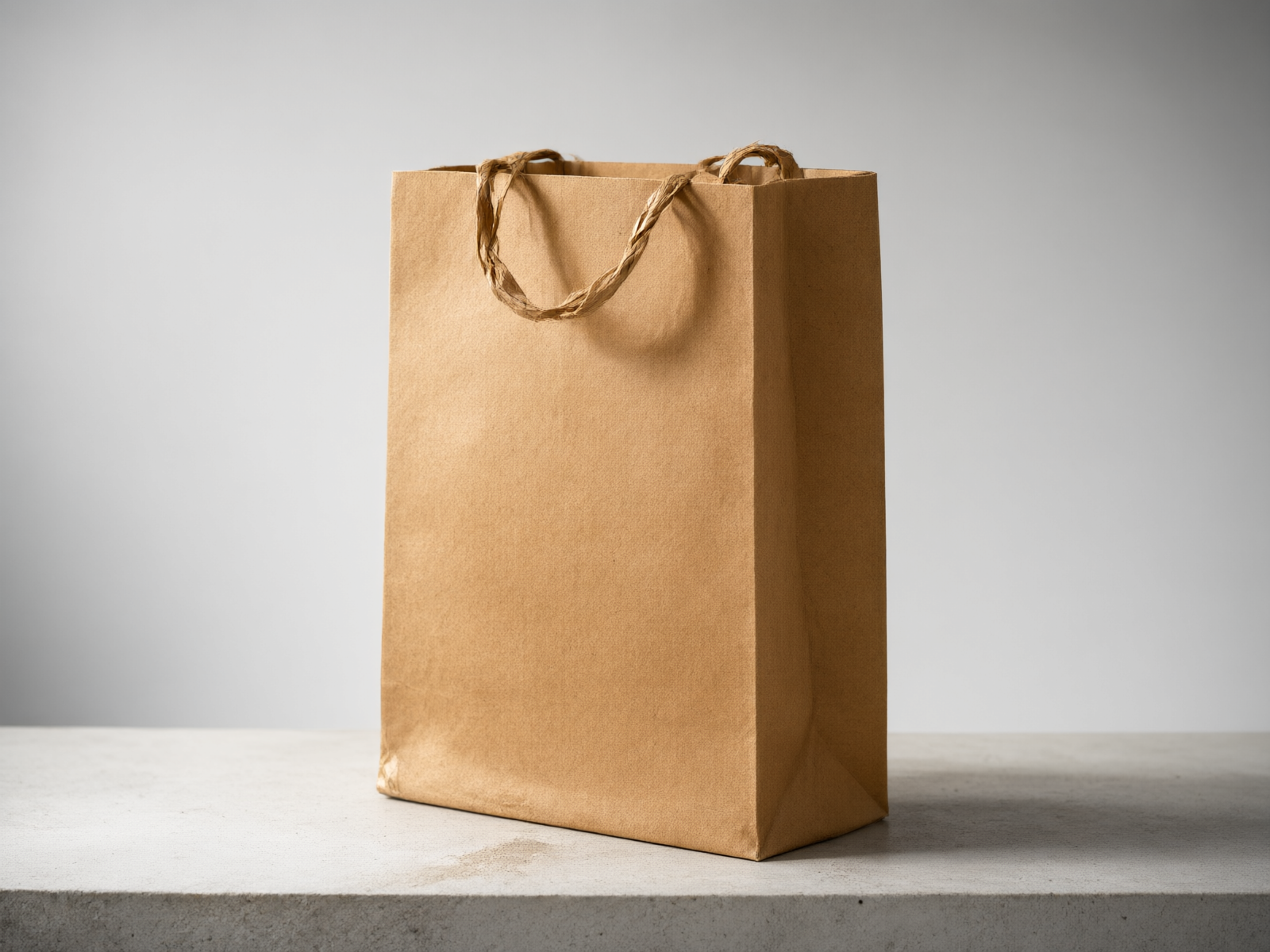
Kraft paper gets its name from the sulfate (“kraft” is German for strength) pulping process, which preserves long cellulose fibers and produces a naturally tough sheet. Brown kraft is unbleached, so it keeps the fiber’s original color and most of its tensile strength; bleached white kraft, like the 200gsm white kraft we used in a recent fashion brand shopping bag, trades a small amount of that strength for a clean printing surface. Flat crush test and tear resistance are the two numbers procurement teams actually check, and kraft wins both per gram of material.
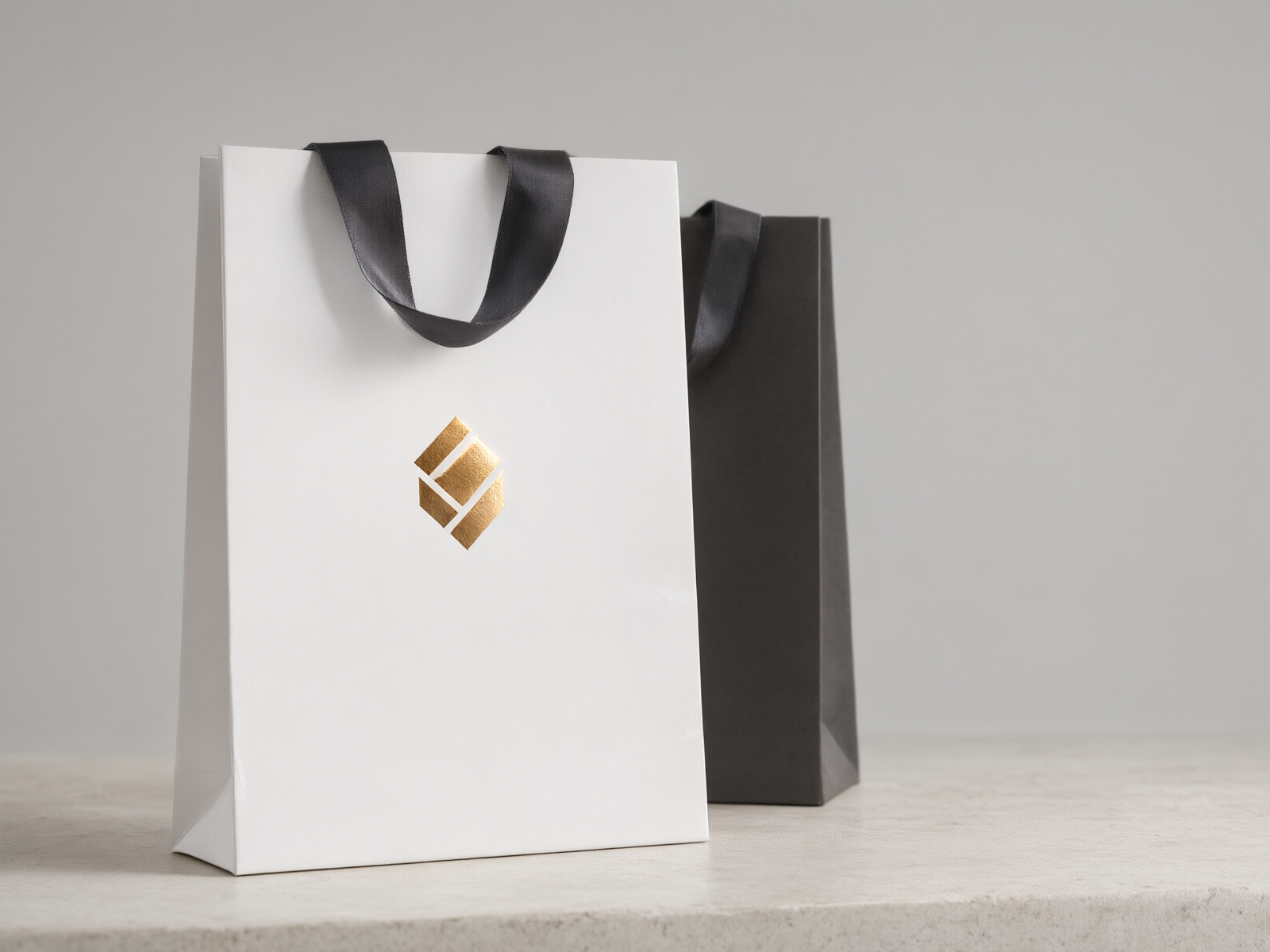
Luxury printed bags are built differently. The base is usually coated art paper or specialty textured paper, 140–250gsm, laminated onto a stiffer board or used with reinforced bottom and side panels. The surface is engineered for print reception: a clay-coated sheet holds halftone detail, Pantone-matched inks, hot foil, and spot UV at levels raw kraft cannot reach. The trade-off is cost and weight — a luxury bag can run 2–4 times the unit price of a comparable kraft bag because it combines papermaking, printing, finishing, and hand-assembly steps that kraft avoids.
What Each Surface Can Communicate
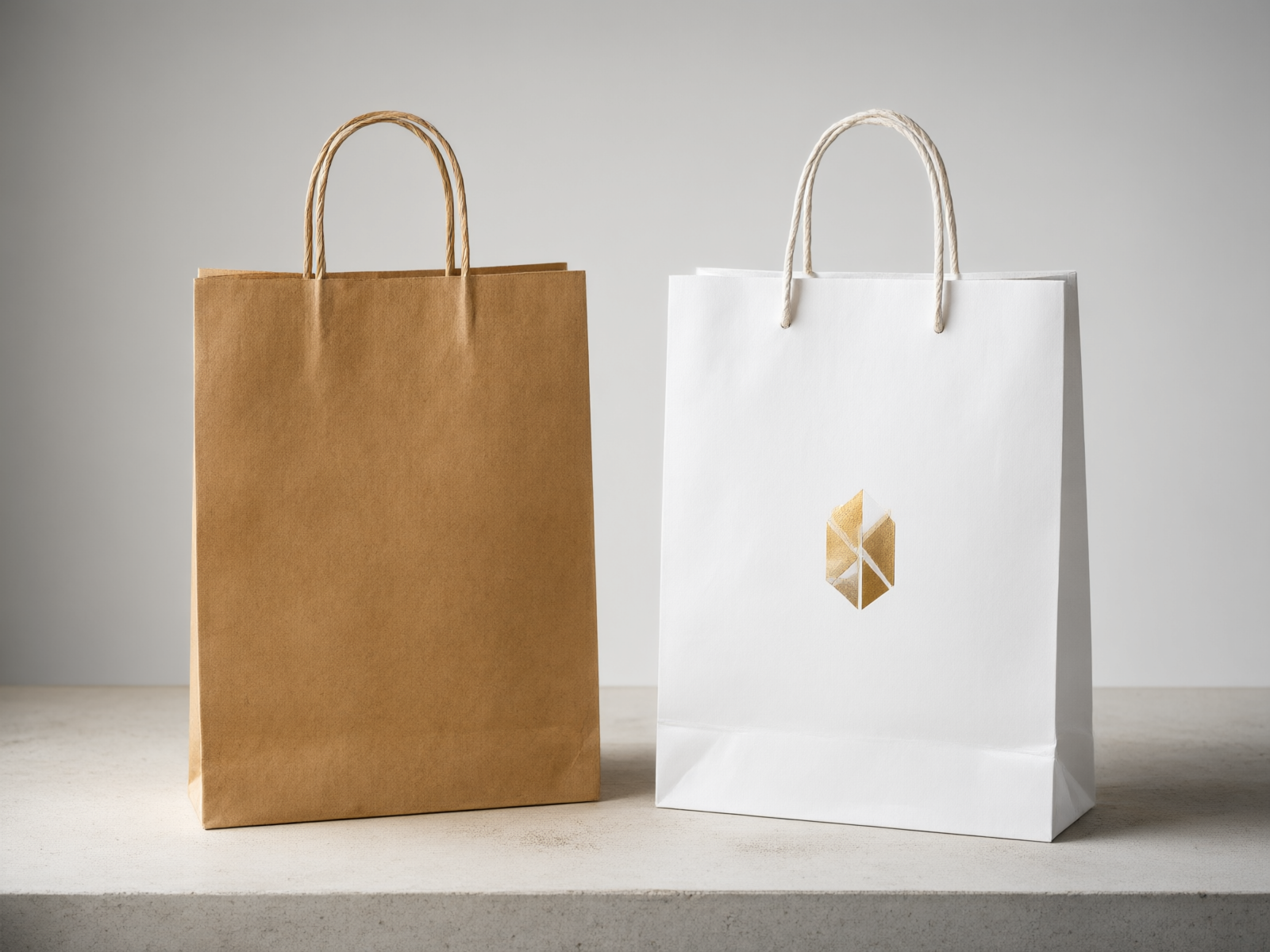
Print capability defines the branding ceiling of the bag. Kraft accepts screen printing, flexography, and simple offset, and it carries a message through texture: the visible fiber and warm tone tell the customer something about the brand before any logo is read. That is why kraft dominates in bakeries, casual fashion, organic retail, and any category where “natural, honest, understated” is the intended positioning. A one-color logo on brown kraft is a complete brand statement, and adding more ink often weakens it.
A coated luxury surface behaves like a billboard. Full CMYK plus Pantone (spot color matched to a brand’s exact red or blue, not a process-ink approximation) allows photographic imagery, gradient artwork, foil stamping, embossing, and soft-touch or matte lamination. Our fashion shopping bag specification — CMYK offset plus Pantone, matte lamination, cotton rope handles — produces a bag whose feel in the hand matches a premium price tag on the shelf. The logic for a cosmetics or jewelry brand is straightforward: if the product retails at a high margin, the bag must not be the cheapest object in the customer’s purchase experience.
Durability Is Not One Number
Buyers often ask which bag is “stronger,” and the honest answer is that the two fail differently. Kraft’s long fibers resist tearing and handle weight well relative to grammage, which is why brown carrier bags for heavy goods are almost always kraft. Its weakness is moisture and abrasion: an uncoated kraft bag in a rainstorm or repeated handling will scuff and soften. A laminated luxury bag resists water, scuffing, and creasing far better because the film or varnish seals the surface, but its thinner coated outer sheet can crack at fold lines if the board specification is wrong.
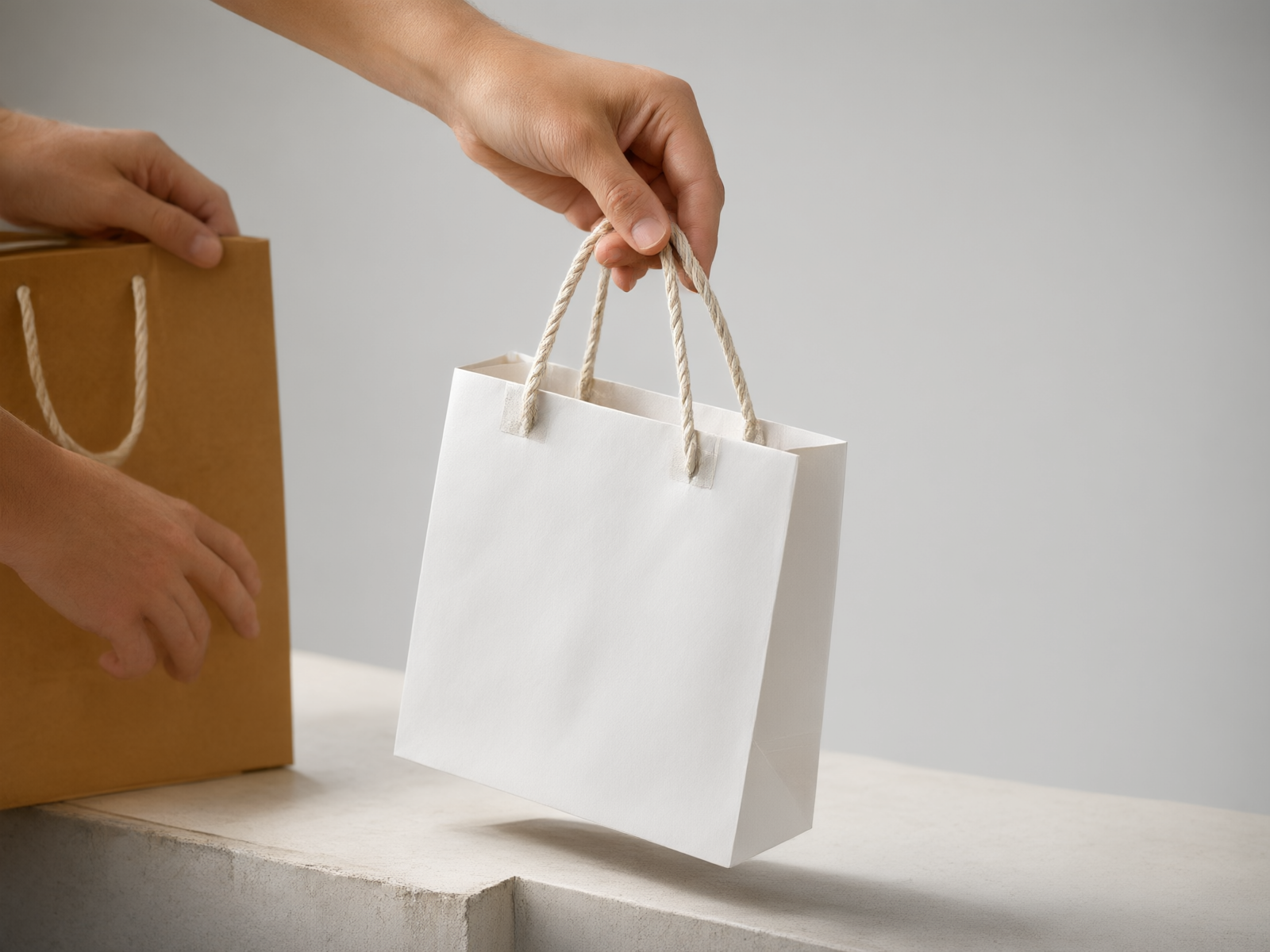
Construction details settle the argument more than paper type. Handle choice (twisted paper, cotton rope, satin ribbon, or die-cut), bottom reinforcement (chipboard insert or layered paper), and side gusset quality determine how many kilograms a bag carries safely. A well-built kraft bag with twisted paper handles will outperform a cheaply built art-paper bag with glued ribbon every time. At our end, this is where strict quality control applies: multi-stage inspection covers handle pull strength and glued seam integrity before packing, because both failure modes show up at the customer’s store, not in our factory.
Matching the Bag to the Business Case
The decision reduces to three variables: product margin, retail context, and how long the bag should live. Kraft makes sense when unit cost matters at scale, when the brand claims sustainability, or when the product is carried casually — food, everyday apparel, high-volume promotions. A 200+ MOQ program (we start custom orders at 200 pieces) with kraft keeps landed cost predictable. Luxury printed bags make sense when the bag is part of the gift experience, when it will be reused or kept, and when shelf presence drives purchase: skincare sets, perfume, jewelry, flagship retail.
Sustainability claims deserve one factual note. Both options are paper-based and recyclable where kraft recovery streams accept laminated board; unbleached kraft has the simpler recycling story, while a laminated luxury bag can be designed for reduced-varnish or water-based film to stay recyclable. Choosing kraft for its look without changing anything else is not automatically the greener program — the whole specification decides.
Specify First, Order Second
Whichever direction the comparison points for a given brand, the ordering discipline is the same: fix the size, grammage, print method, finishing, handle type, and quantity, then verify the result physically. We provide free design support to translate a brand’s artwork into a producible dieline, and free samples so procurement can test the bag before committing to a run — the two steps that separate a bag that survives its first store visit from one that becomes a returns complaint.
Whether it is a natural kraft carrier or a foil-stamped luxury bag, the material only performs when it was selected for the job it has to do.
Interested in Custom Paper Tube Packaging?
Send us your specifications and get a detailed quote within 24 hours.
Get a Free Quote