Custom Rigid Boxes: A Complete Buyer’s Guide for Luxury Packaging
A comprehensive buyer’s guide covering rigid box structures, greyboard and wrapping paper, decoration techniques, inserts, sampling, MOQ and shipping — everything needed to specify luxury rigid packaging with confidence.
A rigid box is the only package in a premium product line that a customer keeps. Most carts, labels and leaflets are discarded at the store or on the doorstep; the box is placed in a drawer and reused. That single fact explains why brand teams in cosmetics, perfume, jewelry, electronics and fashion spend more per unit on packaging that never carries a product claim on it. At BOYU LUXE PACK, a direct packaging manufacturer working with overseas buyers from our Shenzhen facility, we see the same evaluation mistakes repeat across categories. This guide lays out how to judge structure, material, decoration, sampling and logistics against cost, durability and presentation.
What “rigid” actually means
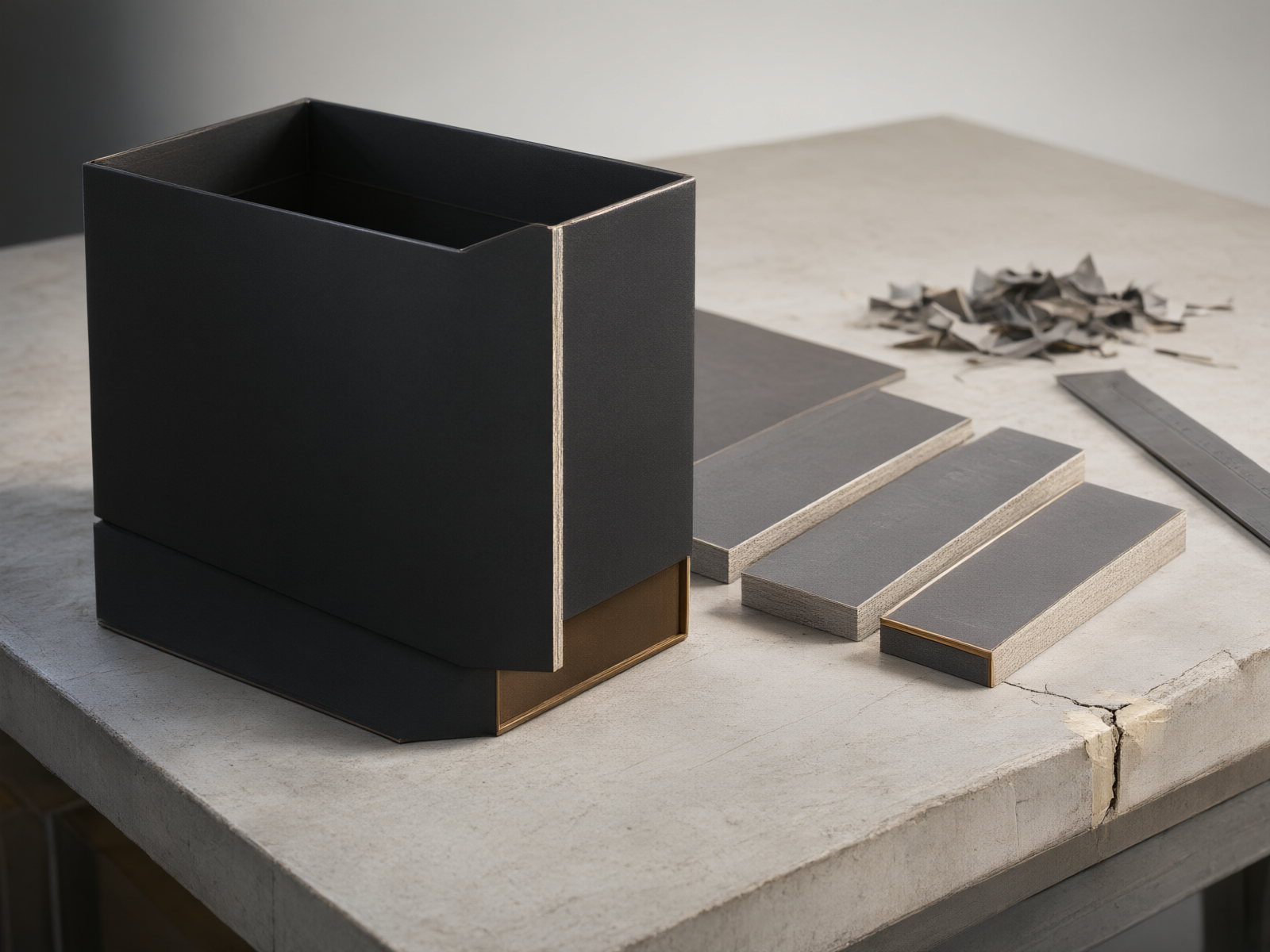
A rigid box is built from a thick greyboard shell that holds its own shape when lifted by the lid. This is different from a folding carton, which is thin coated board cut and glued into a flat blank and assembled on the line. Rigid board behaves like a small piece of furniture: it protects corners, resists crushing in transit and gives a solid hand-feel. The cost gap comes from both the board and the hand or semi-automated wrapping that turns a flat sheet into a clean-edged shell.
Board thickness drives most of that cost. The common working range sits between 1.5 mm and 3.0 mm. Lighter 1.5–2.0 mm board suits small compacts, single-serum boxes and jewelry trays, where the package only needs to resist handling. Medium 2.0–2.5 mm board carries most perfume flacons and skincare sets. Heavier 2.5–3.0 mm board is what electronics and watch boxes use, because the shell must survive repeated opening and the weight of the contents.
Size matters as much as thickness: a long lid made from 2.0 mm can bow at the center, while a compact box of the same board feels dense. In our projects we specify board in grams per square meter of chipboard as well as millimeters; a luxury skincare gift set we recently produced used 1200 gsm chipboard with an art-paper wrap over a 320 × 240 × 90 mm format.
Greyboard and the wrapping paper
The visible face of a rigid box is almost never the greyboard. A printed or textured paper is wrapped over the board, and this is where surface defects either hide or show. Smooth coated art paper takes fine print and metallic detail cleanly. Textured paper and specialty stocks read as premium under the fingers but soften small typography.
Dark wraps expose every speck of greyboard at the turned edges, which is why edge wrapping quality, not the paper swatch, is the honest test. The adhesive layer between board and paper decides whether corners stay sharp after months in a humid warehouse; a poorly laminated wrap lifts at the seams long before the box fails structurally.
Five structures, no universal winner
Each construction solves a different presentation problem.
The lid-and-base box, also called a two-piece rigid box, is the simplest shell: a deep base and a separate cover. It stacks efficiently, ships flat in section, and presents a clean lid surface for branding.
The drawer box adds an inner tray that slides in an outer sleeve. It controls how the product is revealed, which is why jewelry and tea brands choose it, and the friction gap must be tuned so the tray neither drops out nor sticks.
The book-style box opens like a hardcover volume on a hinge, creating a framed reveal and leaving room for a printed message on the inside panel; the hinge is the wear point to inspect.
The magnetic box closes with concealed magnets under the wrap, giving a satisfying snap and a resealable front that suits perfume presentation boxes and gift sets.
The folding rigid box is the structural compromise: rigid board with scored hinges so it ships flat and snaps open in the hand. It protects corners better than a carton while cutting volume-based freight, which is why it appears in direct-to-consumer electronics and fashion launch programs.
A buyer should match structure to the unboxing moment the product needs and to the freight profile, not to a ranking.
Decoration: printing, foil, embossing, lamination
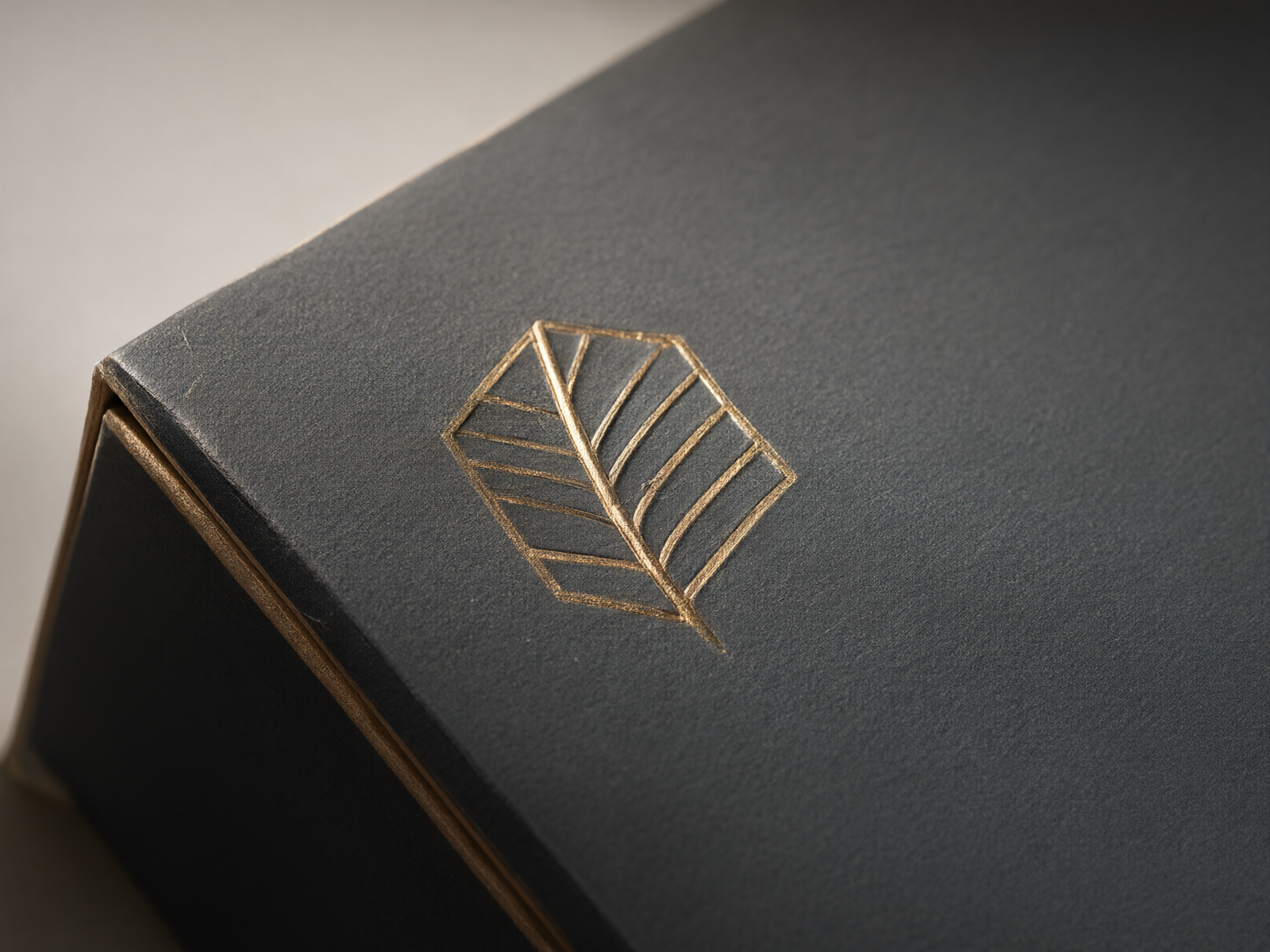
Decoration multiplies both appeal and cost, and the order of operations matters. Offset printing lays down full color and Pantone matches on the wrapping sheet before wrapping. Hot foil stamping presses metallic film into the surface for logos and edges. Embossing and debossing raise or recess the artwork; a blind deboss reads as restrained, a foil-over-emboss reads as decorative.
Lamination seals the printed wrap: gloss makes color pop, matte softens it, and soft-touch film changes the hand-feel. Each process is a separate plate, die and setup charge on top of the board. When a luxury case needs silver foil and embossing on a textured paper over velvet interior, the decoration budget can exceed the structure budget, and that is a normal trade-off, not a mistake.
Inserts and protection
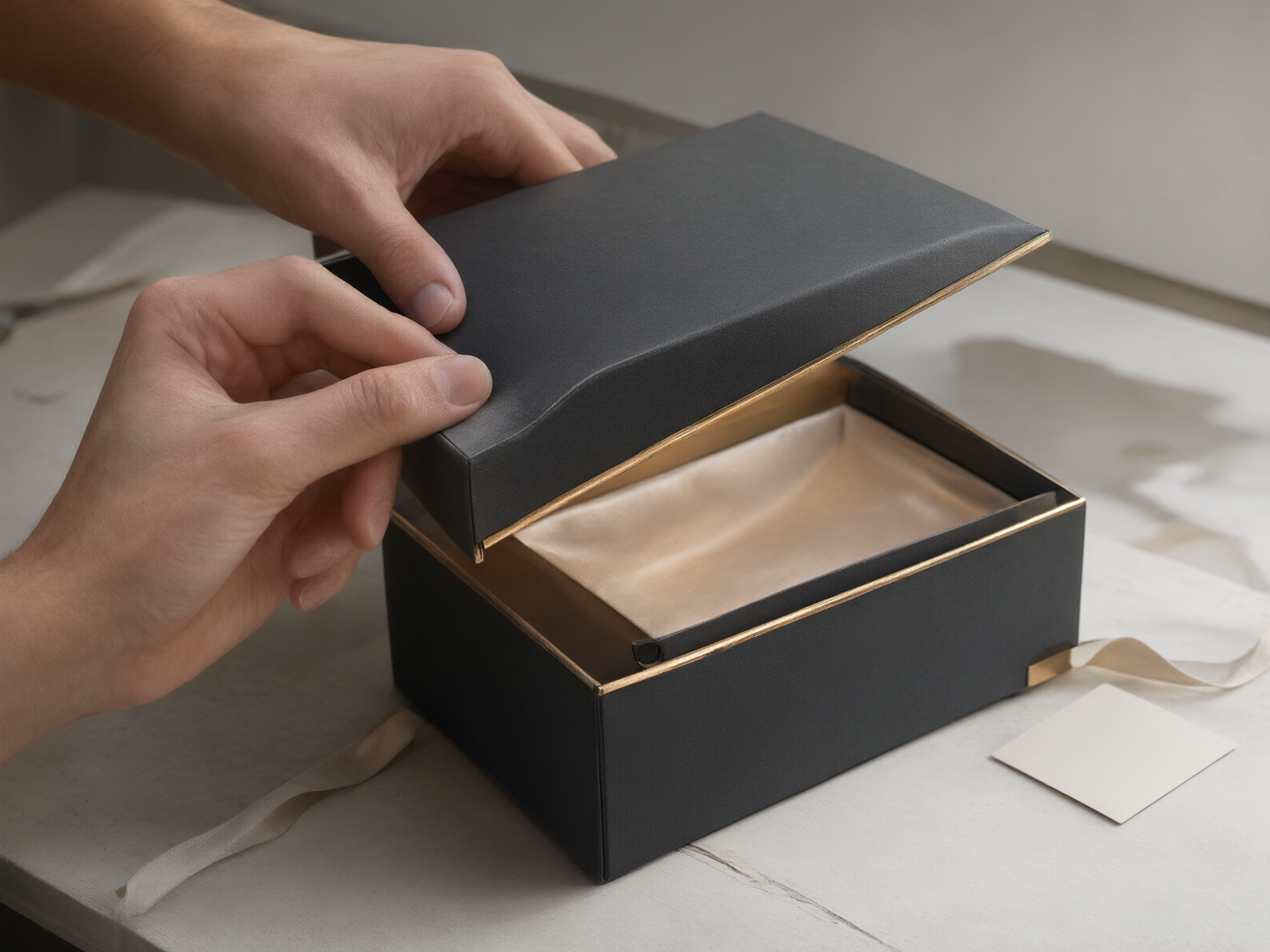
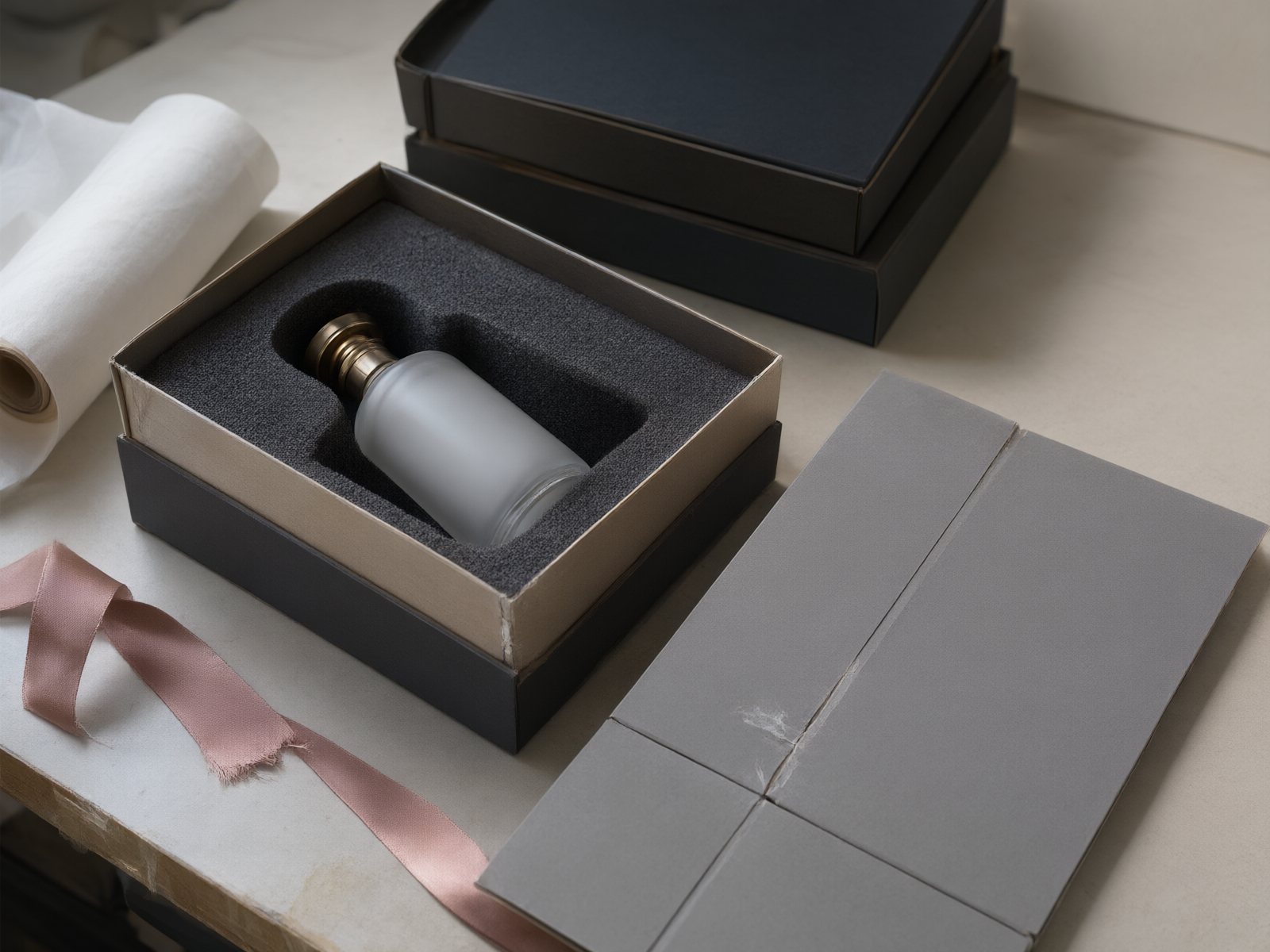
The insert defines whether the package protects or merely contains. Options range from flocked EVA and sponge cutouts to satin-lined paper trays and molded pulp. Electronics and watches demand a retained insert with a defined pocket depth; cosmetics benefit from paper-based cradles that keep sets refillable.
Insert complexity is the most common hidden cost in a rigid quote because cutting dies and hand-placing raise labor per unit.
Sampling and quality control
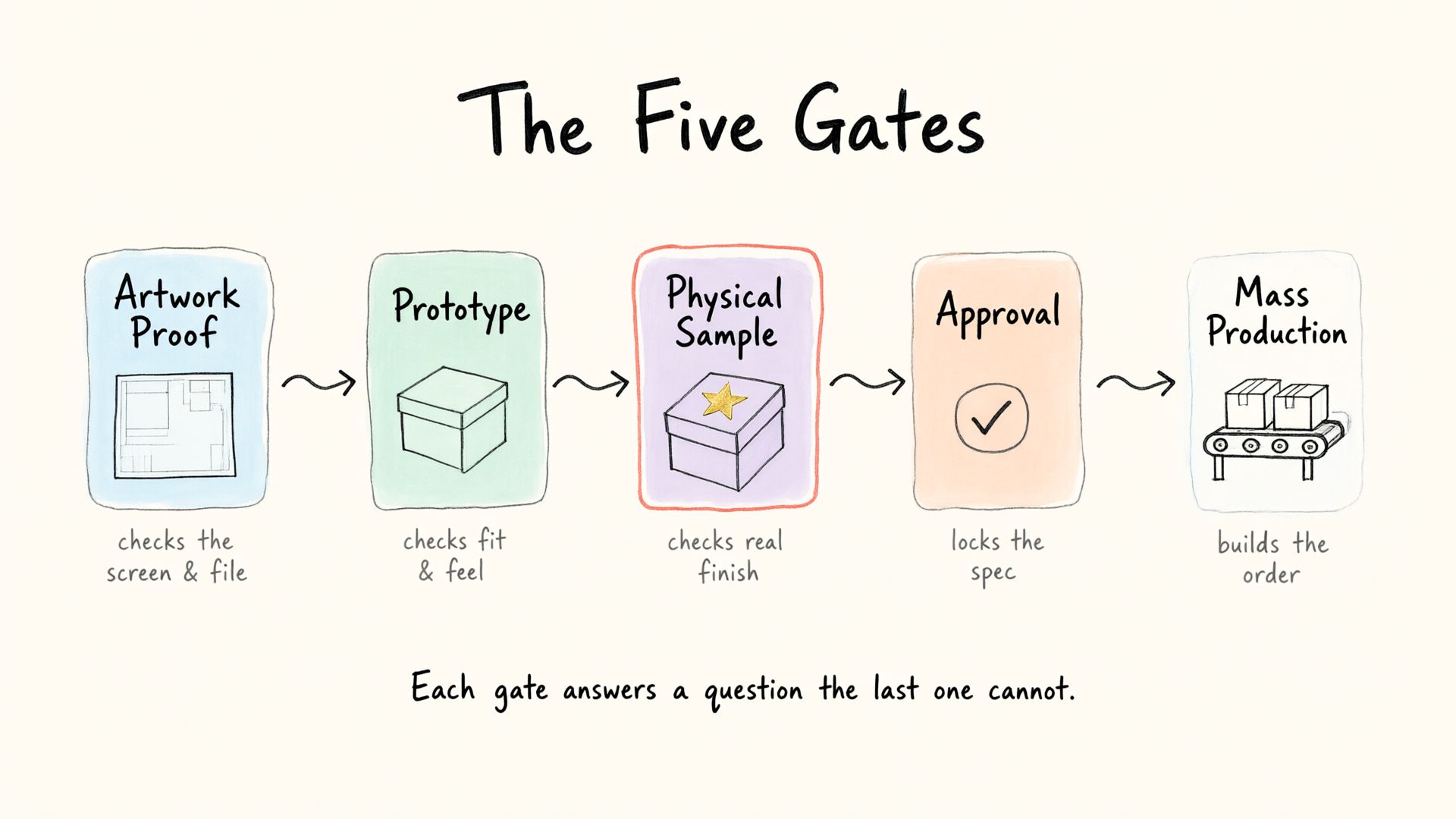
Never approve a production order on a digital proof. A white sample confirms dimensions and structure; a printed sample confirms color, foil registration and edge wrapping. At BOYU LUXE PACK we ship stock samples so buyers can test board thickness and lamination strength before committing.
On the line, strict quality control means multi-stage inspection: incoming board and paper, in-process gluing and wrapping, and a final check for squareness, lid fit and decoration alignment before packing.
MOQ, packaging and shipping
Minimum order quantities differ by construction; at a direct factory low MOQ options starting from 200 pieces are realistic for standard shells, while custom inserts and unusual formats push higher.
For export, rigid boxes arrive either assembled and nested to save space or flat-packed with the shells separated; the choice changes cart density and therefore sea or air freight cost. Export-standard packing with corner reinforcement and moisture barrier matters more for rigid boxes than for cartons, because shipped humidity is what lifts wrapping edges over a long ocean transit.
FAQs
How thick should the board be?
Match it to the product and box footprint: roughly 1.5–2.0 mm for small cosmetic and jewelry boxes, 2.0–2.5 mm for perfume and skincare, 2.5–3.0 mm for electronics and heavier items.
Which structure is best?
None is universally best; each trades presentation, freight volume and unit cost, so align the structure to the unboxing experience and the shipping method.
What is the MOQ?
It varies by construction. Low MOQ options from 200 pieces are available for standard styles at our direct factory.
Can I get samples first?
Yes. Free samples and stock samples let you verify board, wrap and finishing before bulk production.
Which printing works on rigid boxes?
Offset, screen, foil, embossing and matte or gloss or soft-touch lamination, layered in the order the design requires.
How are they shipped?
Assembled nested or flat-packed, with export-standard cartons and reinforcement sized for sea, air or express delivery.
Request a quote
Buyers comparing suppliers should ask each one for the same inputs: size, quantity, artwork, target price and freight mode. At BOYU LUXE PACK we provide free design support, structural layouts and quotes built on those parameters. Send size, quantity, artwork or a reference image to sales@ecopaperpackaging.com or WhatsApp +86 18100228969 to receive a packaging solution and a free quote.
Interested in Custom Paper Tube Packaging?
Send us your specifications and get a detailed quote within 24 hours.
Get a Free Quote