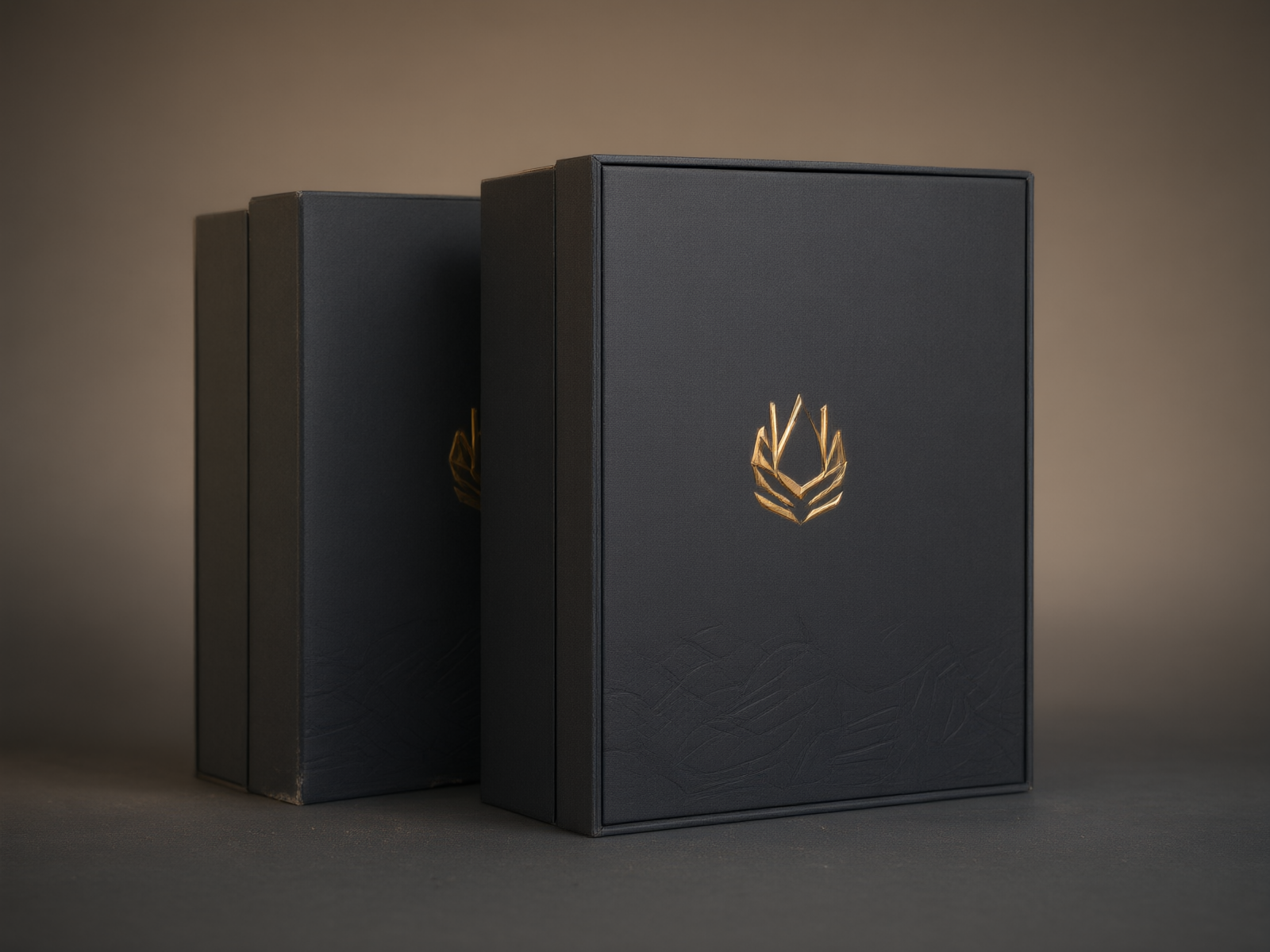
Custom Perfume Boxes: Structure, Materials, Printing & Quality Standards
A technical guide to sourcing custom perfume boxes: bottle clearance formulas, chipboard construction, insert engineering, folding vs rigid vs magnetic structures, offset and foil finishing, and ISTA transport testing.
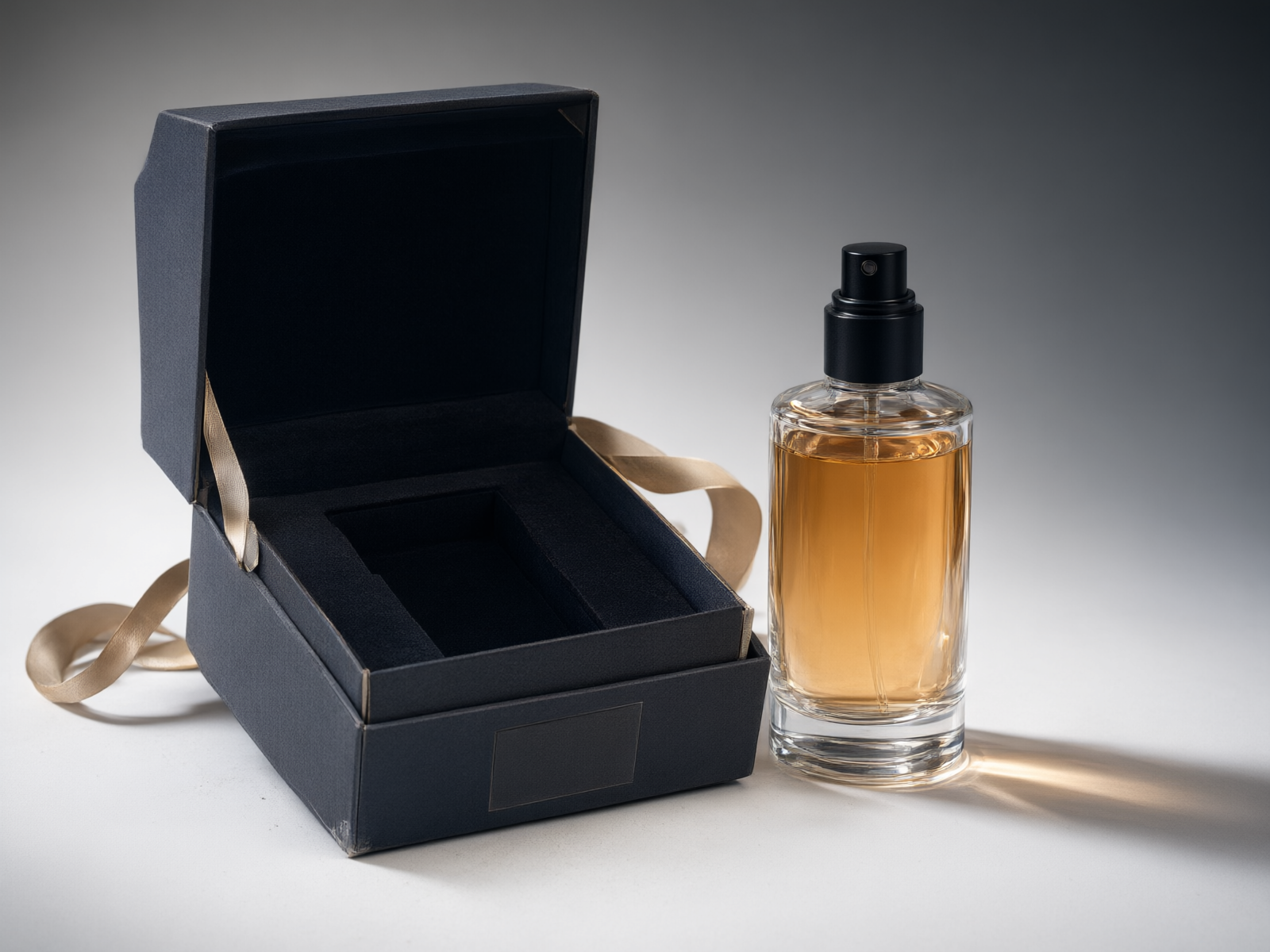
Perfume packaging is a structural engineering problem wrapped in a brand presentation problem. A glass bottle weighing 280–650 g with fragile spray mechanisms and high-value liquid contents demands packaging that satisfies physical protection requirements while reinforcing brand positioning at retail and unboxing. This guide consolidates the technical specifications that matter when sourcing custom perfume boxes, covering dimensions tolerance stacks, board construction, printing methods, and quality gates.
Primary vs. Secondary Packaging in Perfume Products
Primary packaging is the component in direct contact with the fragrance: the glass bottle, the atomizer pump, the cap, and any inner seal. It must meet material safety regulations (EU 1935/2004 for materials in contact with consumer goods) and is typically manufactured by glass and component suppliers, not box makers.
Secondary packaging is the outer box—the carton or rigid case that wraps the bottle, communicates brand identity, survives shipping, and satisfies retail display requirements. This is where structural designers, printing houses, and brands coordinate specifications. When sourcing custom boxes, the buyer is engaging the secondary package layer.
Bottle Dimensions and Box Internal Clearance
Perfume bottles span a wide dimensional range. A 30 ml roll-on might measure 25 mm diameter × 80 mm height; a 50 ml classic flanker, 65 × 110 mm; a 100 ml designer bottle, 80 × 130 mm; a collector’s 200 ml piece, 95 × 165 mm. Caps and atomizer heads frequently extend beyond the shoulder, adding 10–20 mm to effective height.
Internal clearance follows a deterministic formula: box internal dimensions equal the bottle’s maximum envelope (widest point, including cap) plus a tolerance band of 2–5 mm per axis for sliding fit, or plus insert thickness where a die-cut tray holds the bottle in position. Too much clearance allows rotational movement during transport; too little creates insertion resistance that can crack spray actuators. We recommend prototyping the clearance with actual production bottles rather than 3D renders, because glass mold tolerances commonly introduce ±1.5 mm variation between production lots.
Board Construction and Material Selection
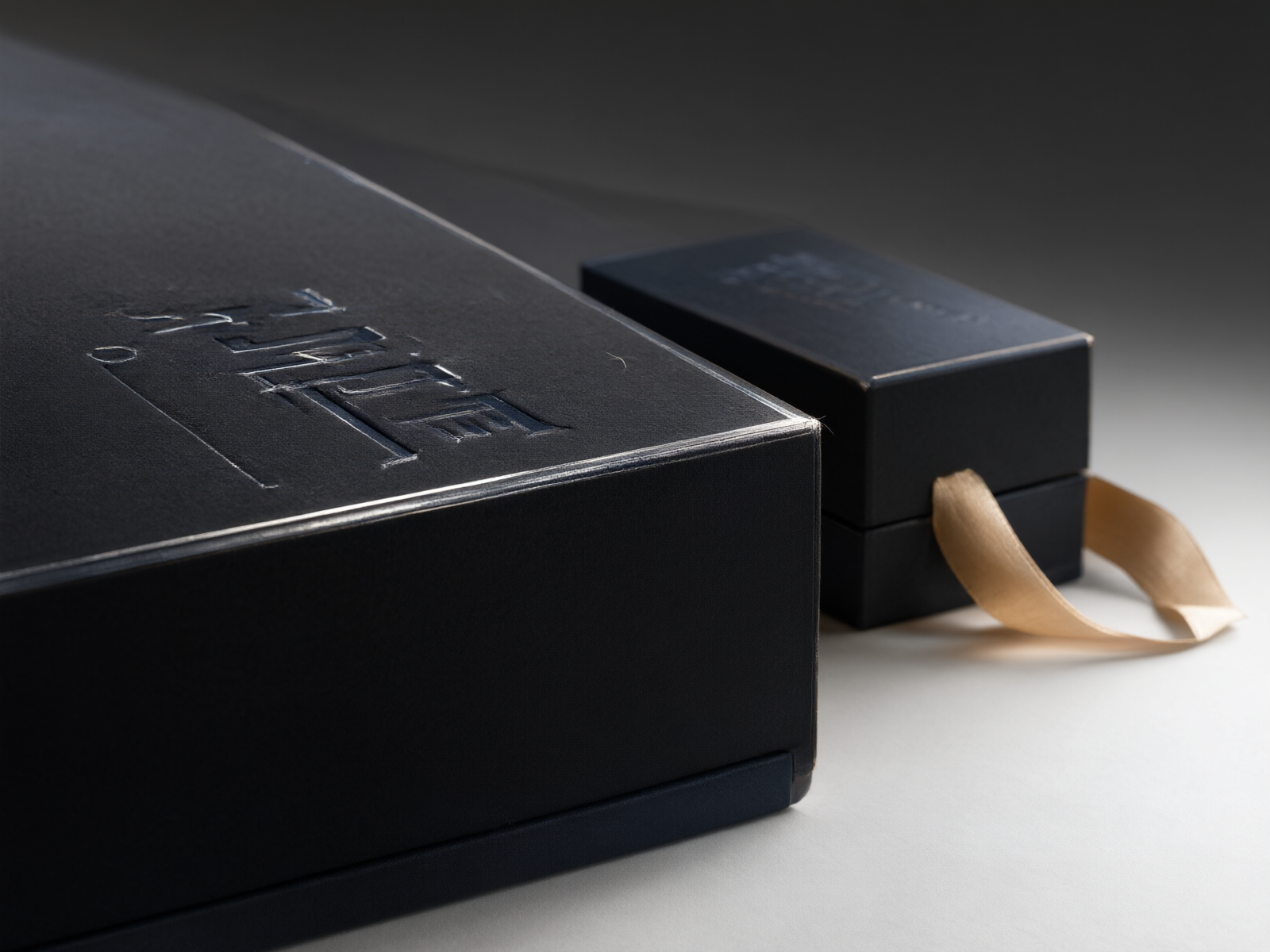
Rigid perfume boxes use chipboard (greyboard) as a core, typically 1,200–1,500 gsm for presentation boxes and 800–1,000 gsm for smaller formats. The core is wrapped with a printed cover paper—157–250 gsm coated stock for offset printing, or a specialty textured/metallic sheet for tactile finishes. For our Perfume Presentation Box line, we specify 1,500 gsm chipboard core with textured paper wrap, producing a structure capable of withstanding 900–1,200 N compression load before deformation.
Folding cartons use SBS (solid bleached sulphate) board, 300–400 gsm, die-cut and glued into a tuck-end tray. They protect a bottle wrapped in individual foam or tissue but add no retail “heft.”
Inserts and Bottle Protection
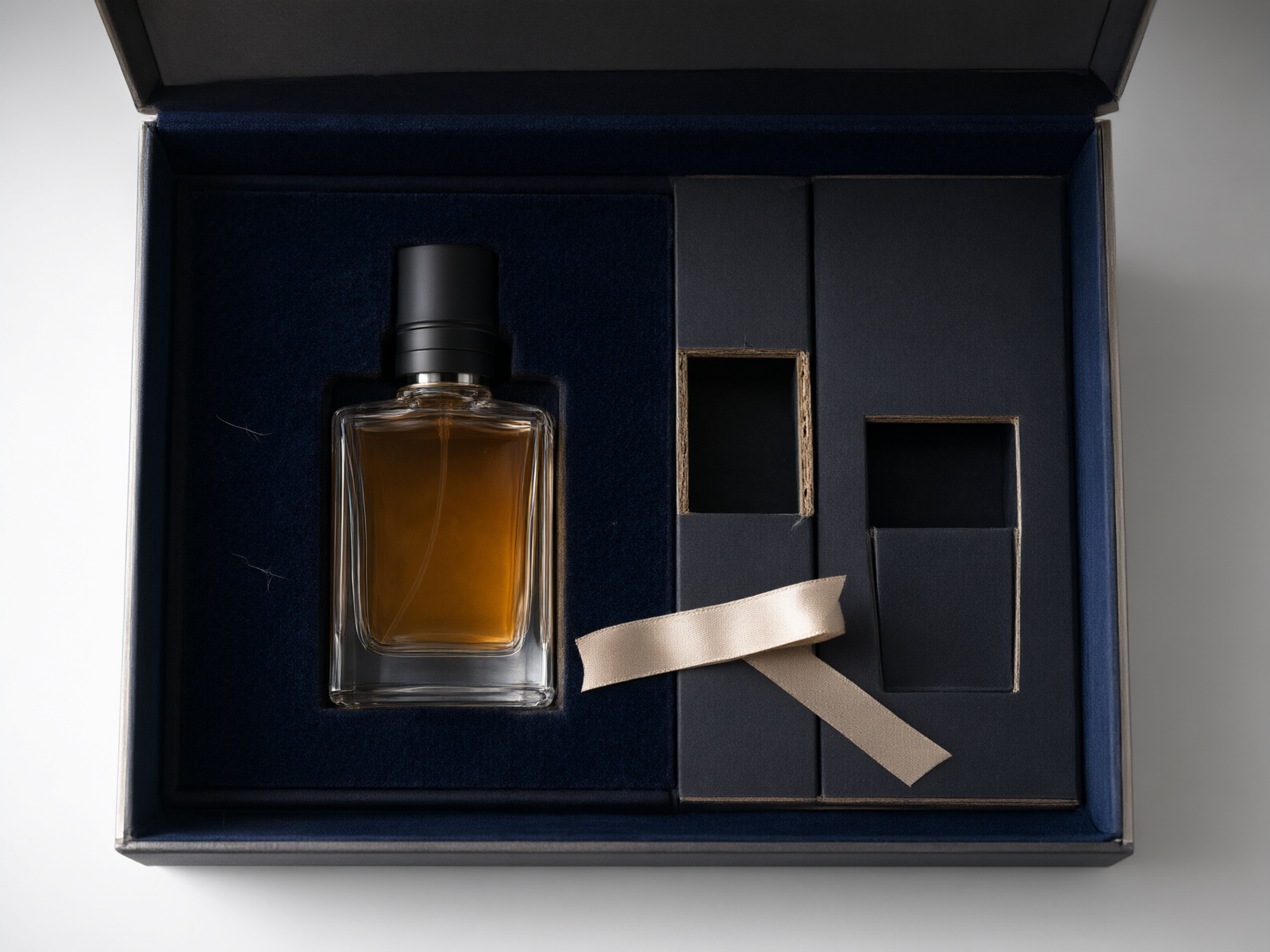
Die-cut EVA foam, sponge with flocking, or molded pulp inserts lock the bottle position and absorb shock. Insert wall thickness (not cavity dimensions) is the variable that determines whether the bottle contacts the box wall during impact. Velvet, satin, or microfiber lining on rigid-box interiors prevents surface abrasion on glass and metal caps.
For multi-piece sets (bottle + sample vials + travel case), inserts use individual pockets with finger-lift cutouts. Our standard practice is to specify pocket depth 2 mm below the bottle shoulder to prevent top-down impact transfer onto the cap.
Folding Cartons vs. Rigid Boxes vs. Magnetic Boxes
Folding cartons suit 30–50 ml mass-market formats, high-volume runs (20,000+), and e-commerce where weight affects freight. Setup is fast; per-unit cost is lowest.
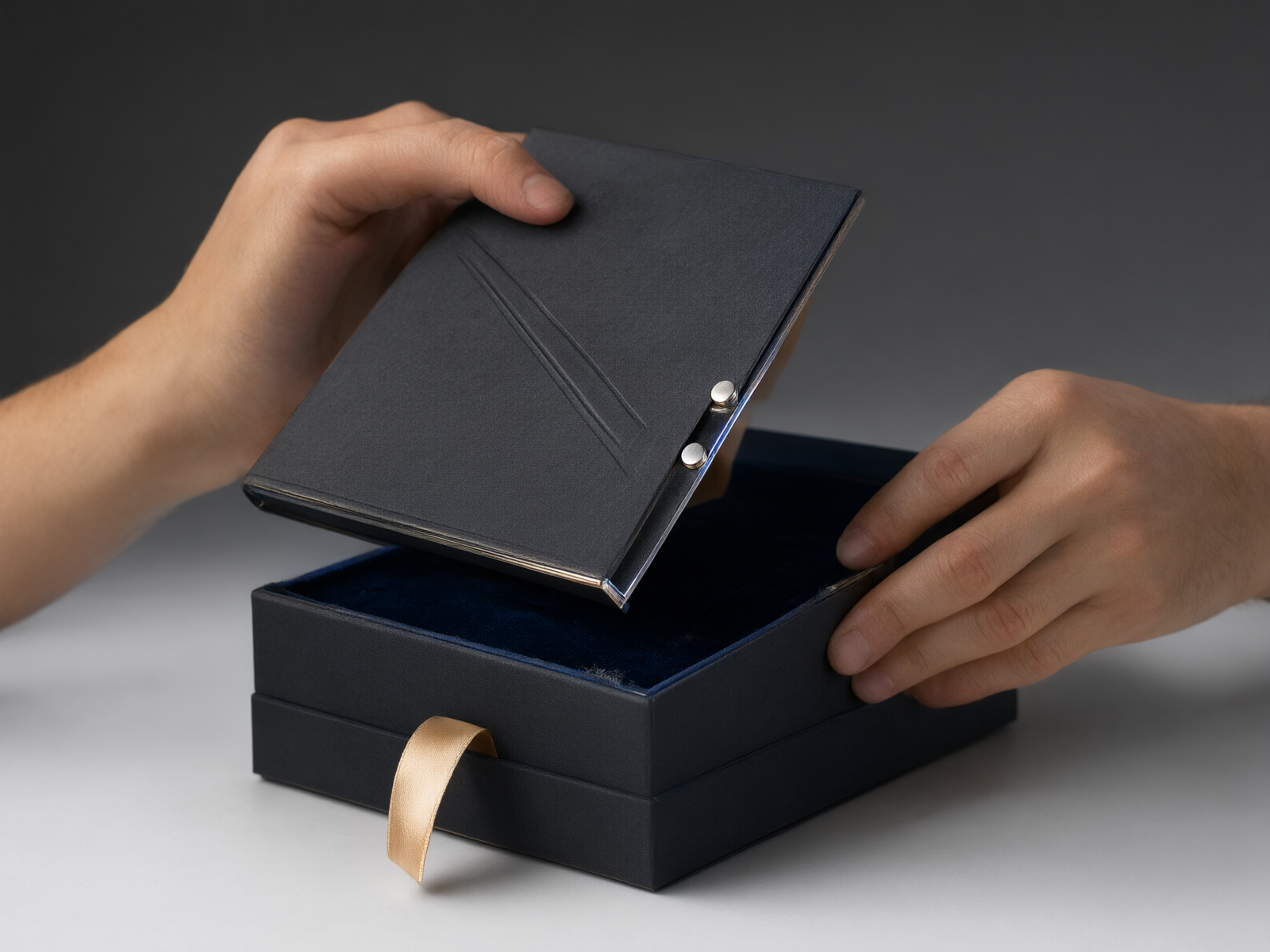
Rigid boxes (also called set-up boxes) assemble by wrapping printed cover stock around a chipboard core, yielding 30–40% higher compression strength. They are the standard for prestige and niche fragrances retailing above €80.
Magnetic closure boxes add a lid with embedded neodymium magnets (typically 6 × 2 mm nickel-plated, 4 per lid) that snaps the cover shut without a ribbon tab. This format is the default choice for Middle-Eastern luxury house brands and European niche houses that prioritize the tactile open-close experience.
Printing and Finishing
Offset lithography (CMYK + named Pantone spot colors) delivers consistent, repeatable color across print runs. Pantone is the only method that guarantees brand-match color across multiple production lots; CMYK simulation introduces ±3–5 ΔE variation even with skilled pressmen.
Foil stamping applies metallic (gold, silver, holographic) or pigment foil via heated die. Registration tolerance is ±0.5 mm; complex multi-color foil sequences add cost per color pass. Embossing and debossing compress the cover board to create tactile relief up to 1.5 mm depth; they pair with foil for signature logo treatments. Spot UV adds localized gloss contrast but is incompatible with heavily textured papers, where the coating pools unevenly.
Lamination (gloss, matte, soft-touch PP or PET film) protects the printed surface from abrasion during shipping and handling. Soft-touch lamination has become the default finish in prestige fragrance packaging since 2019.
Sampling and Proofing
Structural samples (white/unprinted box) confirm fit with real bottles before committing to printed tooling. Printing proofing requires either a digital proof (useful for color check but not for texture) or a physical printed sample on actual production materials. Buyers should plan one structural sample round (5–7 working days) and one confirmed sample round (7–10 days) into procurement timelines before mass production.
Transport and Quality Testing
Drop testing follows ISTA 3A or ASTM D5276 protocols: 26 drops from 76 cm on the package (orientation and face sequence specified). Vibration testing (ISTA 1A or 2A, 1 hour random vibration) simulates road freight. Fragrance boxes routinely fail when wall thickness is under 1 mm without an insert, because the bottle impacts the board repeatedly during vibration.
Incoming quality control checks include board density verification (gsm spot-weight), compression testing (sample 3 units per batch), foil registration visual inspection against approved proofs, color measurement via spectrophotometer (target ΔE ≤ 2.5 for brand colors), and dimensional inspection to ±0.5 mm.
At BOYU LUXE PACK we run multi-stage quality inspection across production lots and maintain export experience serving clients across North America, Europe, and the Middle East.
Frequently Asked Questions
What is the minimum order quantity for custom perfume boxes?
Low MOQ options start from 200 pieces for rigid and magnetic boxes. Folding cartons typically require 3,000–5,000 units due to die-cutting and gluing setup economics.
Can you match a specific Pantone color on dark or textured papers?
Yes. Pantone matching is accurate across white and light substrates; on dark or heavily textured stock we apply a white undercoat layer before the spot color pass, which adds one printing step. A physical proof on the actual selected paper is the only reliable verification.
How much internal clearance should a magnetic box have for a 100 ml bottle?
With a fitted insert, clearance is 1–2 mm between the insert wall and the box interior. Without an insert, allow 4–5 mm per side. We recommend prototyping with actual bottles because glass mold tolerances vary lot to lot.
What is the lead time from artwork to shipped goods?
Standard: 5–7 days structural sample, 7–10 days confirmed printed sample, then 15–25 days mass production depending on finishing complexity. Express air freight adds 3–5 days door-to-door.
Are rigid boxes recyclable given the chipboard core and mixed materials?
Chipboard and paper wrap are recyclable streams. EVA foam inserts are not; they are typically incinerated or landfilled. Buyers prioritizing end-of-life recyclability can request molded pulp or paper-based inserts instead.
Do you offer free samples before mass production?
Yes. We provide stock samples at no production cost (buyer covers freight) so procurement teams can evaluate board weight, print sharpness, and structural quality before placing orders.
Get a Quotation
Ready to get a quotation for your next custom perfume box project? Send bottle dimensions, target quantities, and reference images. We will provide a structural recommendation, print specification, and a free quote. Direct factory pricing with no middleman margin—request free samples too.
Interested in Custom Paper Tube Packaging?
Send us your specifications and get a detailed quote within 24 hours.
Get a Free Quote