Custom Paper Bag Cost: What Affects the Price of Branded Shopping Bags?
A detailed breakdown of every cost layer in a custom paper bag — from paper stock and dimensions, printing method and color complexity, finishing passes, order quantity and MOQ thresholds, to packaging and global shipping — so procurement teams can budget accurately before requesting a quote.
A branded paper bag can cost as little as $0.15 per unit or exceed $2.50. The range is wide because the final quote depends on a sequence of specification decisions, each one compounding on the last. As a direct paper packaging manufacturer in Shenzhen with over a decade of export production, BOYU LUXE PACK breaks down every cost layer so procurement teams can budget accurately before requesting a quote.
Material and Dimensions Drive the Base Cost
Paper stock is the single largest component of a custom paper bag’s unit price, and it accounts for roughly 40–55% of total manufacturing cost at typical order volumes. The specific numbers that determine this line item are grammage (paper weight, measured in gsm — grams per square meter) and paper type.
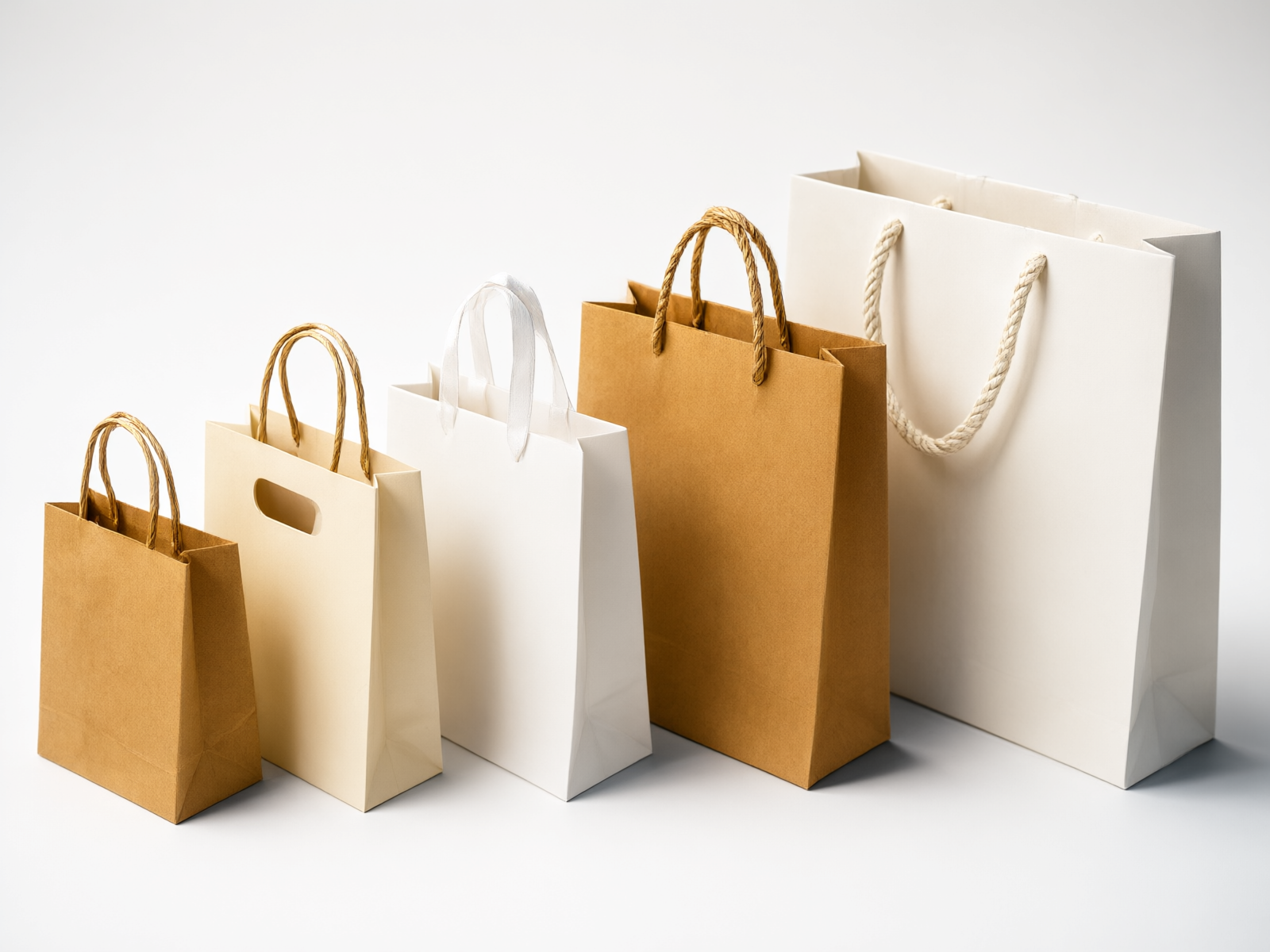
A standard retail shopping bag commonly uses 120–170gsm kraft paper or white art paper. Luxury-tier shopping bags step up to 200–250gsm boards, as in one fashion-brand project that specified 200gsm white kraft paper at 330×260×120mm. Each 30gsm increase in stock weight adds measurable material cost and may require a different press setting, which affects throughput.
Dimensions interact with paper choice: a taller bag consumes more sheet area per unit, and gusset depth (the fold-out side panel that gives the bag its three-dimensional shape) increases both material usage and die-cutting time. A 250ml tote and a 500ml wine carrier built from the same stock differ in price primarily because of board consumption per unit.
Handle selection sits in the same structural-cost tier. Twisted paper handles are the most economical and can be machine-applied at high speed. Ribbon handles require manual threading and add $0.03–$0.10 per unit depending on material. Die-cut handles eliminate the separate component entirely but demand a more complex cutting die. Cotton rope handles, as specified in the fashion-brand project referenced above, occupy the premium end due to material cost and the reinforced hole-punching step they require.
Printing Method and Color Complexity
Printing is the second major cost layer. The method chosen affects both setup fees and per-unit run cost.
Offset printing delivers the highest color fidelity and is the standard for runs above 1,000 units. A four-color CMYK job plus one or two Pantone spot colors is the typical specification for branded bags that must match a strict visual identity. Each additional spot color plate adds setup cost in the range of $30–$60 per color, which is amortized across the order quantity. Digital printing eliminates plate costs and suits prototype runs under 500 units, but the per-unit rate remains higher at scale.
Flexographic printing — a high-speed relief process common in packaging — sits between these two options for simple one-to-three-color designs on kraft stock and can reduce cost on very large runs of straightforward graphics.
Finishing Multiplies the Per-Unit Price
Surface treatments applied after printing add perceptible premium quality but also add process steps, each one contributing to unit cost.
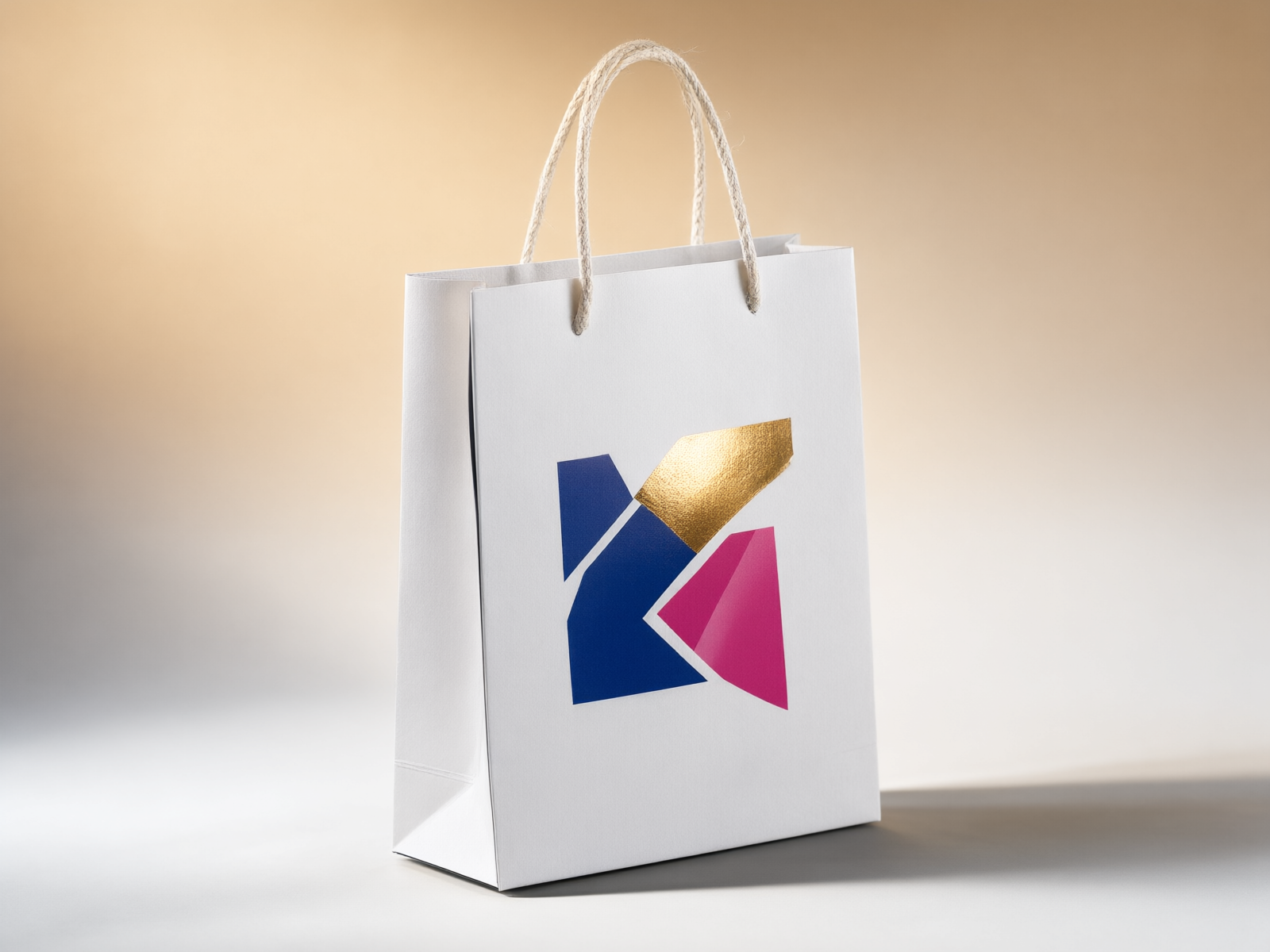
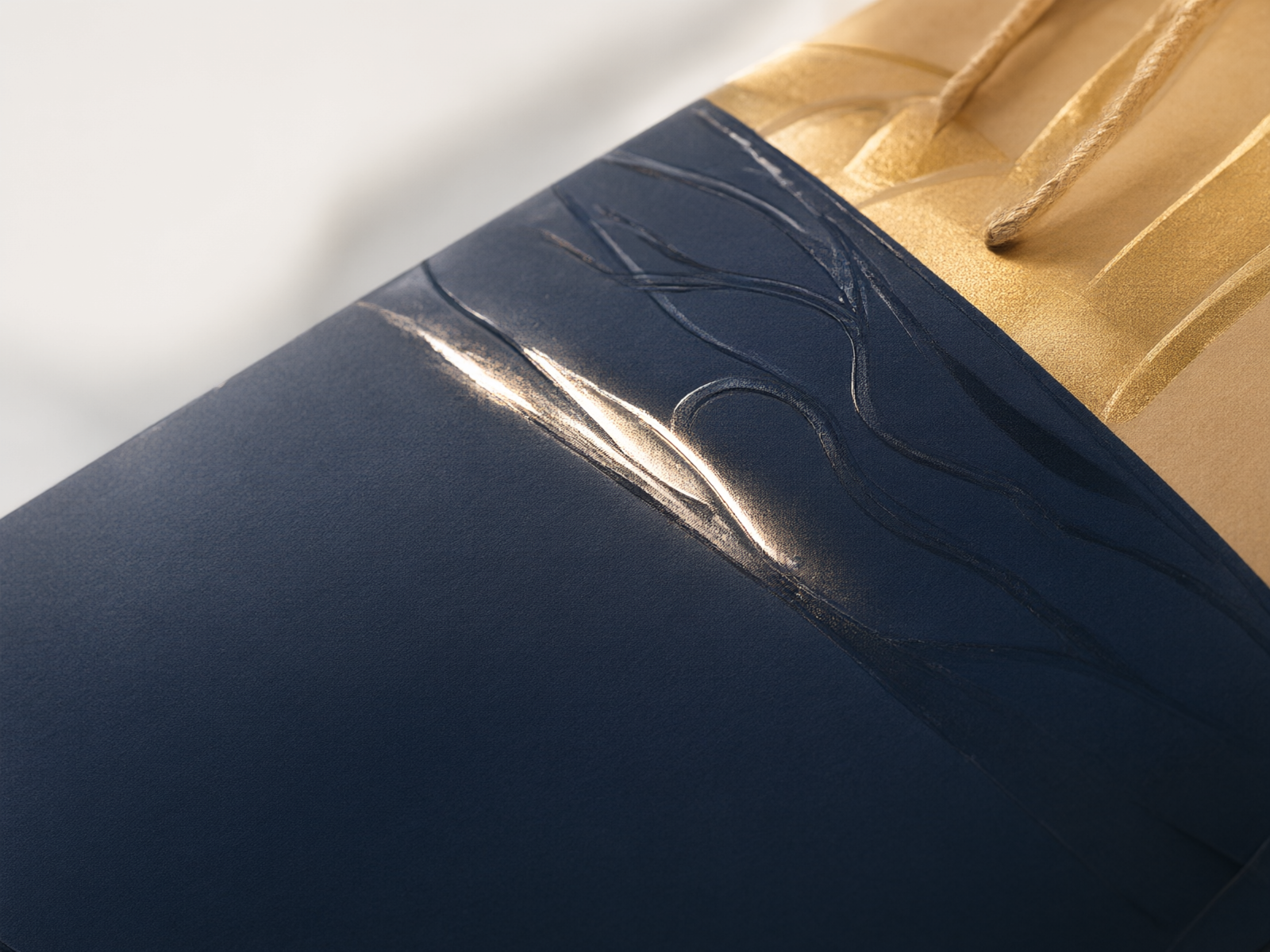
Matte or gloss lamination (a thin film bonded to the printed surface) protects ink and alters tactile feel; expect $0.02–$0.06 per unit at production scale. Spot UV (selective high-gloss coating applied through a screen) requires an additional screen and passes through a UV curing tunnel, typically adding $0.04–$0.12. Hot foil stamping in metallic colors requires a custom-made die and a dedicated foil-press station — this is among the more expensive finishing options, often adding $0.08–$0.20 per unit depending on foil area and whether one or two metal colors are used. Embossing or debossing (raising or depressing the paper surface) follows similar tooling logic.
Each finishing step compounds: a bag that carries lamination plus spot UV plus gold foil needs three downstream stations, which is why multi-process orders carry higher per-unit costs than single-process ones, independent of the printing itself.
Order Quantity and the MOQ Threshold
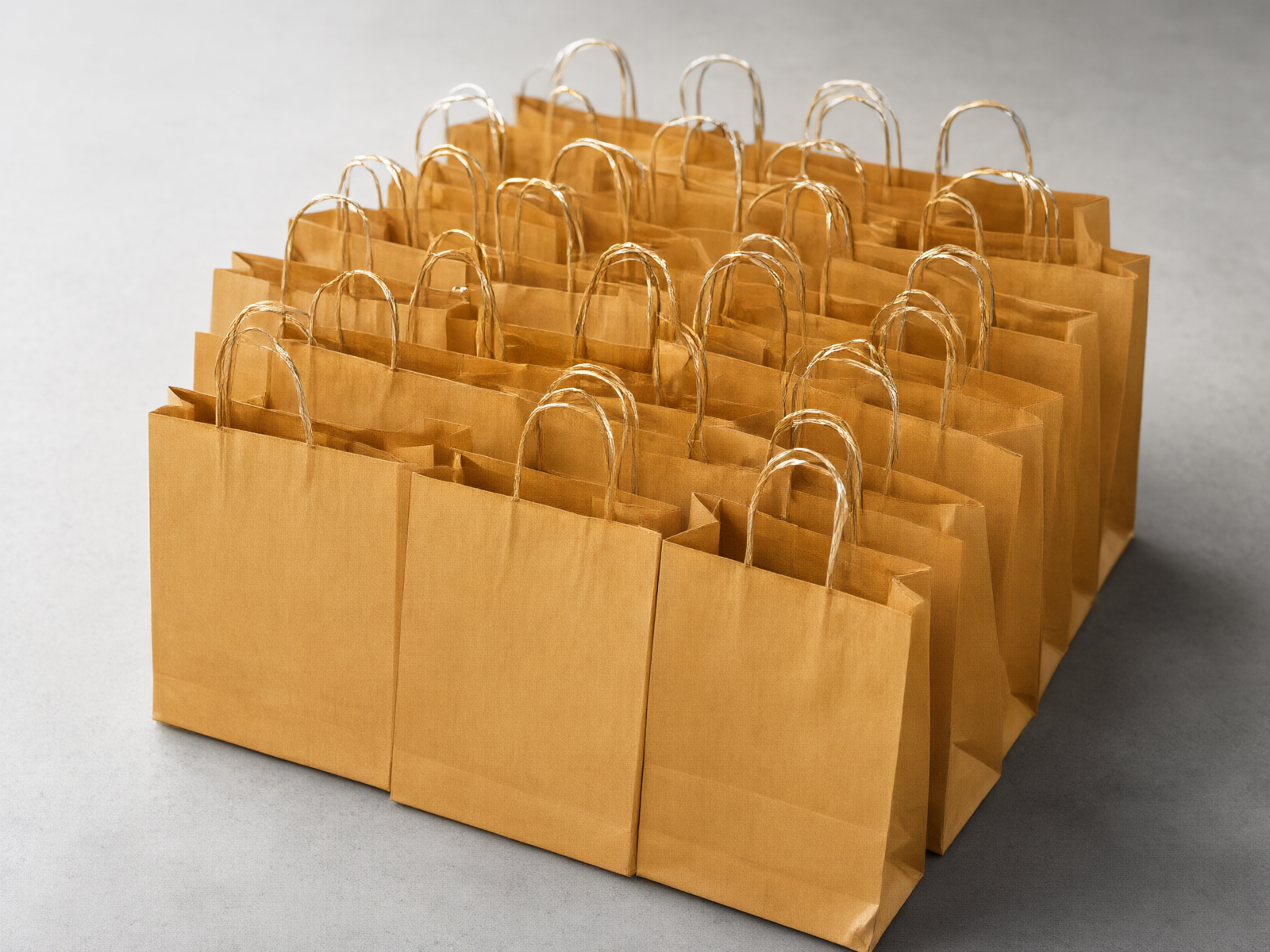
Quantity inversely scales unit cost because fixed charges — plate-making, die-cutting setup, screen fabrication, and finishing tooling — are distributed across more units. A run of 200 bags bears those fixed charges over 200 units; a run of 5,000 units dilutes the same charges over a much larger denominator.
BOYU LUXE PACK sets low MOQ options at 200 pieces, allowing smaller brands to test market response without committing to five-figure orders. At that threshold, unit costs reflect setup recovery. Between 500 and 2,000 units, the inflection curve steepens as the fixed portion becomes negligible relative to variable material and labor. Above 10,000 units, marginal savings flatten because the production line reaches steady-state efficiency and material costs dominate.
Packaging and Shipping Complete the Delivered Cost
The final two cost layers are often overlooked until the buyer evaluates landed price per unit.
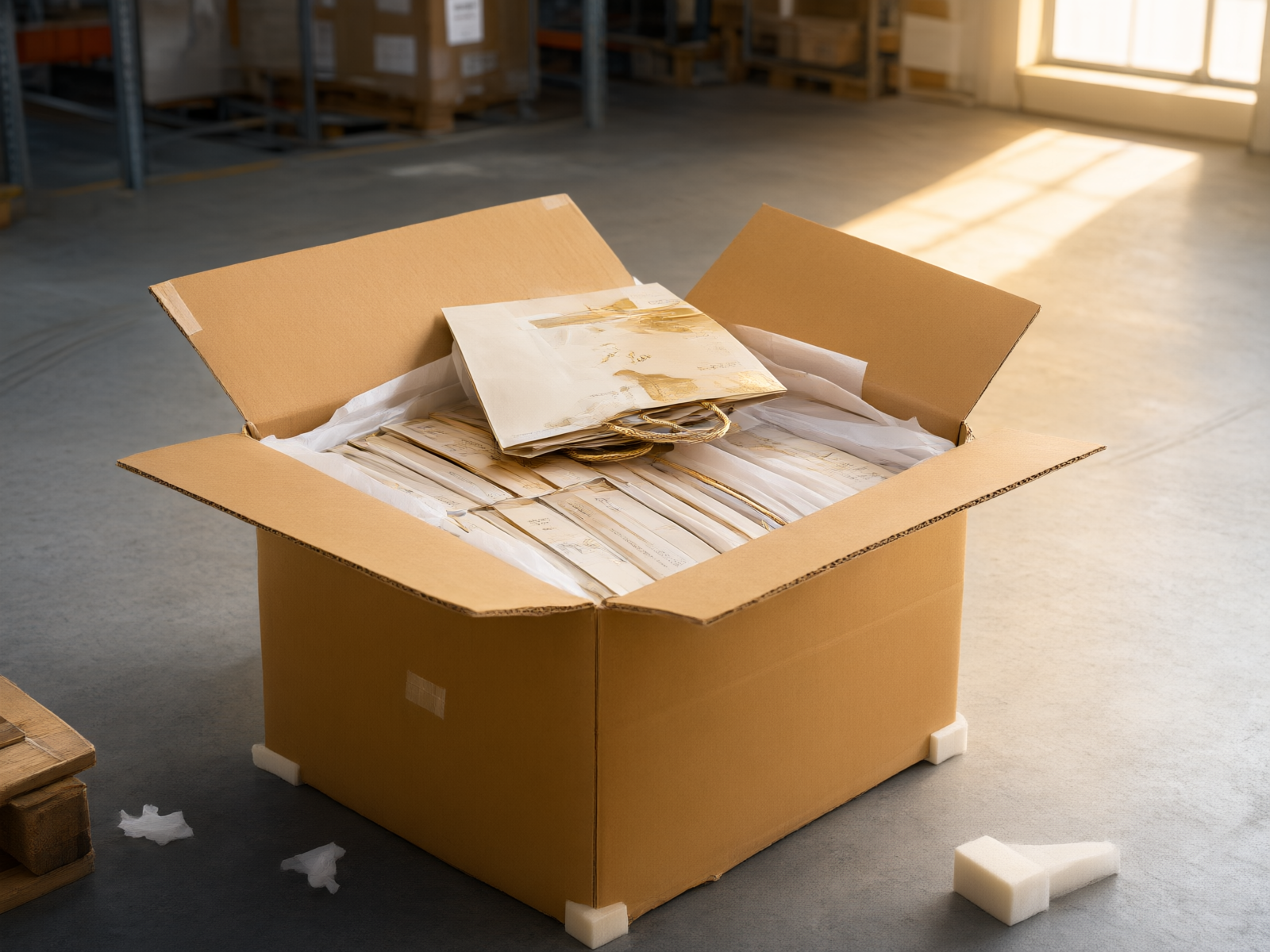
Export-standard packing — usually five-layer corrugated cartons with corner protection — prevents transit damage and adds a modest per-unit allocation based on carton size and units per box. Shipping mode determines the largest logistics variable: sea freight is the default for B2B volumes and produces the lowest per-unit freight cost; air freight and express courier are reserved for urgent samples or small trial orders. With global shipping capability covering USA, Europe, the Middle East, and Southeast Asia, BOYU LUXE PACK quotes door-to-door rates so procurement teams see the full landed figure rather than a factory-gate number that later requires freight surcharges.
How to Budget Without Surprises
The cost structure above explains why two bags that look similar can differ in price by 300%. The difference rarely lies in one factor; it is the multiplication of stock grade, dimensional volume, handle type, print method, finishing passes, run size, and destination.
A practical approach to budgeting is to fix the non-negotiable variables first — logo size, brand color match, handle type, bag dimensions — and then request a specification-based quote from the manufacturer. With free design support and free samples available at BOYU LUXE PACK, a buyer can confirm material and print quality physically before committing to a production run, and receive a transparent quote that itemizes each cost layer described in this article.
Get a Free Quote or Request Free Samples to establish a per-unit cost that matches the exact specification.
Interested in Custom Paper Tube Packaging?
Send us your specifications and get a detailed quote within 24 hours.
Get a Free Quote