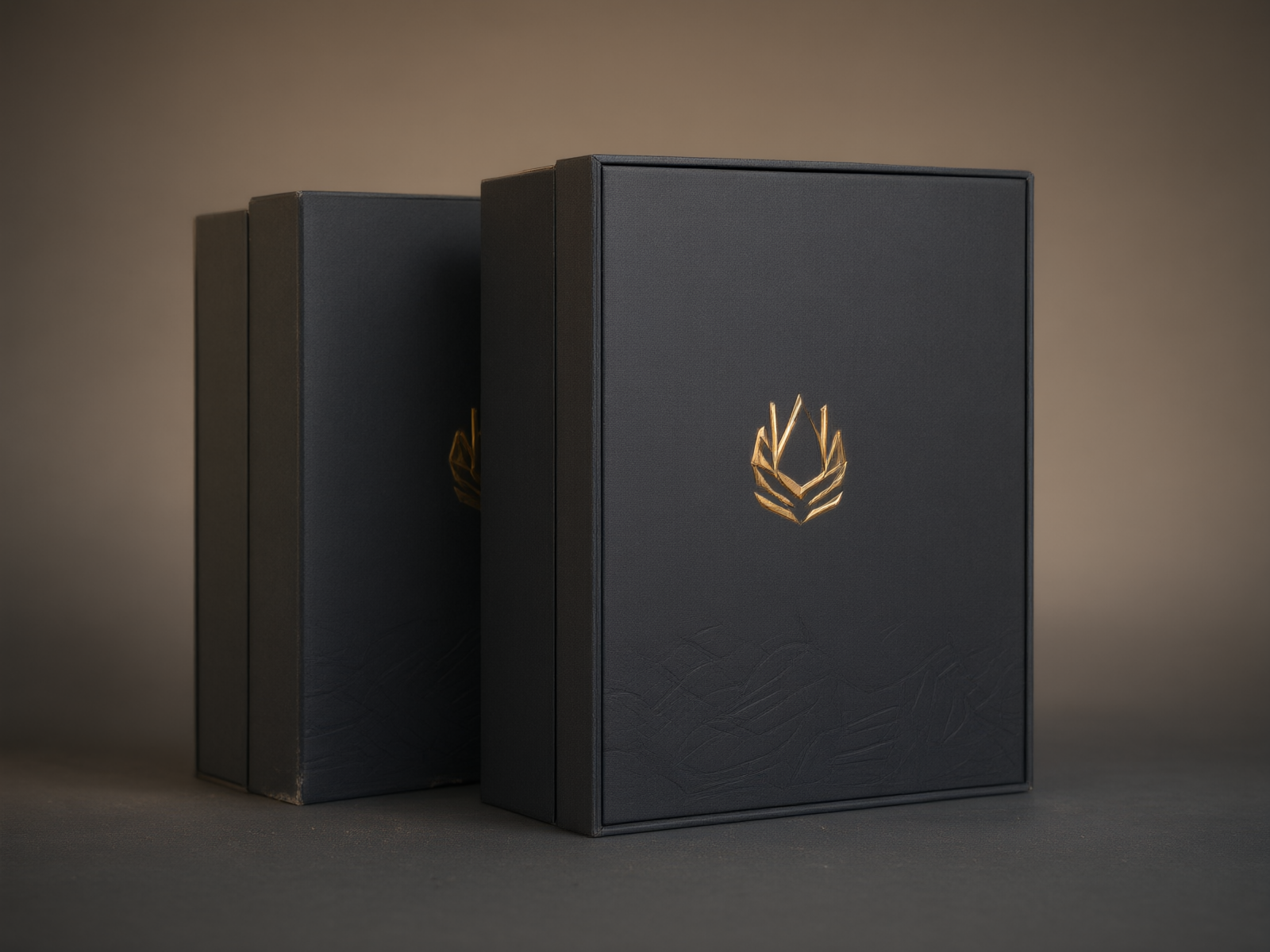
Custom Drawer Boxes for Luxury Cosmetics, Jewelry & Gift Packaging
A technical deep-dive into custom drawer box construction: outer sleeve and inner tray engineering, opening mechanisms, insert types, product category applications and factory-level quality control for luxury packaging.
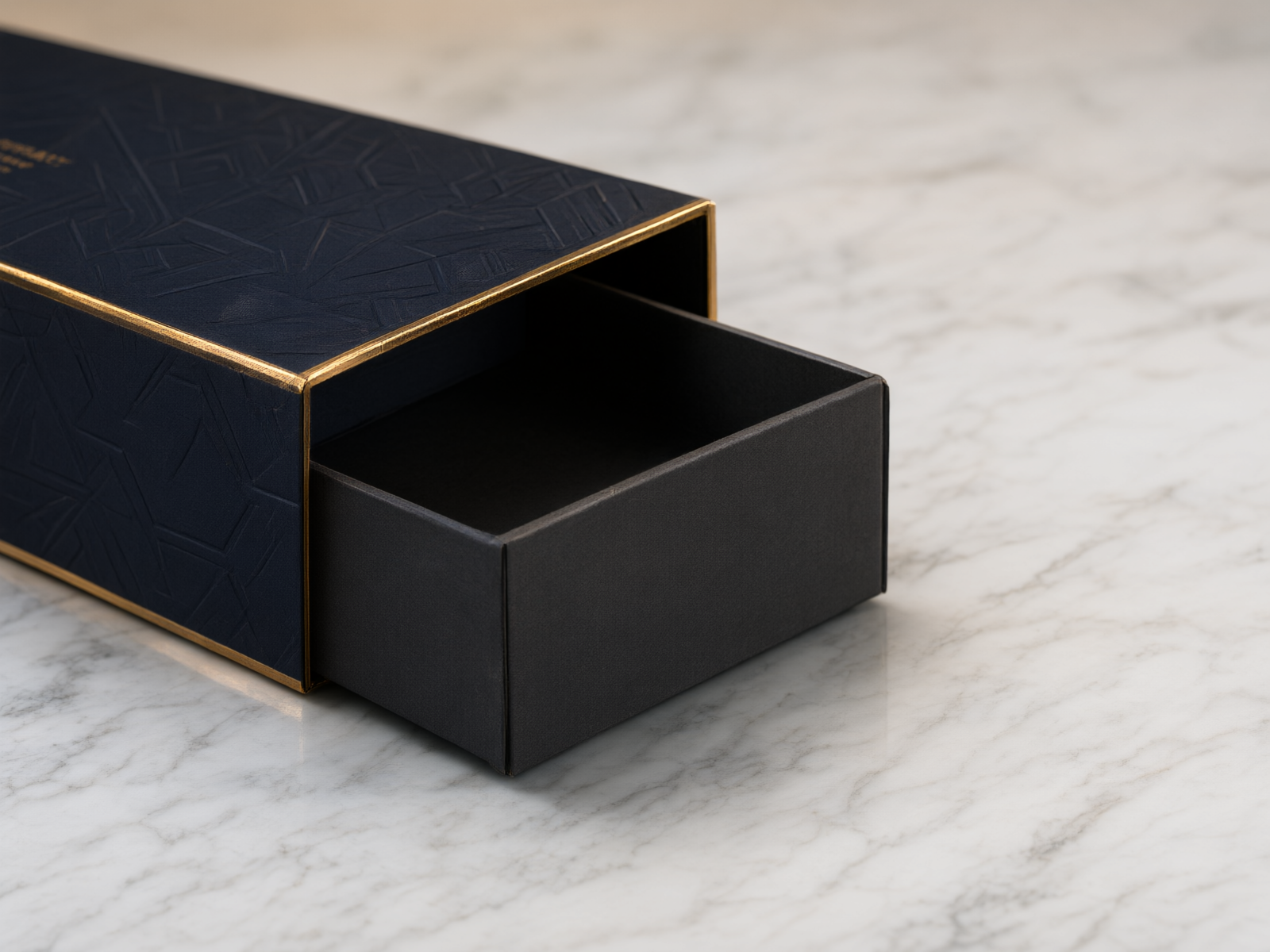
Drawer boxes sit in a narrow tier of rigid packaging structures where mechanical precision directly affects perceived brand value. Unlike flip-top or tuck-end formats, a sliding box relies on clearance tolerances measured in fractions of a millimeter — too tight and the drawer sticks; too loose and the inner tray wobbles inside the outer sleeve. For brands selling products above the mid-market price point, that sliding action is either a signature moment or a defect no amount of gold foil can recover.
At BOYU LUXE PACK, we manufacture custom drawer boxes at our direct factory in Shenzhen, handling everything from structural engineering to finished packing for clients across the USA, Europe, the Middle East, and Southeast Asia. The following breaks down the construction decisions that separate a shelf-appealing luxury drawer box from a generic one.
What Defines a Drawer Box Structure
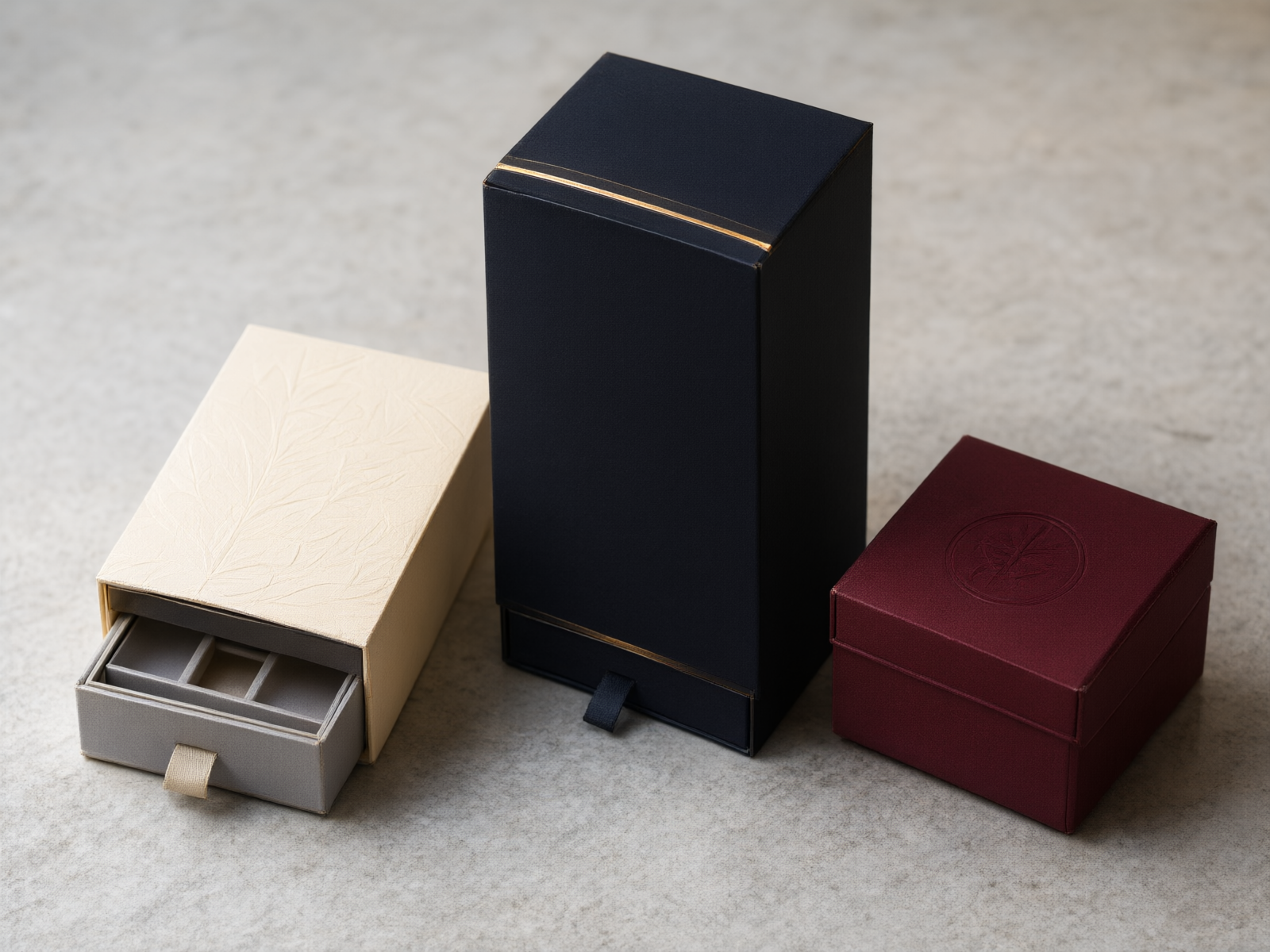
A drawer box is a two-part rigid package: an outer sleeve and an inner tray that slides horizontally, mimicking the mechanics of a chest drawer. The outer sleeve must provide lateral rigidity while the inner tray carries the product weight and positions it relative to display surfaces.
We build the outer sleeve from chipboard between 1200 and 1500 gsm, wrapped with the selected cover paper — art paper, textured stock, or specialty material. The inner tray uses lighter board (typically 600–900 gsm) with a windowed or open front edge so the brand’s logo on the sleeve remains visible when the box is partially pulled open. This structural hierarchy means the heavier-gauge material always sits in the position of greatest mechanical stress, which is a cost-saving principle embedded in the design itself.
For brands requiring higher load capacity — jewelry sets, multi-bottle perfume collections — we reinforce the tray base with double-wall construction or an additional 300 gsm liner that bonds flush against the bottom surface. Our export experience has shown that shipping tolerances in ocean freight add 2–5% humidity fluctuation, so we spec moisture-resistant adhesives and pre-scaled vent channels into the sleeve walls to prevent panel separation during long transit.
Opening Mechanisms: Ribbon Pull, Finger Pull, and Sleeve Design
The way a customer engages with the box determines the perceived quality of the entire unboxing sequence. Three opening methods cover the majority of luxury drawer box applications:
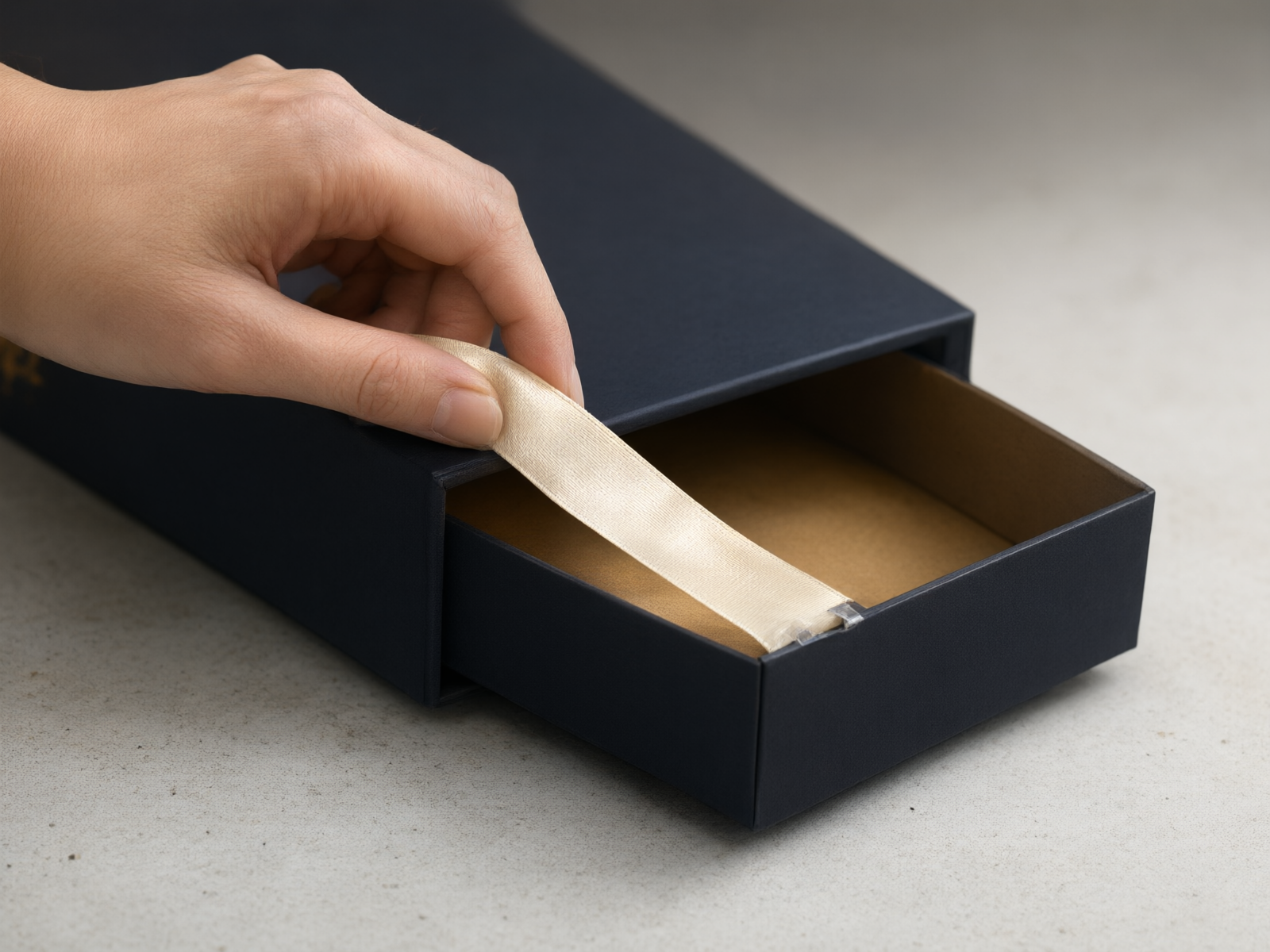
Ribbon pull. A satin or grosgrain ribbon loop is adhered along the bottom interior of the tray’s front face, extending 15–25 mm past the sleeve edge. The customer grips the ribbon to slide the tray open, eliminating any need to push on the visible exterior surface. This method is standard for perfume and high-end cosmetics where fingerprints on matte-finished sleeves degrade display appeal. The ribbon anchoring requires a specific glue pattern — a central dot with two lateral wings — to resist pull-out under repeated opening cycles.
Finger pull. A half-circle or rectangular cutout in the sleeve’s front lip allows the user’s fingertip to catch the tray edge directly. Finger pulls are lower-cost than ribbon systems and work well when the packaging is single-encounter (retail gift sets, promotional launches). We cut the finger recess on a CNC die to hold tolerance at ±0.3 mm, preventing the sleeve from flexing over time.
Sleeve construction. The sleeve can be single-piece (a pre-glued channel wrapping the tray from one side) or two-piece (top and bottom halves bonded together). Two-piece sleeves give cleaner corners and allow deeper wrap-around printing without visible seams — a practical requirement for brands placing logos or artwork across the full outer perimeter.
Insert Engineering: The Component Often Overlooked
A drawer box without a proper insert is a box that ships products loosely. Inserts fix product position inside the tray and serve the dual function of protecting items during transit and presenting them organized on the retail shelf.
The three insert tiers most common in custom luxury packaging:
EVA foam — carved to exact product contours, used for heavy or irregularly shaped jewelry pieces where vibration damping matters. Density of 25–30 kg/m³ prevents foam compression over a six-month retail cycle.
Blister trays — vacuum-formed from PET or rPET, suited to cosmetics and gift sets where multiple items sit in a single tray. Tooling lead time from our factory averages 5–7 working days, after which repeat orders reuse the same mold.
Flocked or paper inserts — used when the priority is aesthetic finish rather than load protection: rigid paper partitions for layered gift items, velvet-flocked pads for necklace display.
At our direct factory we produce all three insert types in-house, which means structural integration between tray and insert happens at one point rather than across two suppliers — reducing assembly tolerance stack-up by approximately 0.5–1 mm per axis.
Applications Across Product Categories
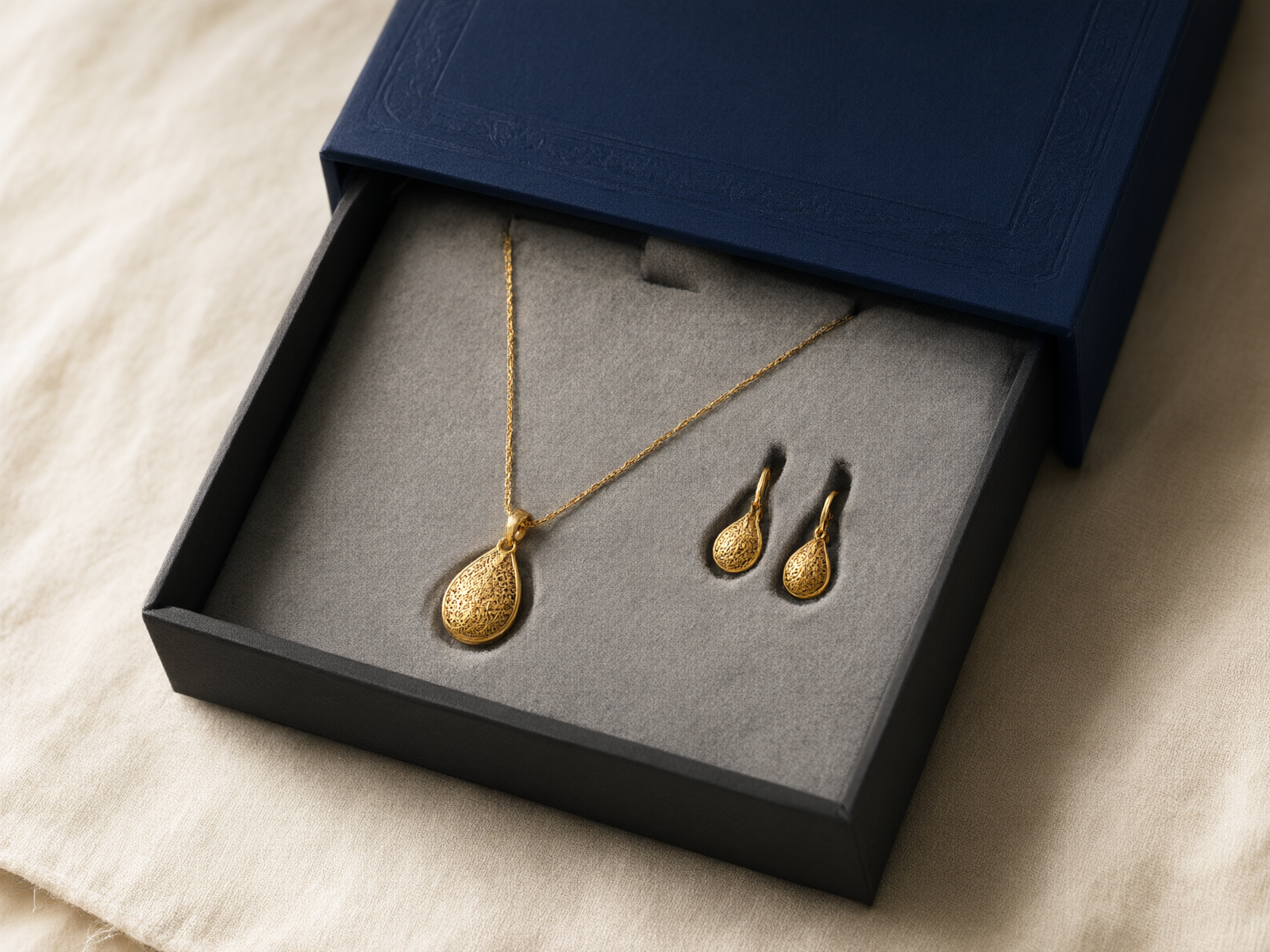
Jewelry. Drawer boxes in jewelry retail face the highest scrutiny because the product inside carries both high value and high visual exposure to the buyer. The tray typically holds 2–6 slots flocked in neutral gray or cream, sized for rings, earrings, or pendant chains. A rigid outer sleeve with matte lamination and spot UV logo keeps the presentation understated — which in turn reads as confidence rather than decoration.
Perfume and cosmetics. Single-bottle fragrance presentations require a snug cavity with shoulder relief so the cap does not contact the tray wall during transport. Multi-piece skincare gift sets demand a layered insert with stepped depth. We routinely produce 320 × 240 × 90 mm trays with dual-level EVA inserts for these applications.
Gift and promotional boxes. Drawer-format gift boxes benefit from the reveal mechanic: partial opening teases the interior, full opening discloses a printed message card or QR code on the tray base. This sequence is a measurable engagement advantage in direct-to-consumer gift retail, especially during seasonal campaigns.
Why Structural Specificity Matters at the Factory Level
Every dimension, material selection, and finishing combination above is a decision that compounds. A drawer box with a 90 mm sleeve depth requires a different scoring line radius than one with a 60 mm sleeve. The glue pattern on a ribbon pull changes based on the weight of the intended product load. These are not after-thoughts a designer can resolve on screen — they require manufacturing feedback built into the development cycle.
We offer free design support that includes structural CAD review and dieline preparation before any production run, starting from an MOQ of 200 pieces. Physical samples ship within 5–7 days after artwork approval so buyers can validate sliding clearance, insert fit, and print registration themselves before placing volume orders. Every batch undergoes multi-stage quality inspection covering corner bonding strength, sleeve-to-tray fit, and color consistency against the approved Pantone reference.
For brands evaluating custom drawer boxes — whether for a single SKU or a seasonal collection — the practical question is not whether the box looks premium on a render. It is whether the finished unit arrives at the customer’s hands still gliding, aligned, and structurally unchanged after three weeks in a shipping container. That outcome is an engineering responsibility, and at BOYU LUXE PACK it is the specification we build to.
Interested in Custom Paper Tube Packaging?
Send us your specifications and get a detailed quote within 24 hours.
Get a Free Quote