Corrugated Mailer Boxes vs Rigid Boxes: Which Packaging Structure Fits Your Product?
An application-by-application comparison of corrugated mailer boxes and rigid boxes, covering material construction, flat-pack efficiency, premium presentation, finishing options, and the framework for matching format to product and channel.
Procurement teams choosing between a corrugated mailer box and a rigid box usually treat the decision as a ranking: which structure is better. In practice the two formats answer different questions, and a rigid box adopted for high-volume parcel shipping raises landed freight cost just as surely as a mailer adopted for a premium gift line weakens shelf presence. The useful comparison is application by application. This guide walks through the material reality behind each structure, the factors where each one performs, and the framework for matching the format to the product.
What Each Structure Is Made Of
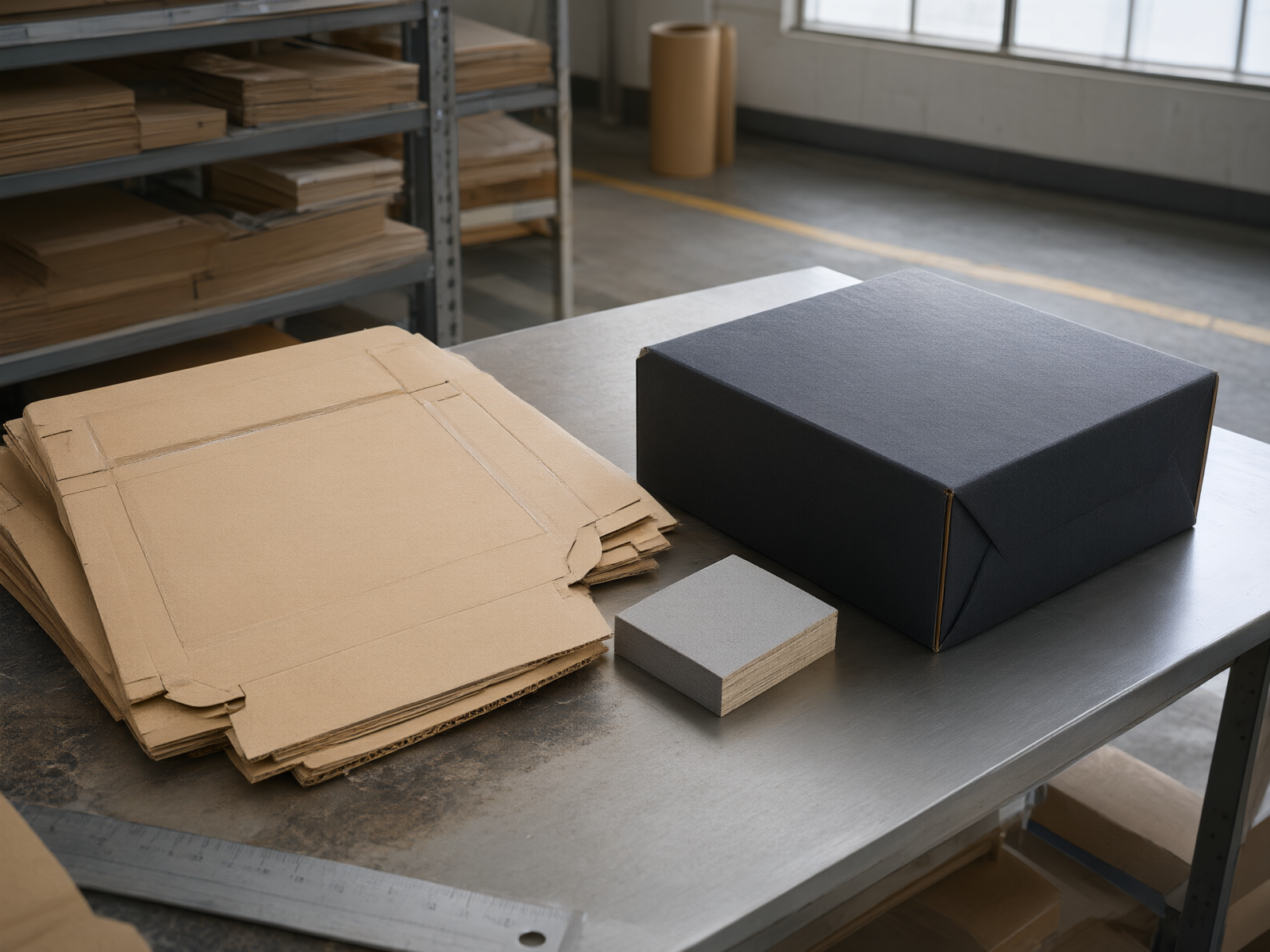
A corrugated mailer is built from a single sheet of corrugated board — paper with a wavy fluted medium between two flat liners. Most retail and subscription packaging uses E-flute (around 1.5 mm thick) or B-flute (about 2.5 mm). The box is die-cut with score lines and glue strips, delivered flat to the packing line, and assembled seconds before use. The fluted layer is what gives a thin sheet its crush resistance once the box is formed, and that is why the same board class carries freight across oceans.
A rigid box works the other way. It uses compressed chipboard — greyboard — instead of fluted paper. The skincare gift set in our current production runs on 1200 gsm chipboard faced with printed art paper; the perfume presentation box uses 1500 gsm chipboard under textured wrap. Walls of that density do not bend in transit and corners do not blunt from stacking. Rigid boxes arrive at the destination warehouse finished and volumetric; mailers arrive as flat sheets. Every advantage in the rest of this comparison traces back to those two facts.
Where the Mailer Box Wins
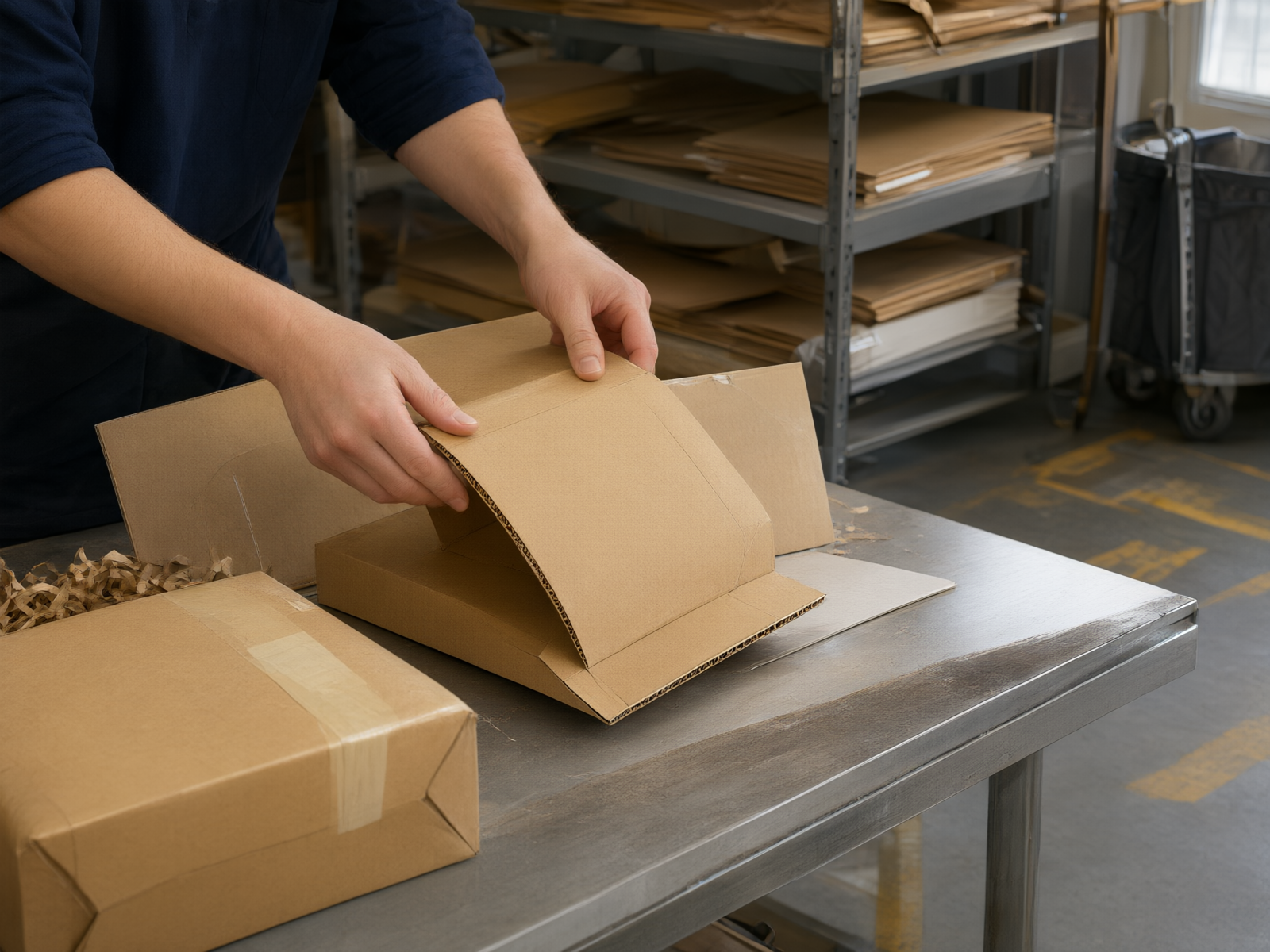
Flat-pack transport decides the first factor. A pallet of flat mailers holds many times the piece count of pre-assembled rigid boxes, so the difference in both freight cost and warehouse racking is structural rather than negotiable. Single-wall corrugated adds little gram weight per unit, and lightweight packaging keeps dimensional weight down on parcel networks — a cost that compounds with every SKU when the outer box ships to the end customer.
Assembly speed decides the second. Pre-glued drop-bottom mailers erect in seconds, with no skill requirement at the packing station, and only in the quantity needed that day. Folding efficiency therefore protects inventory too: slow-moving references wait as sheets in a corner of the line, not as pre-built volume that occupies floor space and shows dust. For e-commerce and direct-to-consumer brands shipping apparel, subscription goods, and mid-priced cosmetics, the mailer covers transit protection, unboxing on a phone screen, and returns handling from one format.
Where the Rigid Box Wins
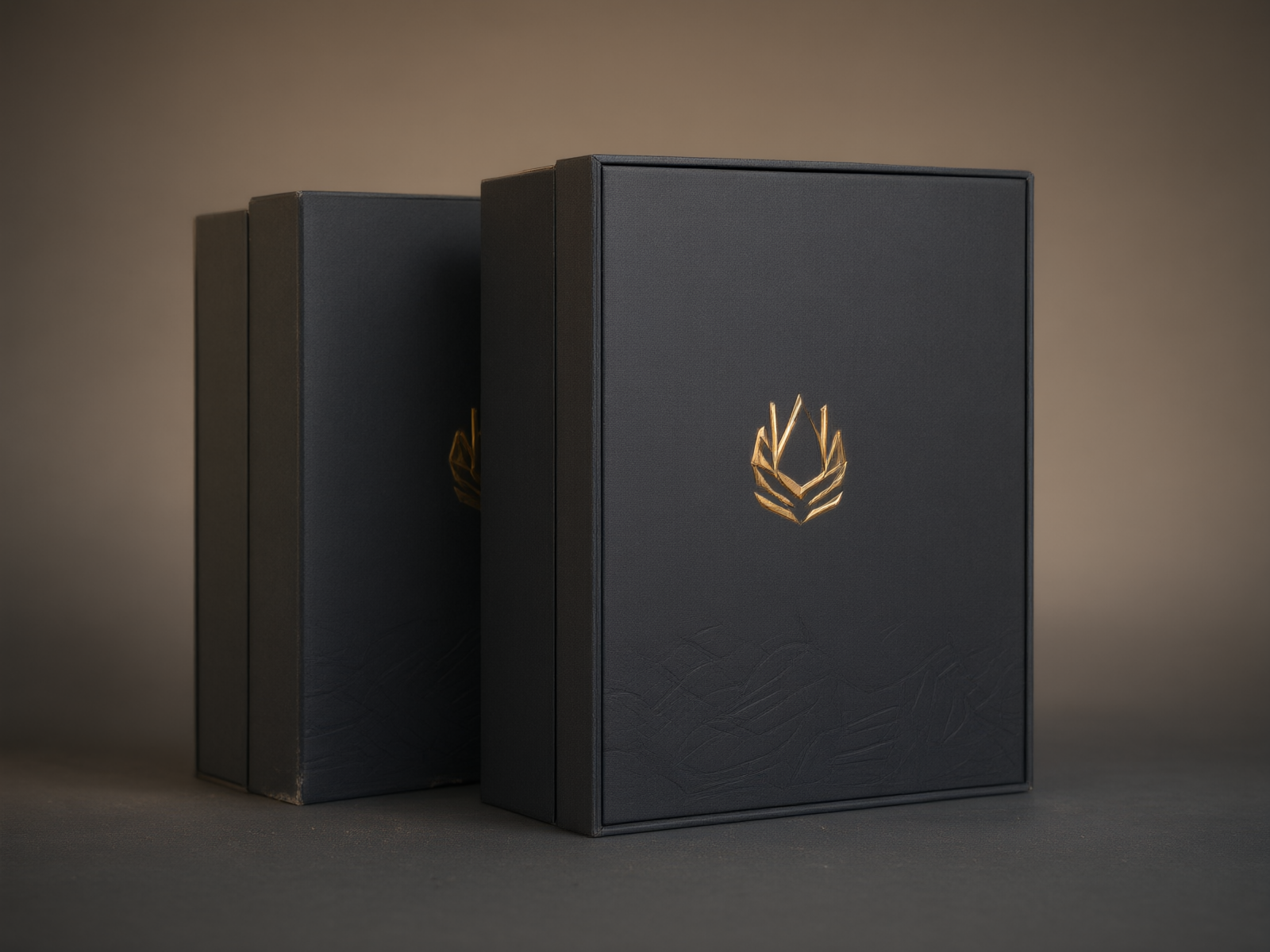
Presentation decides the first rigid factor. Chipboard gives a lid weight and damped opening that thin corrugated cannot imitate through extra printing. A smooth paper-wrapped surface also accepts finishing that corrugation ruins: hot foil, spot UV, debossing. The performance range shows in production specifications — 320 × 240 × 90 mm with satin lining and Pantone gold foil for the skincare gift set, 180 × 120 × 80 mm with embossing and velvet interior for the perfume box. Gift packaging depends on exactly that permanence, the reason it is specified so often for cosmetic and perfume launches.

Load-bearing structure decides the second. Rigid boxes stack in retail displays and keep square corners through repeated handling on a shelf, where corrugated softens after one open-close cycle in humid conditions. The trade-off sits inside the same material: high-density greyboard absorbs moisture from damp air and can warp, which is why rigid gift boxes travel best in climate-controlled conditions and why the perfume project pairs the wrap with interior protection rather than relying on the board alone.
One Table, Two Toolkits
Shipping: Mailer Box ✓ | Rigid Box —
Premium presentation: Mailer Box — | Rigid Box ✓
Folding efficiency: Mailer Box ✓ | Rigid Box —
Gift packaging: Mailer Box — | Rigid Box ✓
E-commerce: Mailer Box ✓ | Rigid Box —
Structure: Mailer Box — | Rigid Box ✓
The pattern is consistent: every check on the mailer side comes from its flat-pack, lightweight construction, and every check on the rigid side comes from chipboard thickness and permanent assembly. The table reads as fit rather than score because each factor reflects a different commercial variable — freight cost per carton versus perceived value at the point of sale.
Choosing by Product and Channel
The mailer fits when packaging travels with the product and the margin cannot absorb added weight: subscription boxes, apparel, book retail, and e-commerce sellers shipping direct to consumers. A brand testing a new reference can validate demand at low volume — our low MOQ options start from 200 pieces — before committing to a more expensive tooling path.
The rigid box fits when the unboxing moment is part of the product price: premium cosmetics, perfume launches, jewelry, corporate gifting, and seasonal gift sets sold through retail shelves or brand storefronts. In a gift channel the box competes with the contents on the table, and presentation drives repurchase where protection does not.
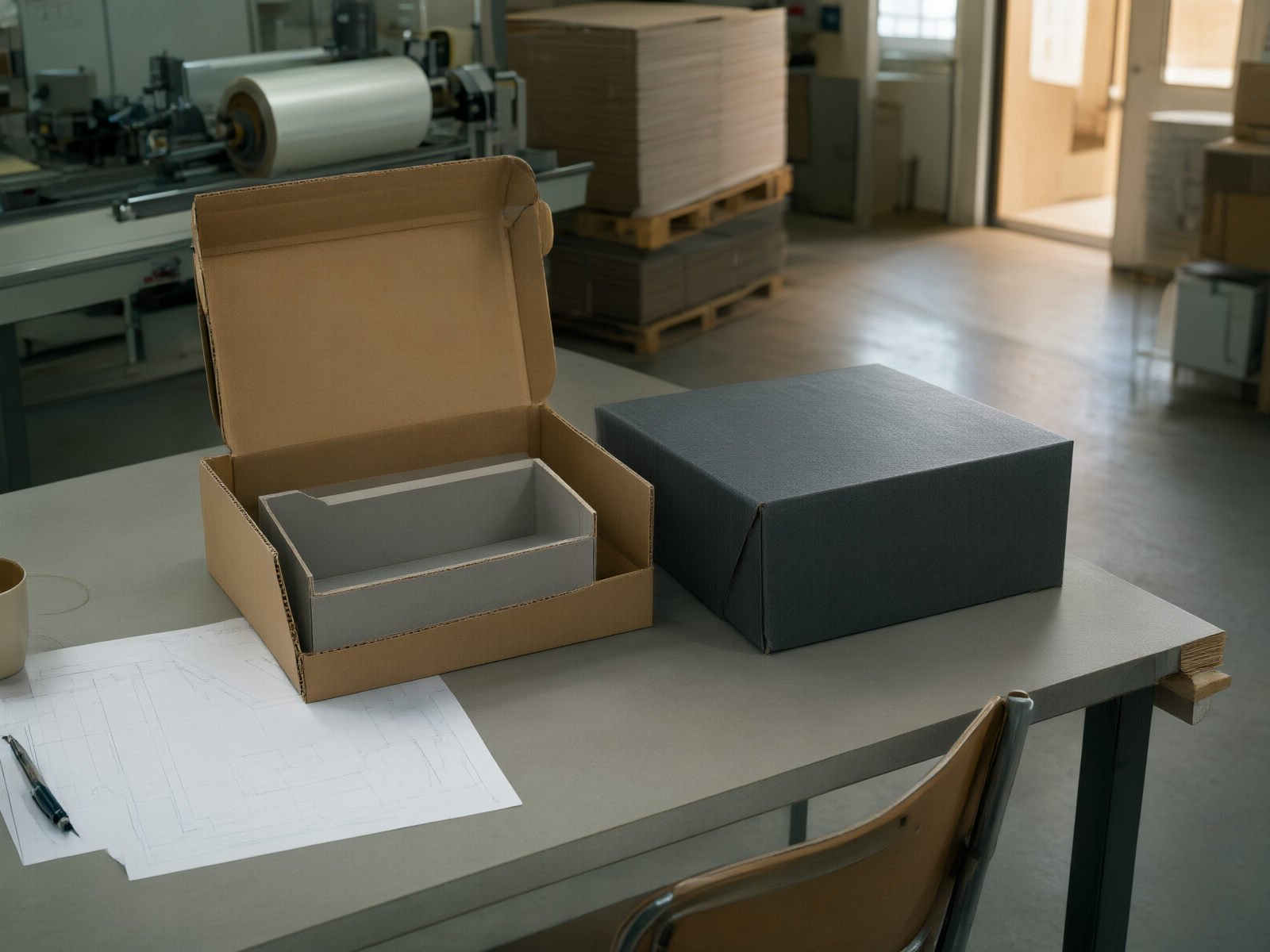
A practical answer sits between the two formats as well. A rigid tray or lid nested inside an outer corrugated mailer keeps the heavy component small and the outer shipper flat during transport, a construction we engineer around regularly for clients whose retail presentation must survive parcel networks intact.
Making the Call With Facts, Not Guesswork
Neither structure is better in absolute terms; each is cheaper or more expensive along a different line — freight and storage versus finishing and perceived value. The buyer-side checklist stays short: confirm how packaging reaches the end customer, what weight and volume the parcel network will bill, and whether the shelf experience or the shipping label decides repurchase.
As a direct custom packaging manufacturer in Shenzhen, we build both structures under one roof: custom manufacturing to exact dimensions, free design support covering structural dielines and graphic layouts, free samples produced before bulk commitment, strict quality control at every stage from printing to packing, and global shipping to the USA, Europe, the Middle East, and Southeast Asia. Brand owners comparing a mailer and a rigid gift box can send product dimensions, order quantity, and target landed cost — or a reference image — and receive the material recommendation, the tooling path, and a quote for each option side by side. Get a free quote or request free samples to see the quality before committing to a structure.
Interested in Custom Paper Tube Packaging?
Send us your specifications and get a detailed quote within 24 hours.
Get a Free Quote